Foam Cannon vs Two-Bucket Method: How to Use Each (and When)
A foam cannon and a two-bucket wash do different jobs. Foam is a low-contact pre-wash that loosens and rinses away some contamination. Two buckets manage dirt during the contact wash by separating clean shampoo from the mitt-rinse water. Use foam alone only for very light soil when the product permits it; use both for normal road film or a dirtier daily driver.
Key takeaways
- They are stages, not substitutes. Foam removes some loose soil before contact; two buckets reduce what a dirty mitt carries back to the paint.
- Judge the panel after rinsing. If road film remains, drying it without a contact wash simply moves the rubbing to the towel.
- Thicker foam is not automatically stronger cleaning. Product chemistry, dilution, dwell, and rinsing matter more than the shaving-cream look.
- No pressure washer is not a deal-breaker. A thorough hose rinse and careful two-bucket wash remain a complete process.
Choose the wash process by contamination
| If your situation is… | Pick | Why |
|---|---|---|
| Light dust on a well-protected car | Foam, dwell, rinse, then inspect | A compatible product may clean light soil without a mitt, but only if no film remains before drying. |
| Normal weekly road film | Foam pre-wash plus two-bucket contact wash | The pre-wash reduces loose contamination; the mitt removes the film that rinsing leaves behind. |
| Mud, salt, or gritty lower panels | Heavy rinse or directed pretreat, then foam and contact wash | Remove grit before touching the paint and follow the product's application order rather than scrubbing through it. |
| Ceramic-coated or waxed finish | Use compatible chemistry; combine methods as soil requires | Protection changes product compatibility, not whether remaining contamination needs contact cleaning. |
| No pressure washer available | Thorough hose rinse plus two-bucket wash | A cannon is optional; clean wash media, suitable shampoo, and contamination control matter more. |
Use this row to shortcut by situation.
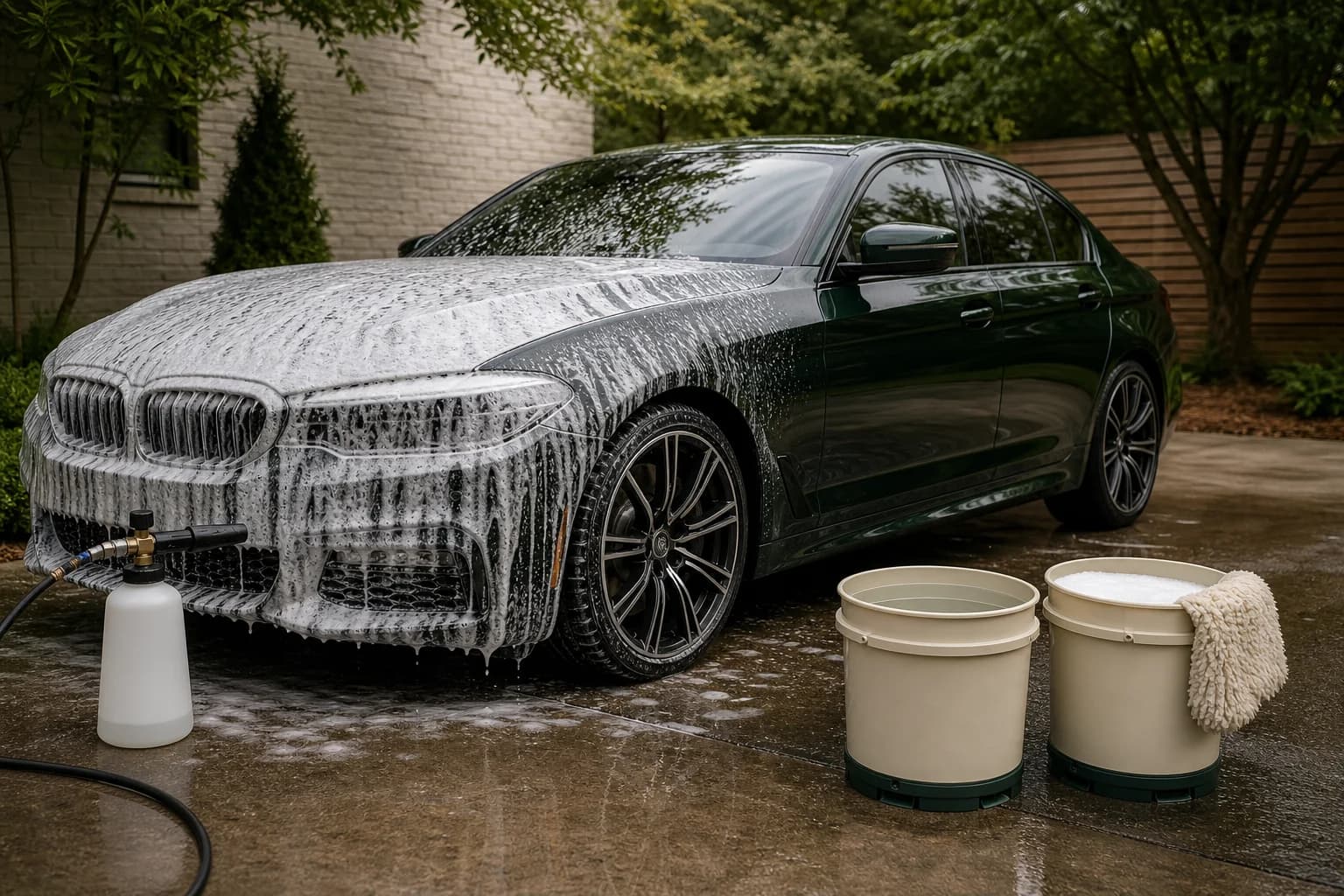
Foam cannons and two-bucket washes are often presented as rival ways to clean a car. They are not. A foam cannon puts a clinging wash solution across the vehicle with little or no contact. The two-bucket method manages contamination during the contact wash: one bucket holds shampoo, while the other is where the dirty mitt gets rinsed before it returns to the soap.
That distinction changes the answer. On a lightly dusty, well-protected car, a foam-and-rinse wash may be enough. On a car with road film, bug residue, or visible grime, foam is the pre-wash and the mitt still does the final cleaning.
Rule of thumb: the safest useful process is not the one with the most foam. It is the one that removes loose contamination before you rub the remaining film.
The jobs are different
| Method | What it does well | What it does not guarantee | Equipment |
|---|---|---|---|
| Foam cannon | Spreads pre-wash evenly, adds dwell time, loosens and carries away loose soil | Complete removal of bonded road film | Pressure washer, compatible cannon, suitable wash product |
| Two-bucket wash | Provides contact cleaning while giving the mitt a separate rinse stage | Removal of heavy grit before contact | Two buckets, wash solution, clean mitt, water supply |
| Foam plus two buckets | Removes loose soil first, then cleans the remaining film with a managed mitt | A scratch-proof wash or permission to rush drying | Both setups |
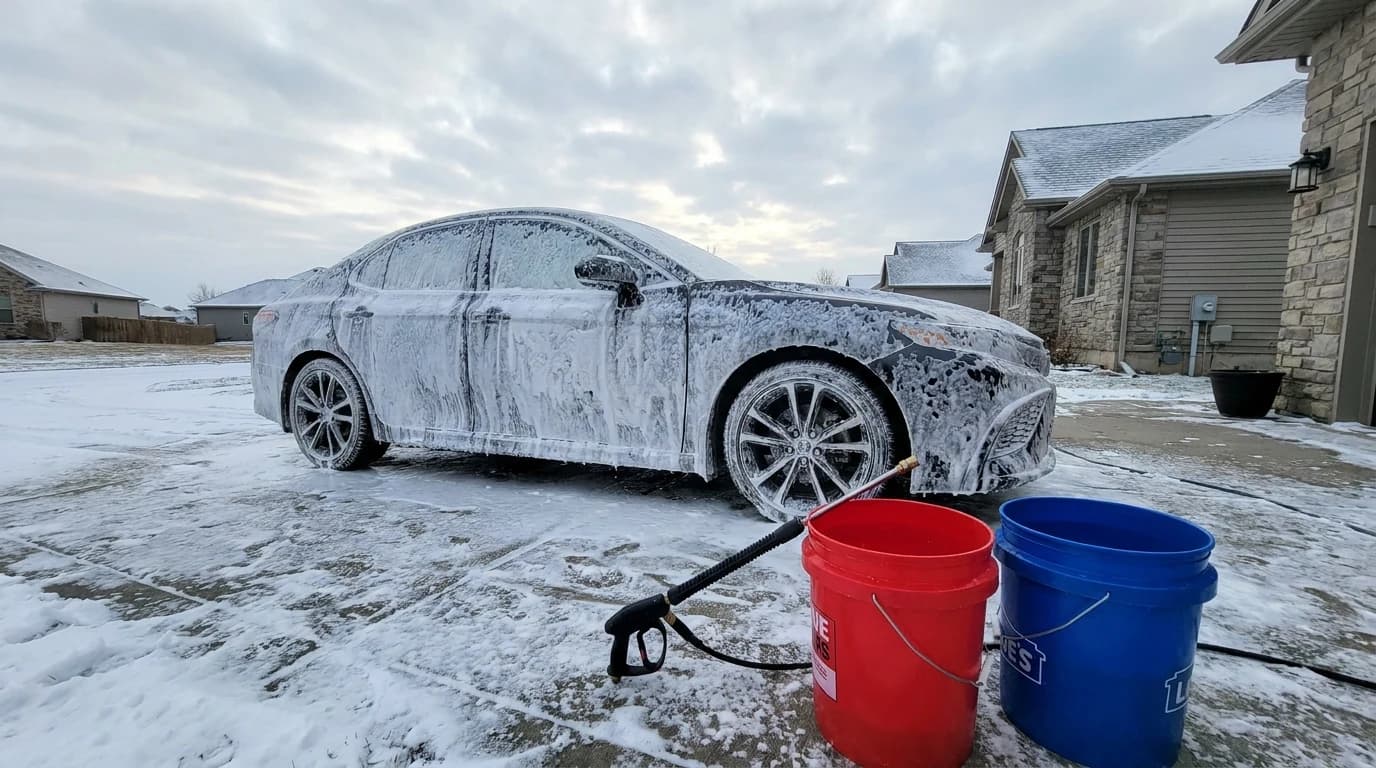
Meguiar's describes its snow foam two ways: on lightly soiled cars you can rinse it off and dry without rubbing the paint with a wash mitt, while on dirtier vehicles it acts as a lubricant for the mitt that still has to follow. Griot's maintenance guide likewise says foam may work touchlessly on lightly dirty vehicles, but more heavily soiled paint may need a hose-and-bucket contact wash afterward. Those instructions are product-specific, yet the process distinction is useful across brands: pre-wash reduces what is on the paint before contact; it does not make contact cleaning obsolete.
What a foam cannon actually changes
A pressure washer sends water through a detergent reservoir and nozzle to spread a foamed solution. The foam keeps product on vertical panels longer than a quick spray, giving it time to soften dirt. When rinsed away, it can take loose dust and grit with it before a mitt ever touches the finish.
That is valuable because the safest particle to rub across paint is the one you already rinsed off. Autoglym positions its Polar Blast as a pre-wash for that reason and says the product should dwell without drying before it is pressure-rinsed. Its guidance reserves foam-only cleaning for very light soiling.
The trap: foam thickness is not a cleaning score. Shaving-cream visuals depend on the chemical, dilution, water hardness, cannon orifice, and pressure washer flow. A thinner wet foam that reaches and loosens contamination can be more useful than a dramatic blanket that sits on top. Follow the specific product's dilution and dwell instructions; do not invent one ratio for every soap.
A foam cannon also does not eliminate contact during drying. If dirt remains and you drag a towel across the panel, you have merely moved the risky contact to the final step. Inspect the lower doors, rear bumper, and rocker panels after rinsing. If a light film remains, continue with a contact wash rather than drying over it.
What two buckets actually change
The two-bucket method is a mitt-control system. The wash bucket holds diluted shampoo. The rinse bucket receives the dirt released from the mitt. After cleaning a small section, rinse and work the mitt in the clear-water bucket, then reload it from the wash bucket. This reduces the amount of removed grit carried back into the soap solution and onto the next panel.
What the second bucket does:
- Gives the mitt a rinse stage away from your shampoo
- Keeps removed grit out of the solution you reload from
- Reduces what gets carried onto the next panel
What it does not do:
- Make a dirty-car contact wash automatically gentle — if dry grit is still sitting on the hood, the first mitt pass can move it before the rinse bucket helps
- Compensate for a contaminated mitt or a dirty drying towel
Start with a thorough rinse or foam pre-wash, work from cleaner upper panels toward dirtier lower ones, use light pressure, and switch to a clean mitt face frequently. Keep wheels and tires on separate tools; brake dust does not belong in the paint buckets.
The microfiber mitt and towel category matters here because a clean wash media and a dedicated drying towel complete the process. Buckets cannot compensate for a contaminated mitt, and a careful wash can still be marred by a dirty drying towel.
Pick the process by what is on the car
Light dust on a protected weekend car
Foam, dwell, and pressure-rinse may be enough if the product allows touchless use and inspection shows no film. Do not let the foam dry. If the surface is not genuinely clean, do not towel-dry it as though it is.
Normal weekly road film
Use both. Apply the pre-wash, allow the manufacturer-specified dwell, rinse thoroughly, then do a two-bucket contact wash. This is the default for a daily driver because traffic film often survives a rinse even when the panel looks better from a distance.
Mud, winter salt, or gritty lower panels
Rinse away heavy loose material before foaming, unless the chosen product explicitly instructs dry application. Pretreat the dirtiest areas within the product directions, foam, rinse, then assess before contact.
The trap: never scrub packed grit to save a rinse cycle. Observe local runoff rules too, especially where wash water can enter storm drains.
Ceramic-coated or waxed paint
Use a wash product that its maker identifies as compatible with the protection already on the car. Foam can help reduce contact, but strong cleaning chemistry may affect wax or sealant life. The car-wash soap and foam guide separates paint-safe formulation from foam theater; the DIY ceramic coating guide explains why maintenance chemistry still matters after coating.
No pressure washer
Skip the cannon. A hose rinse followed by a careful two-bucket wash is a complete, sensible process. A pump foamer or hose-end foam gun can spread product, but neither is required to wash safely. Spend first on clean mitts, drying towels, and a proper automotive shampoo rather than buying foam solely for the look.
The combined wash, step by step
- Park in shade and make sure the body is cool. Read the wash-product directions before mixing.
- Clean wheels with separate tools, or save them for a separate stage so their contamination never reaches the paint mitt.
- Remove heavy loose mud or grit with a controlled rinse when the product directions call for it.
- Apply foam evenly. Respect its stated dilution and dwell window, and never allow it to dry.
- Rinse completely. Inspect the lower panels and rear of the car for remaining film.
- Fill one bucket with the specified shampoo mix and the other with clean rinse water.
- Wash from the cleaner upper panels downward, using light straight passes. Rinse the mitt frequently and expose a clean face before reloading soap.
- Rinse, then dry immediately with a clean automotive drying towel or appropriate air-drying method. Avoid pressing or repeatedly rubbing the paint.
Worth knowing: pressure-washer safety belongs in the process too. Griot's guide warns against taking a high-pressure stream too close to loose paint or fragile plastic and rubber trim. Use the equipment and nozzle according to their manuals, keep control of the wand, and never aim a high-pressure jet at people or animals.
These are stages, not rival methods
They compare foam cannon versus two buckets as though you buy one technique and reject the other. That makes good thumbnail copy and poor wash advice. Foam does not clean by looking thick, and a rinse bucket does nothing until contamination reaches the mitt.
For most daily drivers, the best answer is sequential: remove as much soil as practical without touching the paint, then use controlled contact for what remains. For very light maintenance, foam may shorten or eliminate the mitt stage. For limited equipment, two buckets after a thorough rinse remain effective. Match the process to contamination, not to the most satisfying tool in the driveway.
Your next step
Choose the wash method, then compare soaps, foam and paint-protection options.
Common questions
Does a foam cannon replace hand washing?
Should I rinse before using a foam cannon?
Do I need grit guards in both buckets?
Can I use regular car shampoo in a foam cannon?
Research Sources
- Griot's Garage BOSS Foaming System guide — touchless limits, contact-wash follow-up, dwell, rinse, and pressure precautions
- Meguiar's Ultimate Snow Foam (G191532) — touchless rinse on lightly soiled paint, wash-mitt lubrication on dirtier vehicles
- Autoglym Polar Blast — pre-wash purpose, light-soil limit, dwell, dilution, and rinse guidance