Cordless vs 12V Tire Inflators: Which Portable Pump to Buy
For most drivers, choose the Fanttik X8 Apex, a cordless pump with automatic shut-off that you can carry wheel to wheel without a cable. If you would rather never charge a battery, the EPAuto 12V runs from the car's socket and costs less. In winter, check pressure on cold mornings, because Continental puts the drop at 1 to 2 PSI for every 10°C.
The Verdict
Our Verdict
Ignore the headline PSI and choose the power source that suits how you drive, then use auto shut-off to hit the placard pressure. The Fanttik X8 Apex is our cordless top pick, and the corded EPAuto is the budget pick that never needs charging.
Key takeaways
- Choose the power source first. Cordless is easier wheel to wheel; 12V corded costs less and never needs charging.
- Inflate to the door-jamb placard with tires cold. NHTSA defines cold as not driven for at least three hours.
- Winter lowers pressure. Continental puts the drop at 1 to 2 PSI per 10°C, so check on cold mornings.
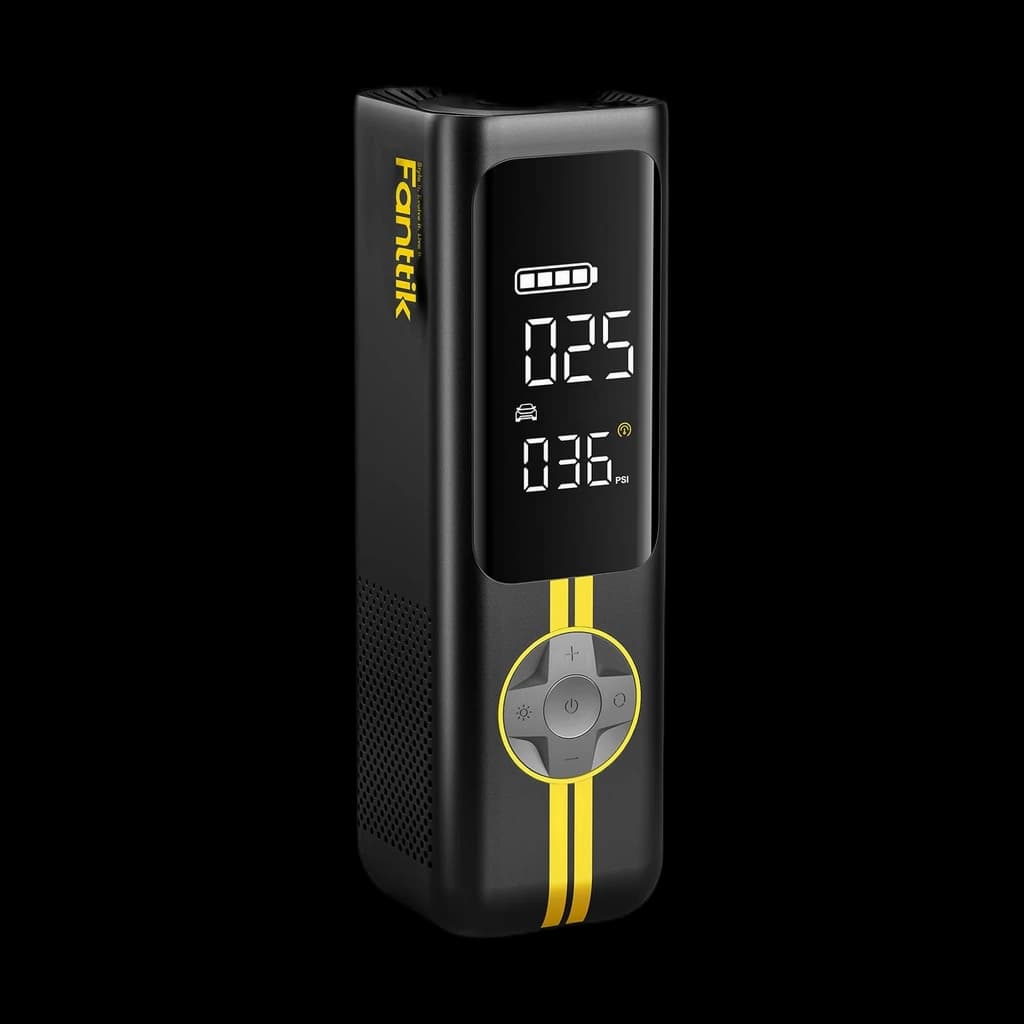
Fanttik X8 Apex — 150 PSI cordless tire inflator
- Rated 150 PSI with roughly one-minute car-tire top-ups
- Rechargeable battery means no cord or 12V socket needed
- Dual LED display, preset modes (car/bike/moto/ball) and auto shut-off
Our top pick for cordless convenience: a rechargeable 150 PSI pump with preset modes and automatic shut-off, so you set the placard pressure and let it stop itself. Keep it charged, and check its gauge occasionally against a separate tire gauge.
Side-by-side comparison
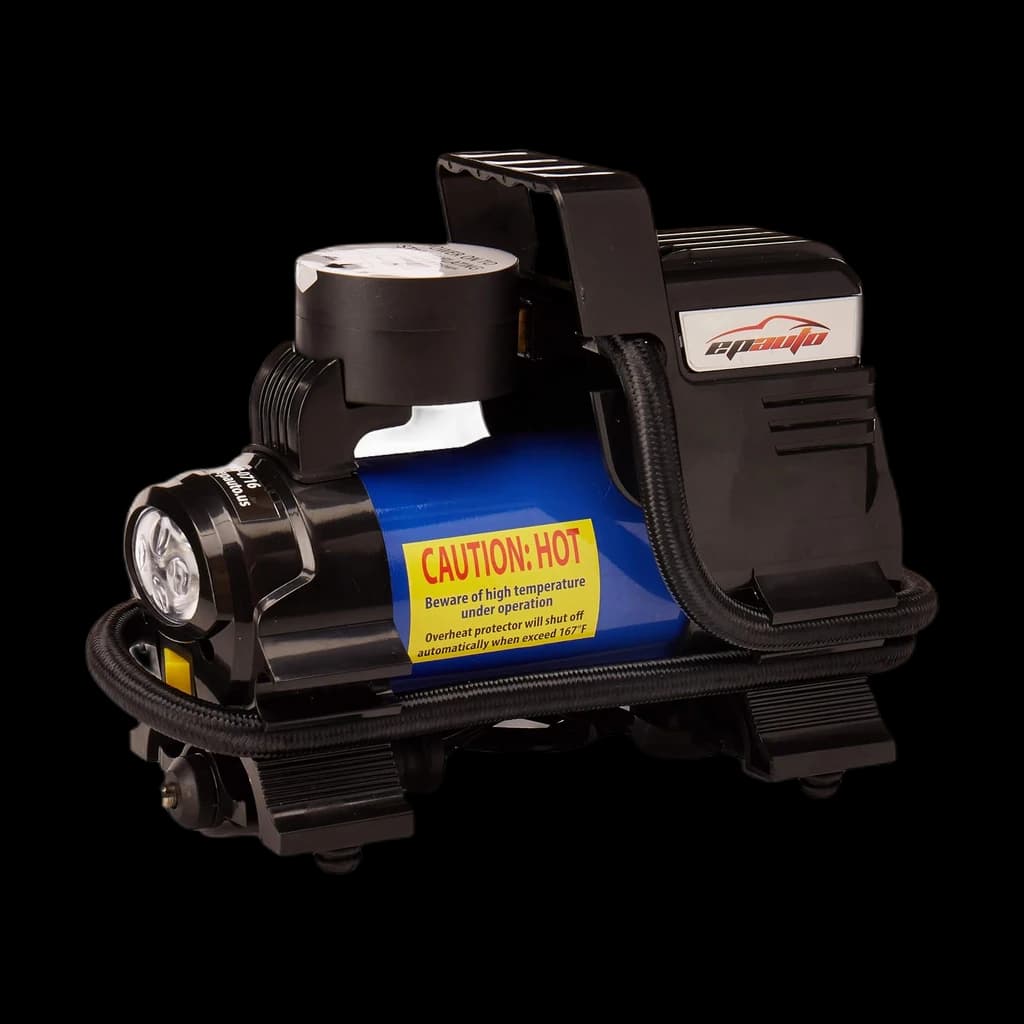
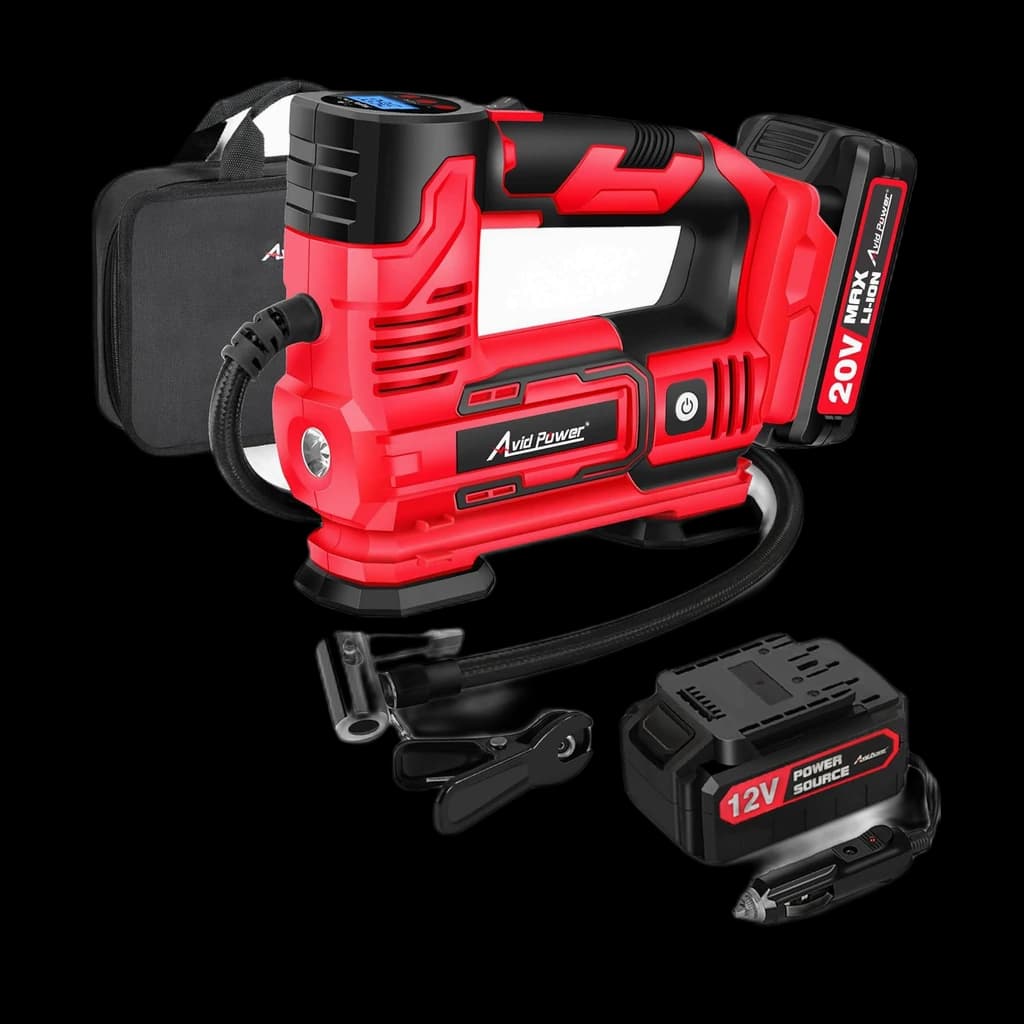
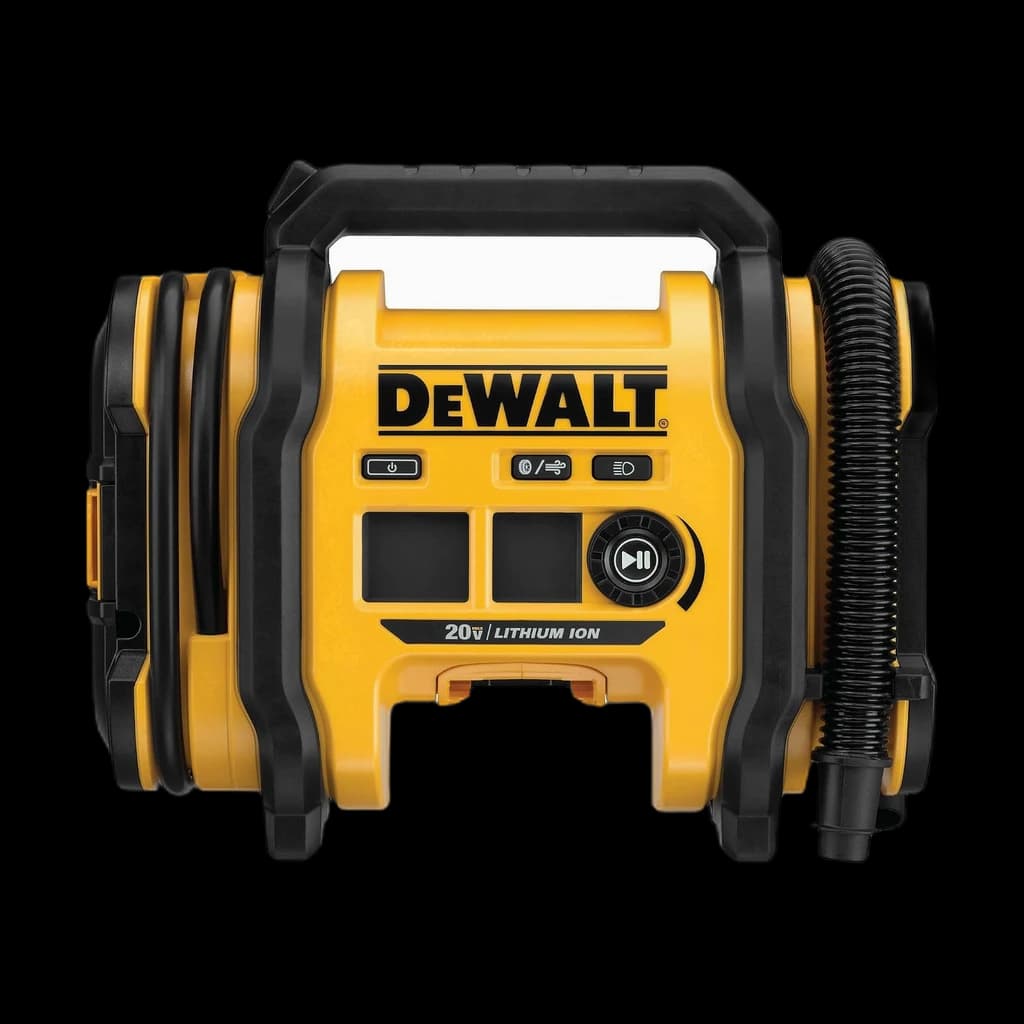
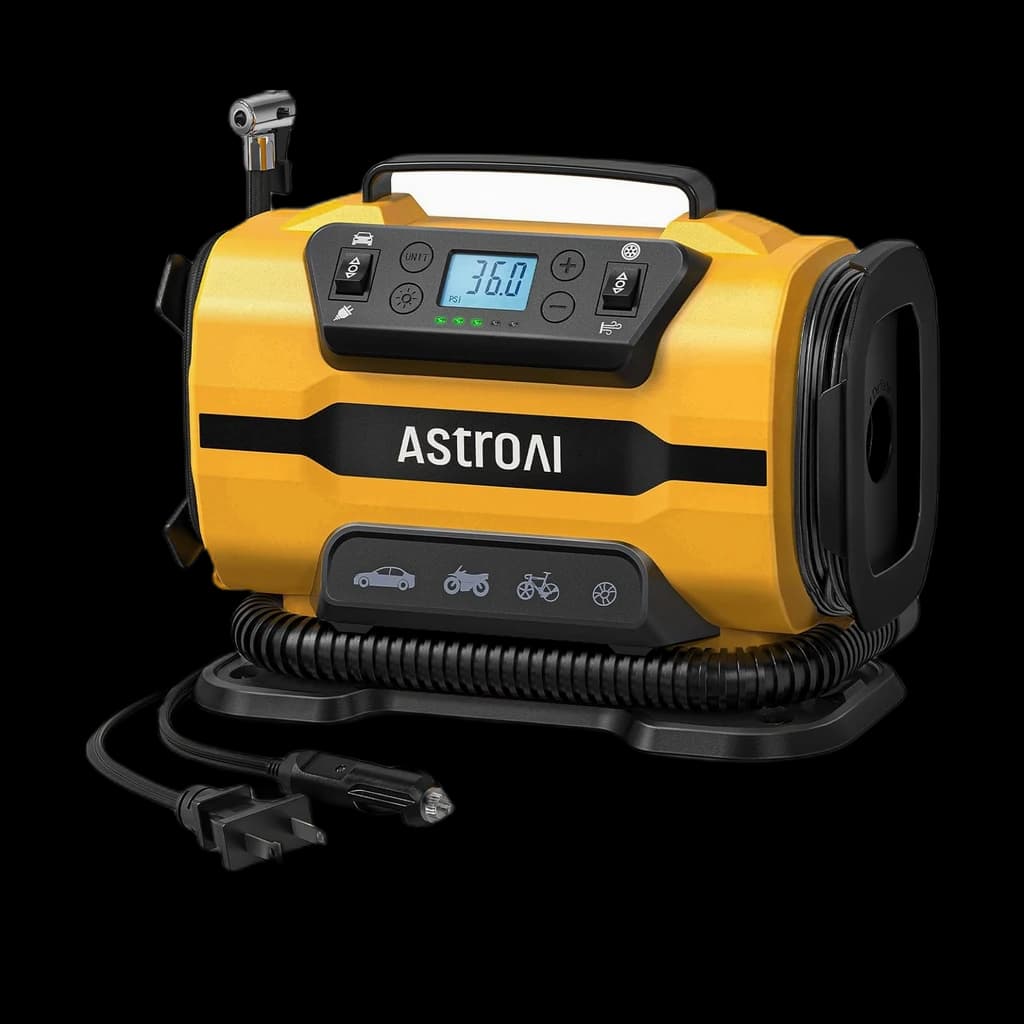
#1Fanttik X8 Apex — 150 PSI cordless tire inflator 4.7 | #2EPAuto 12V DC — digital tire inflator with auto shut-off 4.5 | #3Avid Power 20V — cordless tire inflator with 12V adapter 4.4 | #4DEWALT DCC020IB — 20V MAX cordless/corded inflator (tool only) 4.7 | #5AstroAI 150 PSI — dual-motor 12V/110V heavy-duty inflator 4.7 | |
|---|---|---|---|---|---|
|  |  |  |  | |
| DriveScored | |||||
| Verdict | Researched as the best all-around cordless inflator: a fast, well-calibrated 150 PSI pump that refills a mid-size car tire in about a minute and holds a 4.6-star average across 6,500+ ratings. The dual LED screen and preset modes make it the easiest pick for drivers who want to skip the 12V cord. | Researched as the best-value default: a 12V corded pump with a programmable auto shut-off that stops at your target PSI, backed by nearly 59,000 ratings at 4.5 stars. Slower than cordless pumps and tethered to the outlet, but hard to beat for reliability per dollar. | Researched as the flexible cordless value pick: a 150 PSI pump that runs off its 20V Li-ion battery or a bundled 12V car adapter, so you have a backup power path if the pack dies. A digital preset gauge with auto shut-off rounds it out at a mid-tier price. | Researched as the pick for DEWALT 20V battery owners: DEWALT says the inflator runs on any of three power sources (a 20V MAX battery, 12V DC, or 110V AC), with automatic shut-off and a work light. It earns 4.6 stars across 18,000+ ratings, but it ships as a bare tool: DEWALT sells the battery, charger and AC power adapter separately. | Researched as the pick for bigger tires and faster fills: a dual metal-motor pump that runs on both 12V DC and 110V AC, so it works at the roadside or off a wall outlet at home. It moves more air than single-cylinder mini pumps, but this model relies on a manual gauge rather than a preset auto shut-off. |
| Price | ~$69.99Buy on Amazon | ~$35.97Buy on Amazon | ~$59.99Buy on Amazon | ~$141.79Buy on Amazon | ~$52.24Buy on Amazon |
| Max PSI | 150 | 100 | 150 | 100 | 150 |
| Power Source | Rechargeable | 12V corded | Rechargeable | Rechargeable | 12V corded |
| Auto Shutoff | Yes | Yes | Yes | Yes | No |
| Buyer sentiment | Performance Quality Ease Of Use Portability Buyers praise performance, quality, ease of use and portability. Mixed feedback on battery life and reliability. Based on 2,398 user mentions | Functionality Quality Ease Of Use Size Reliability Buyers praise functionality, quality, ease of use and size. Mixed feedback on speed. Some flag reliability. Based on 18,950 user mentions | Performance Ease Of Use Effectiveness Durability Buyers praise performance, ease of use and effectiveness. Mixed feedback on reliability and battery life. Some flag durability. Based on 566 user mentions | Functionality Quality Ease Of Use Pressure Control Buyers praise functionality, quality, ease of use and pressure control. Mixed feedback on battery life and automatic shut-off. Based on 6,141 user mentions | Quality Ease Of Use Value for money Versatility Durability Buyers praise quality, ease of use, value for money and versatility. Mixed feedback on reliability and inflation speed. Some flag durability. Based on 2,877 user mentions |
| Pros |
|
|
|
|
|
| Cons |
|
|
|
|
|
* Prices are approximate. Click Buy to see current pricing on Amazon.
Researched as the best-value default: a 12V corded pump with a programmable auto shut-off that stops at your target PSI, backed by nearly 59,000 ratings at 4.5 stars. Slower than cordless pumps and tethered to the outlet, but hard to beat for reliability per dollar.
Researched as the pick for DEWALT 20V battery owners: DEWALT says the inflator runs on any of three power sources (a 20V MAX battery, 12V DC, or 110V AC), with automatic shut-off and a work light. It earns 4.6 stars across 18,000+ ratings, but it ships as a bare tool: DEWALT sells the battery, charger and AC power adapter separately.
Buy on AmazonWhich tire inflator fits you
| If your situation is… | Pick | Why |
|---|---|---|
| You want the easiest wheel-to-wheel top-ups | Fanttik X8 Apex | Cordless with preset modes and automatic shut-off; no cable to route around the car. |
| You want it cheap and never want to charge it | EPAuto 12V | Runs from the car's 12V socket with auto shut-off, for $35.97. |
| You already own DEWALT 20V batteries | DEWALT DCC020IB | Runs on a 20V MAX battery, 12V DC or 110V AC; the battery, charger and AC adapter are sold separately. |
| You inflate big tires at home and on the road | AstroAI dual-motor | Runs on 12V DC or 110V AC with two motors, but uses a manual gauge with no auto shut-off. |
Each pick is one of the products ranked below - this row is for shortcutting based on your situation, not a separate recommendation.
A portable inflator is one of the few car accessories that can save a trip, improve everyday tire care, and fit in a small cargo compartment. The biggest number on the box, maximum PSI, does little to separate a good passenger-car inflator from a frustrating one. The decision that actually changes how you use it is the power source: a cordless battery pump or one that runs from the car's 12V socket.
Cordless or 12V: the decision that matters
| Inflator | Power source | Auto shut-off | Max PSI |
|---|---|---|---|
| Fanttik X8 Apex | Rechargeable battery | Yes | 150 |
| EPAuto 12V | Car 12V socket | Yes | 100 |
| Avid Power 20V | 20V battery, plus a 12V car adapter | Yes | 150 |
| DEWALT DCC020IB | 20V MAX battery, 12V DC or 110V AC | Yes | 100 |
| AstroAI dual-motor | 12V DC or 110V AC | No | 150 |
Cordless makes sense when:
- You want to carry it wheel to wheel without a cable to every tire
- You also use it away from the car, for bikes and sports balls
- You will genuinely keep the battery charged, because a flat tool is no help
A 12V corded pump makes sense when:
- You want the lower price
- You want it to work whenever the car has power, with no battery to maintain
- The cable reaches all four wheels on your vehicle
A hybrid is worth knowing about. DEWALT says the DCC020IB runs on any of three power sources, a 20V MAX battery, 12V DC or 110V AC, though it ships as a bare tool and DEWALT sells the battery, charger and AC adapter separately. The Avid Power pump carries a 12V car adapter as a backup if its battery is flat.
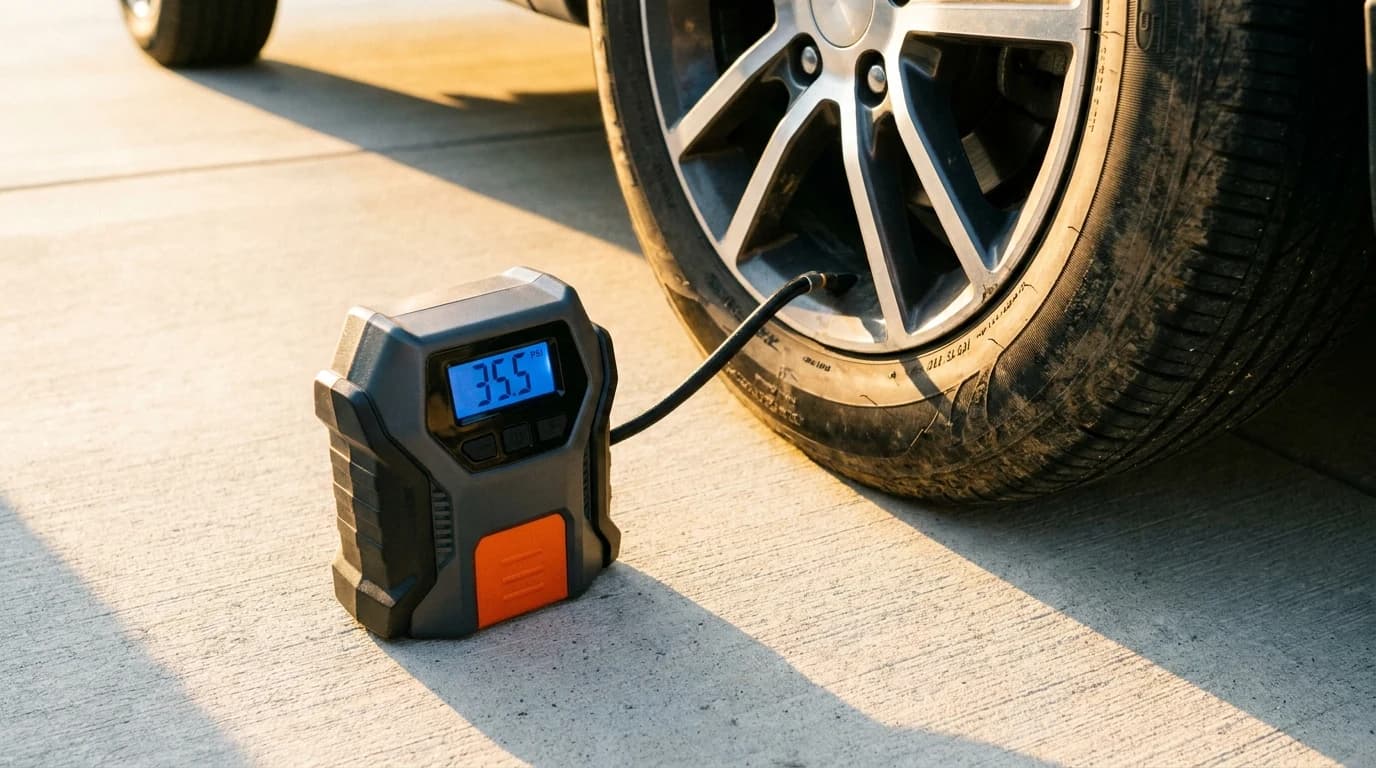
Start with the pressure your car needs
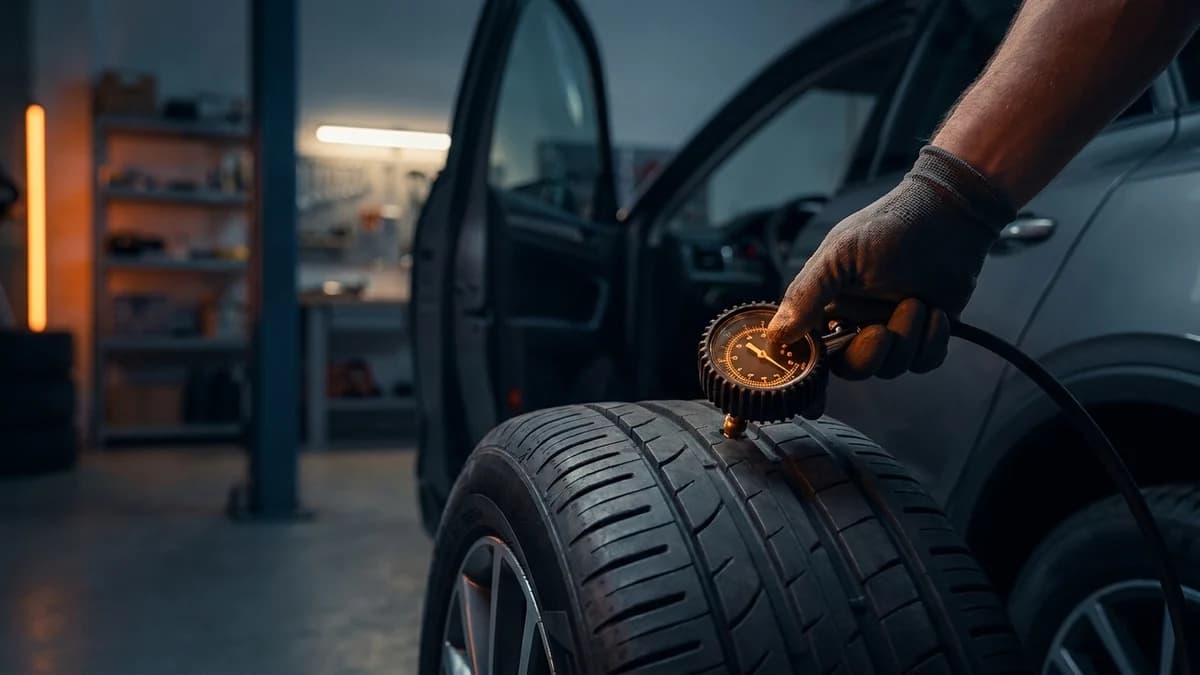
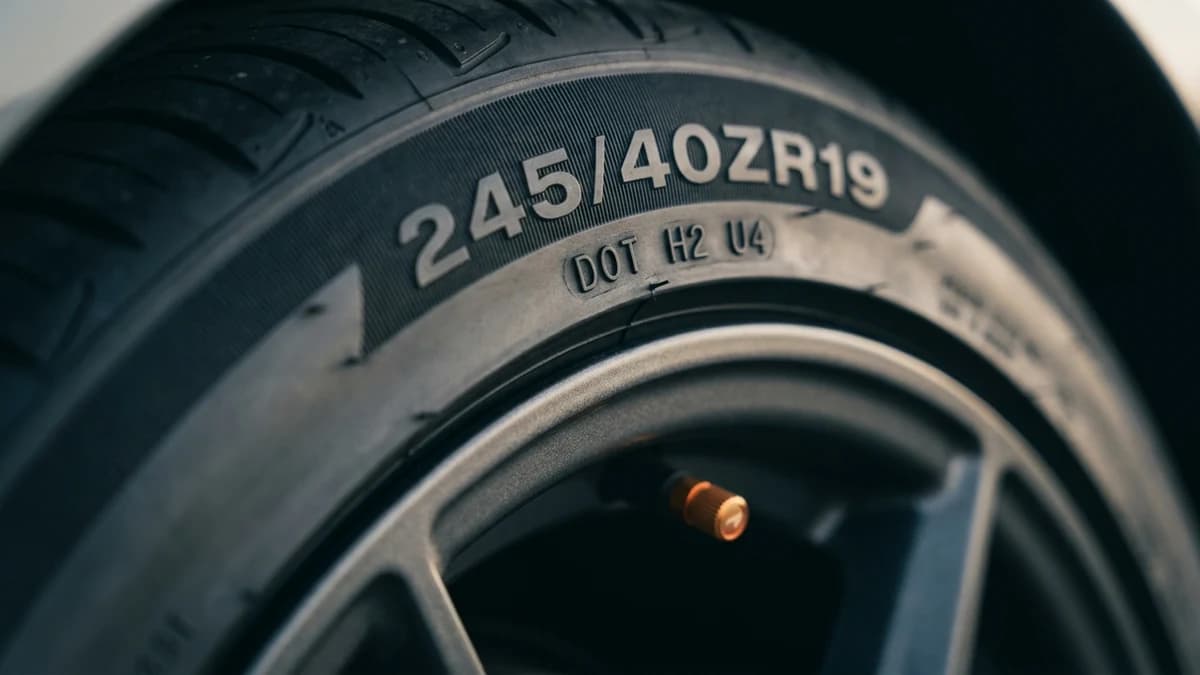
Set the target from the tire information placard on the driver's door jamb, not the maximum pressure molded into the sidewall. NHTSA advises checking all tires, including the spare, at least once a month when they are cold, meaning the car has not been driven for at least three hours. A warm tire reads high, so a pressure that looks right after a drive may be low by morning. What tire pressure you should run covers the placard in detail. If the warning light is already on, the tire pressure light guide walks through adding air at a pump or with an inflator, and resetting the light.
Rule of thumb: inflate to the door-jamb number with the tires cold. The sidewall number is a ceiling, not a target.
Cold weather lowers your tire pressure
This is the season inflators earn their keep. Continental puts the drop at roughly 1 to 2 PSI for every 10°C fall in temperature, so a tire set correctly on a warm afternoon can read several PSI low on a cold morning. Continental also advises checking pressure every two weeks in winter, and checking it even if your car has a tire pressure monitoring system.
In winter, a good routine looks like this:
- Check pressure on a cold morning, before driving
- Top up to the placard figure rather than adding a fixed amount
- Recheck after a big temperature swing, since the drop follows the thermometer
- Keep a cordless pump's battery charged indoors so it is ready
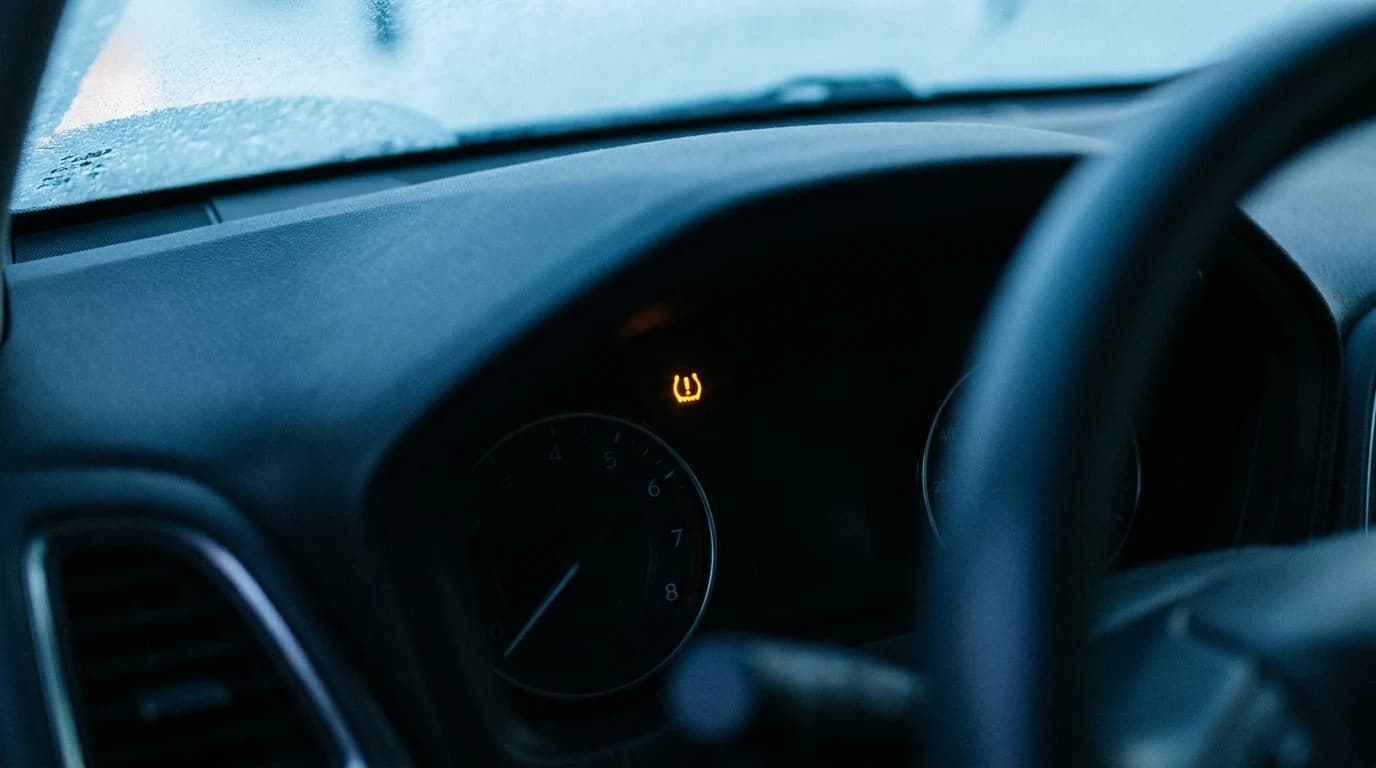
Cold check: if the low-pressure light comes on during the first cold snap of the year, check all four tires before assuming a puncture.
Auto shut-off and a gauge you can trust
Preset pressure with automatic shut-off turns the job into connect, set, wait. Four of the five pumps here have it; the AstroAI relies on watching a manual gauge. However good the readout, check it occasionally against a separate tire gauge you trust, and use the separate gauge to confirm the final reading. For larger SUV and truck tires, sustained airflow and heat management matter more, which is where a heavier-duty unit earns its size.
How the picks compare
The table below lists each pump's DriveScore, our 0–100 summary of published specs and owner ratings. Our pick order is editorial: the Fanttik leads because it is the easiest cordless pump to live with on a passenger car, and the score is a supporting signal. For the rest of our tire guides, start at the tire knowledge hub.
Bottom line
The Fanttik X8 Apex is our top pick if you want cordless convenience. The EPAuto 12V is the budget pick that never needs charging, and the DEWALT DCC020IB makes sense if you already own DEWALT 20V batteries. Whichever you buy, inflate to the door-jamb figure with the tires cold.
Your next step
Confirm the vehicle placard pressure before choosing an inflator.
Common questions
How much maximum PSI do I need?
Cordless or 12V corded?
Why is my tire pressure low in cold weather?
Research Sources
- NHTSA — Tires: check pressure monthly when cold, use the vehicle's tire information placard
- Continental Tire — Tire pressure in winter: 1–2 PSI drop per 10°C, check every two weeks, check even with TPMS
- DEWALT — DCC020IB 20V MAX corded/cordless air inflator product page (three power sources; battery, charger and AC adapter sold separately)