Quick Answer
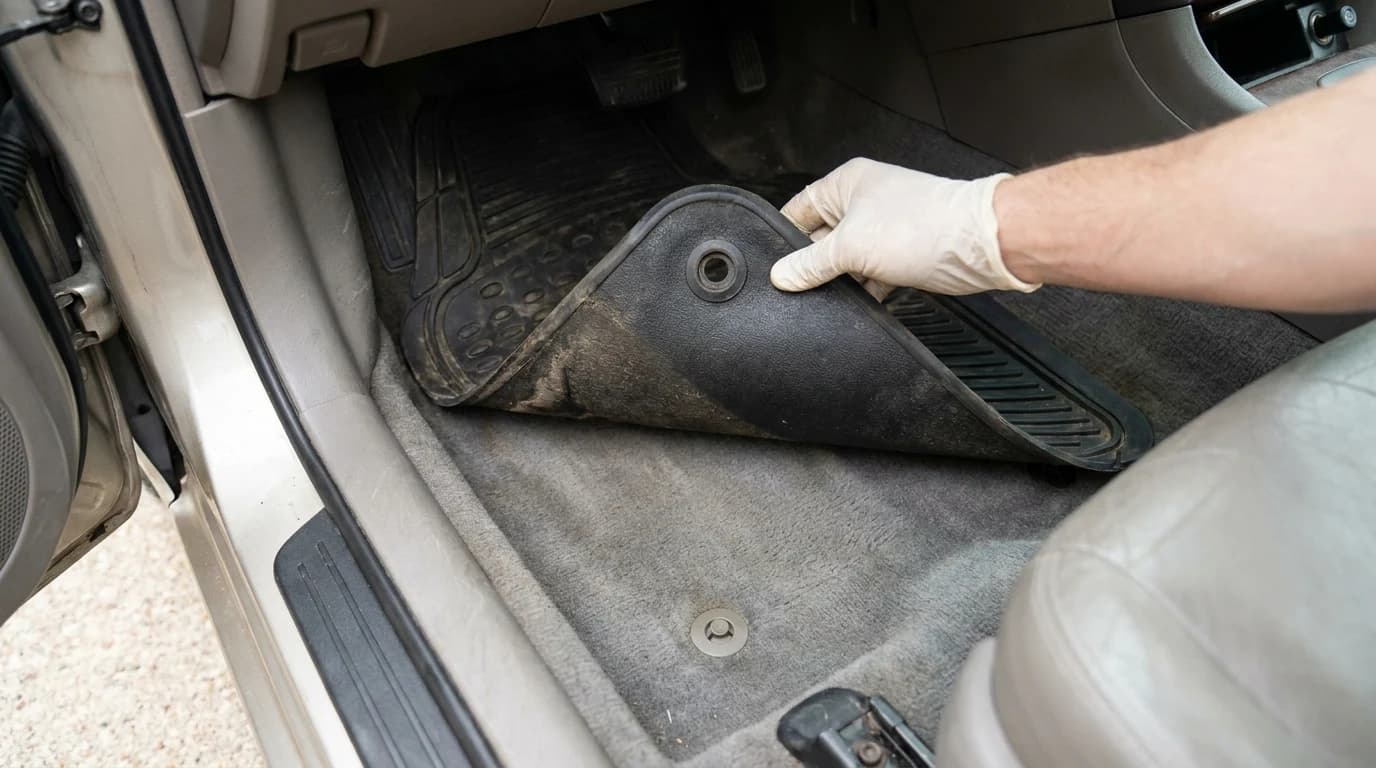
Check the retention before you compare materials. Find the hooks, posts or grommet studs in your driver's footwell, buy a mat whose holes match them, remove the factory carpet mat completely, seat the retention, then pull the mat forward at the heel pad — it should not travel. Finish by sweeping the accelerator, brake and clutch through full travel. NHTSA's advice is that a mat must never be laid over another one, because the retention hooks cannot secure the top mat, and that applies to every make and model, not just the vehicles that were recalled.
Key takeaways
- Retention is the first specification and material is the second. A cheap mat locked to the factory posts is safer than a premium liner sitting loose on top of the carpet mat.
- NHTSA's consumer advisory tells drivers to never overlay two mats, and its 2011 engineering assessment gives the reason: the hooks are not tall enough to secure more than one.
- Verification is physical, not a spec. Pull the mat forward at the heel pad, then move every pedal through its full range and watch for contact.
- The failure is seasonal and it is a habit, not a decision — the winter rubber goes on top of the carpet mat that was already in the car. Swap, never layer.
Pick by footwell, not by material
| If your situation is… | Pick | Why |
|---|---|---|
| Factory retention posts present, and you want the most protection | Vehicle-specific TPE liner | A laser-cut liner puts its holes on your car's posts and its sidewalls above the carpet edge, so containment and retention come from the same part. |
| Salt-belt winters over factory carpet you want to keep | All-weather rubber, installed alone | It shields the carpet from slush and salt, but only if the carpet mat comes out first — the hooks cannot hold both. |
| Older or unusual footwell with no vehicle-specific listing | Trim-to-fit rubber, cut around the posts | Trimming lets you open the mat where the hardware is instead of covering it, which is the difference between universal and unsecured. |
| No retention hardware in the footwell at all | Close-cut mat with anti-skid backing, checked often | Nothing anchors it, so fit and habit do the work — keep the front edge clear of the pedals and watch for creep in the first few weeks. |
| The hooks will not seat through any mat you can find | Factory mat, or nothing in the driver's footwell | Mat makers say an unseated liner should not be used in the vehicle, and a bare footwell is a lesser problem than a mobile one. |
Use this row to shortcut by situation.
Every buying guide in this category sorts by material — TPE, rubber, carpet, carpet-plus-liner — and treats fitment as a sizing footnote. The federal safety guidance sorts it the other way round. Material decides how much water a mat holds. Retention decides whether it can reach the accelerator pedal.
That is not a theoretical distinction. Floor mats have a safety record at all because an unsecured or doubled-up mat can slide forward and sit under the pedal, and no grade of TPE prevents it.
The 30-second test: grip the driver's mat at the heel pad and pull it toward the pedals. If it travels, the retention system is not engaged — whatever the listing says about custom fit.
What the safety guidance actually says
Four documents, three organisations, one message. Not one of them is about material.
| Source | The relevant instruction |
|---|---|
| NHTSA consumer advisory, 2007 | Secure the driver's mat to the retention hooks, and "never overlay two mats on top of each other" — a warning it extends to drivers of all makes and models |
| NHTSA engineering assessment, 2011 | "The retention hooks are not tall enough to secure two or more stacked mats" |
| GM service bulletin, 2013 | Do not flip the driver's mat over, do not place anything on top of it, do not lay a second mat over it, and use only mats designed for that vehicle |
| WeatherTech fitting warning | Remove every other mat from the vehicle first, and if the retention hooks cannot be fully inserted, do not use the liner in that vehicle at all |
The last one is worth sitting with. A mat manufacturer is saying its own product is unusable in your car if the hooks do not seat. Fit is not a comfort feature to them either.
The order that actually matters
1. Find the retention hardware before you shop. Look in the driver's footwell for posts, hooks, twist-locks or grommet studs. Count them and note where they sit. Some cars have two, some have one, some have none.
2. Buy to the hardware, not to the material. A mat with no way to attach to your car's posts is a universal mat whatever the listing calls it. Vehicle-specific liners like the 3D MAXpider Kagu set or OEDRO's TPE liners are cut for one vehicle and one year range, which is precisely why their holes land on the posts.
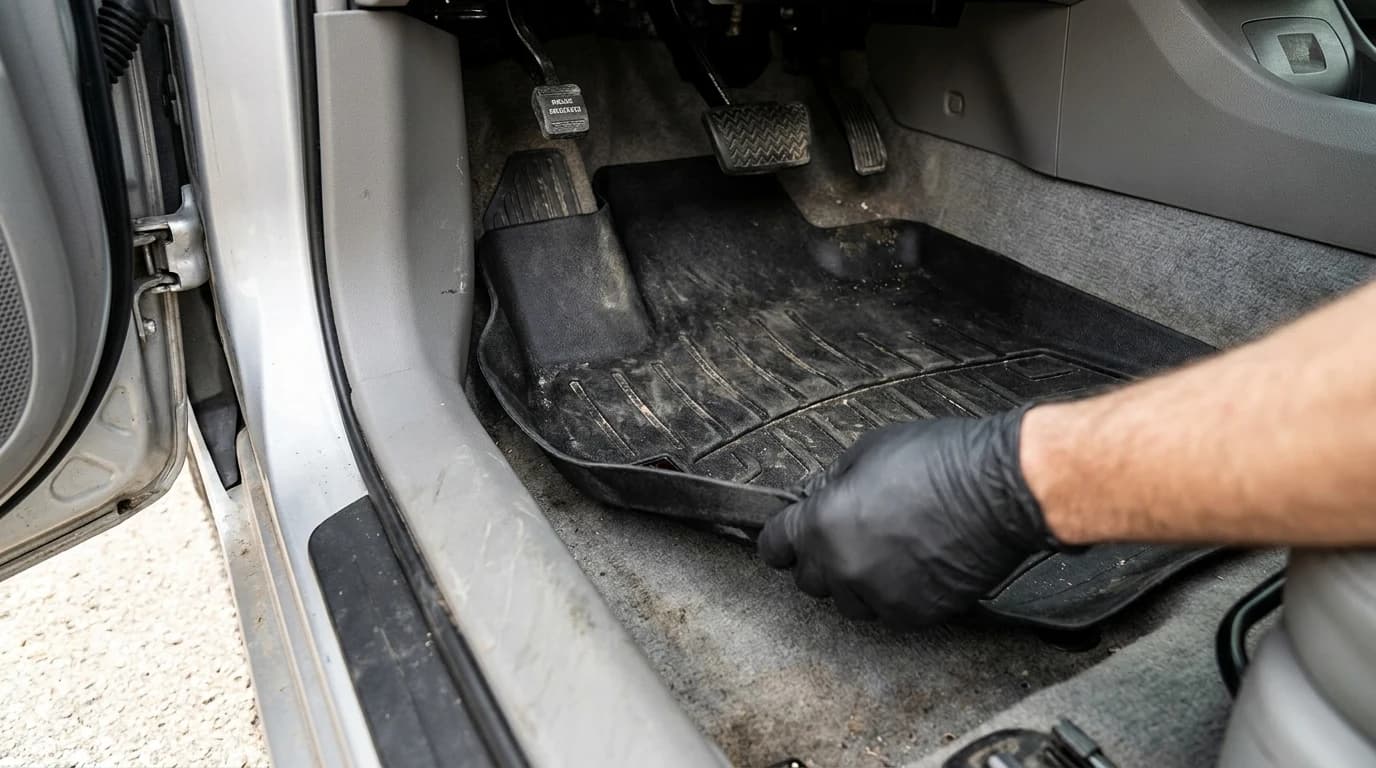
3. The floor underneath must be bare. Take the factory carpet mat out and leave it out. This is the step people skip in November and regret in February.
4. Seat the retention, then pull. Push each hook through its hole or snap the grommet down onto the post, then pull the mat forward at the heel pad. It should not move.
5. Sweep the pedals. Run the accelerator, brake and — if fitted — clutch through their full travel and confirm nothing catches on the mat or its edge.
Material is the second question, not the first
Once the mat is anchored, the material argument becomes a real one. It is just downstream of fit.
| Type | Does well | Will not do |
|---|---|---|
| Custom-fit TPE liner | Raised sidewalls that contain melt-water and grit, with exact footwell coverage | Fit anything outside its listed vehicle and years |
| Trim-to-fit rubber | Deep channels plus wide vehicle compatibility | Look factory-neat without careful trimming |
| Universal flat rubber | Shield carpet cheaply enough to replace seasonally | Contain a real spill or hold an edge down against the firewall |
| Factory carpet mat | Match the interior, with retention designed in from the start | Come through salt and slush unstained |
Our own ranking follows that order. The Motor Trend FlexTough set sits above the universal BDK ProLiner and Armor All rubber set because trim-to-fit lets you cut around the retention posts instead of laying material over them. Every set we score is on the floor mats and liners page.
What holds a mat down, and what people hope will
What actually keeps it in place:
- Retention posts engaged through matching holes or grommets
- One layer only, sitting on bare carpet
- Trimmed edges that lie flat instead of riding up the firewall
- A re-check after any detail, valet or seat slide
What people rely on instead:
- Rubber nibs on the backing, which resist creep but not a shove
- Weight — "too heavy to move" is not a retention system
- Tape or hook-and-loop pads the mat maker never supplied
- The fact that it has not moved yet
Do not do this: never lay an all-weather mat over the factory carpet mat for winter. That is the one configuration every source above names on its own, because the hooks can only hold the bottom mat.
The habit that causes it
Almost nobody sets out to stack mats. It happens seasonally — the rubber set comes out of the garage in November and goes straight down on top of the carpet already in the car. Swap, do not layer.
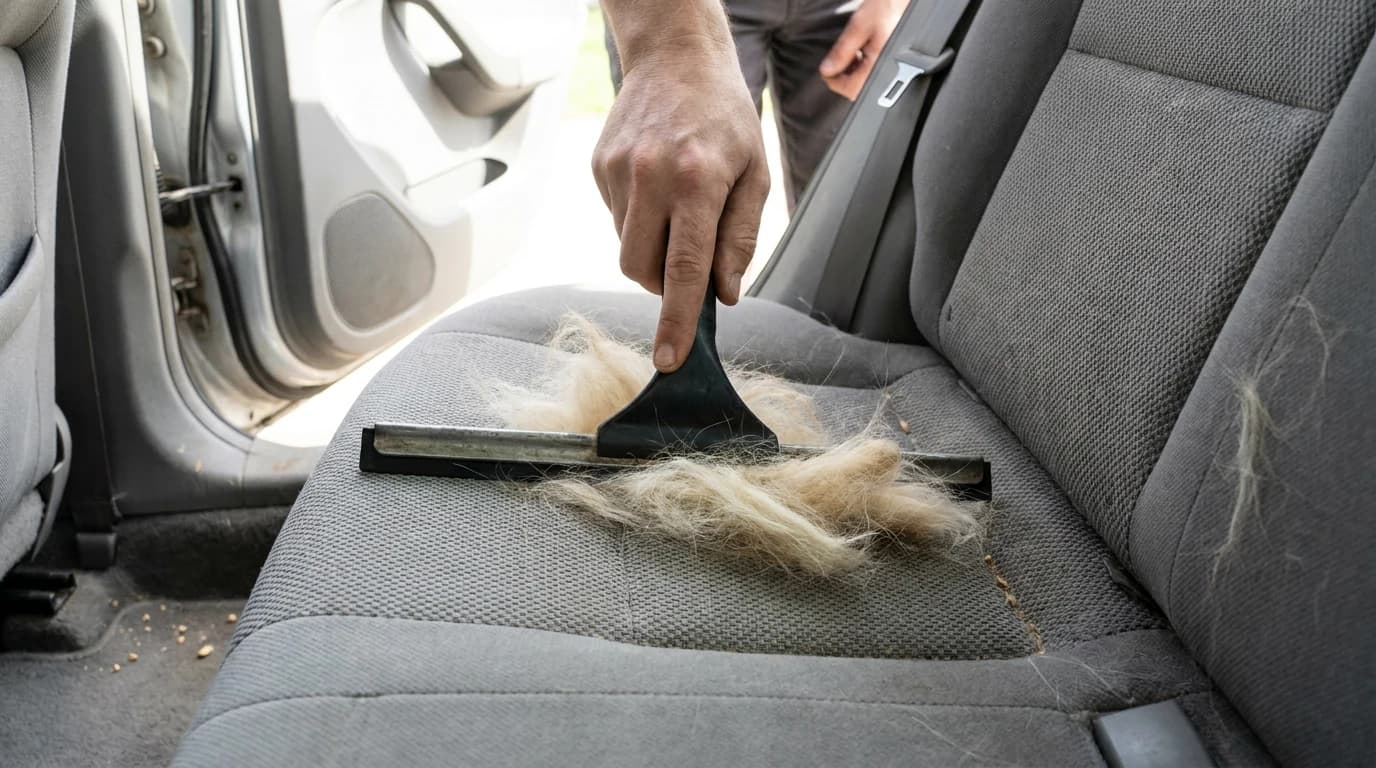
The other quiet moment is after service. WeatherTech's fitting warning asks owners to re-inspect the installation whenever the vehicle has been serviced, detailed or cleaned, because mats come out for vacuuming and go back in loose. If you have just pulled the mats to deal with pet hair, that counts as a re-check.
If your car has no retention posts
Plenty of footwells have none, particularly on older cars. NHTSA wrote its advisory for all makes and models, so the obligation does not vanish with the hardware — it moves onto you. Choose a mat cut close to the footwell shape rather than an oversized one, prefer a backing with genuine anti-skid texture, keep the front edge well clear of the pedal cluster, and check its position every time you get in for the first few weeks until you know whether it creeps.
Some mats ship their own retention hardware to be fitted to the carpet. Follow the maker's instructions for it, then run the same pull test. Where the hook came from does not matter. Whether it holds does.
When no mat is the right answer
If nothing you can find lines up with your car's posts, the honest options are the vehicle maker's own mat or nothing at all in the driver's footwell. A rear-row liner that fits imperfectly is a cosmetic problem. A front one is not.
Your next step
Use the retention check before comparing custom-fit, trim-to-fit and universal liners.
Common questions
Can I put rubber mats on top of my carpet floor mats for winter?
How do I know whether my car has floor mat retention hooks?
Are universal floor mats safe?
Do rear floor mats need to be secured as well?
Do I need to re-check the mats after a car wash or detail?
Research Sources
- NHTSA Consumer Advisory (Sept 26, 2007) — Secure Floor Mats in 2007/2008 Lexus ES 350, Camry, Other Toyotas
- NHTSA — Technical Assessment of Toyota Electronic Throttle Control (ETC) Systems (February 2011), floor mat retention footnote
- General Motors Service Bulletin 10-08-110-001A (Nov 2013) — Information on Proper Use of Floor Mats
- WeatherTech — FloorLiner and All-Weather Floor Mat safety warning and installation instructions (67FLFMINS1)