What Should My Tire Pressure Be? Door Placard, Not Sidewall
Run the cold-tire pressure printed on the sticker inside your driver's door (or in the owner's manual) — for most passenger cars that is 32 to 35 PSI. Ignore the higher "max" number on the tire sidewall; that is the tire's structural limit, not your target. Check when the tires are cold, top up seasonally as temperatures fall, and don't wait for the dashboard warning light.
Key takeaways
- Run the door-placard number, not the sidewall number. The PSI on the driver's-door sticker is your target; the "MAX PRESS" molded into the tire is a structural ceiling, not a recommendation.
- Set them cold. Check in the morning before driving; pressure reads higher once tires heat up, so a "correct" number after a highway run is actually low.
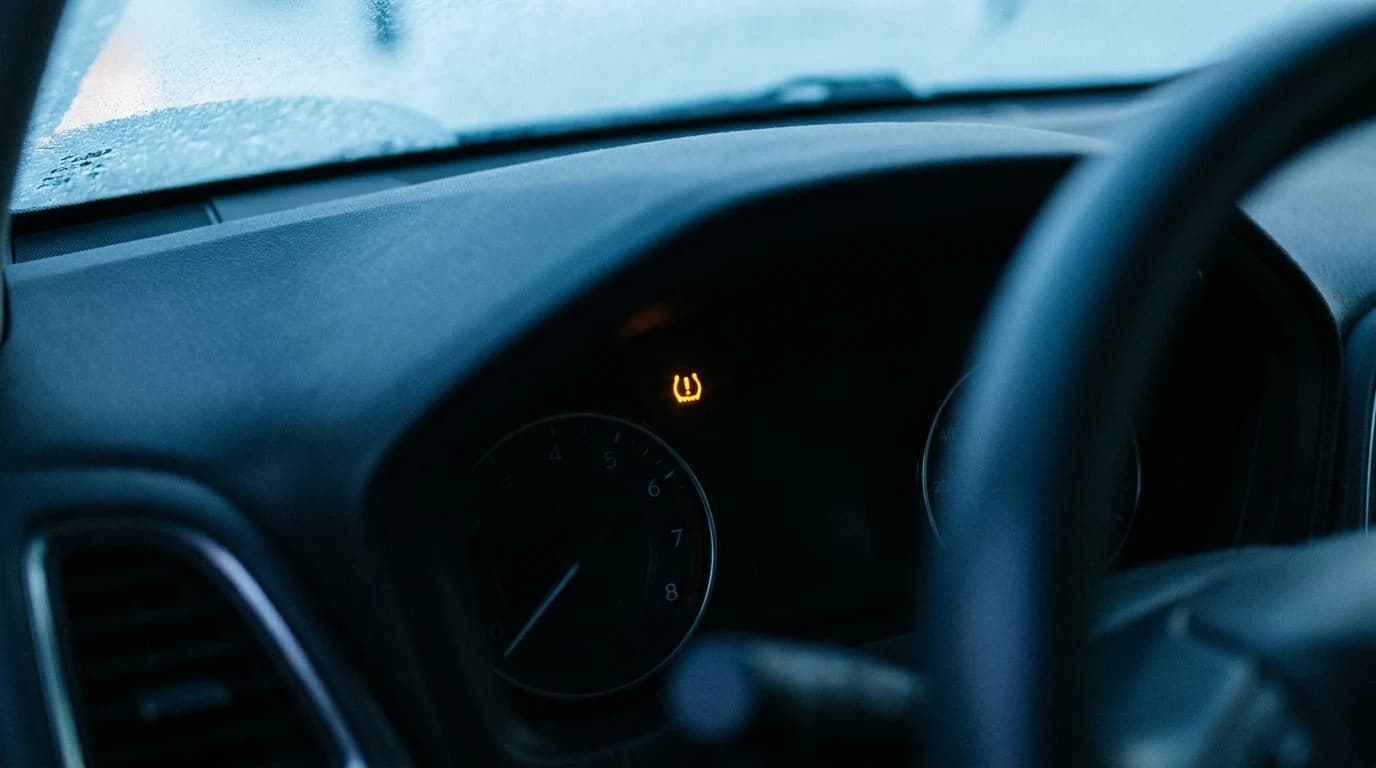
- Don't trust the warning light. Federal rules only require the TPMS lamp to trigger at 25% below placard — about 26 PSI on a 35-PSI car — long after handling and fuel economy have suffered.
- Adjust for cold snaps and heavy loads. Pressure falls about 1–2 PSI per 10°C, and a loaded road-trip car often has a higher "full load" placard figure worth using.
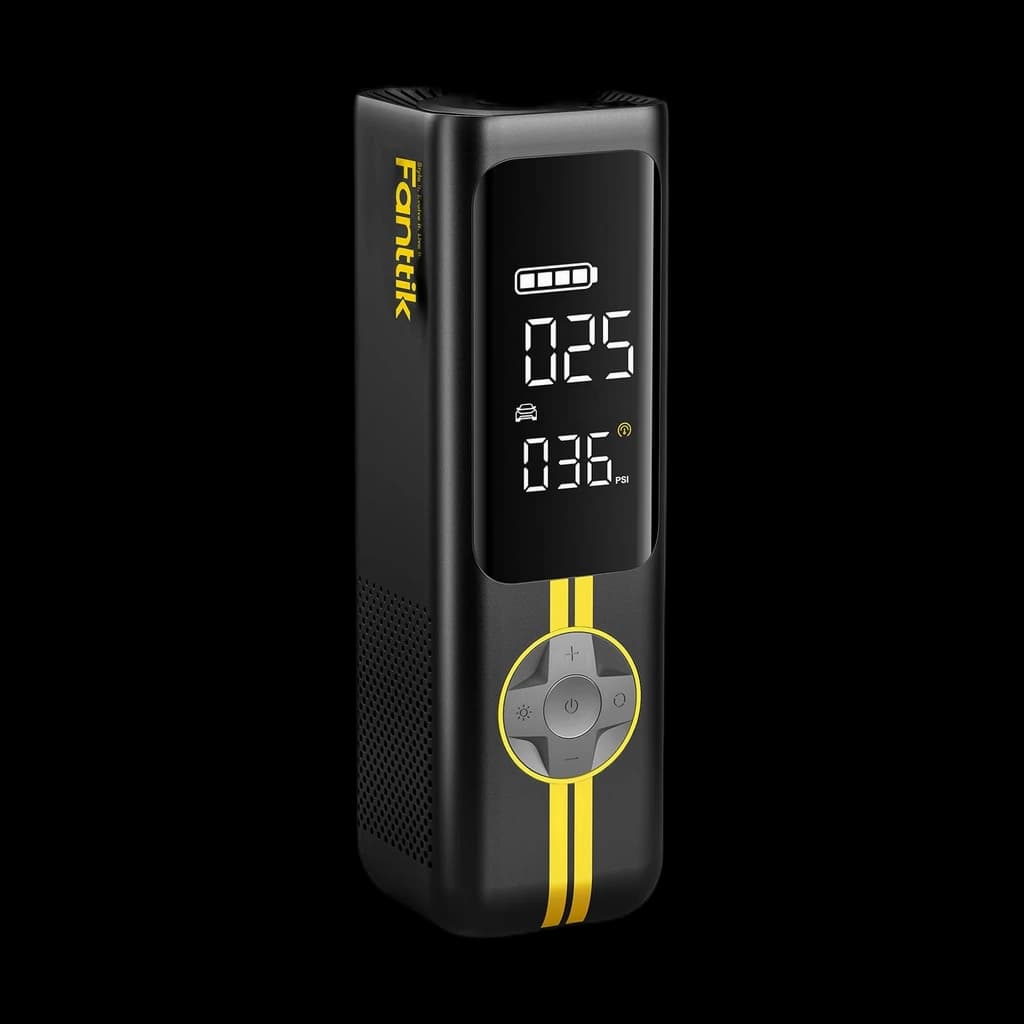
Fanttik X8 Apex — 150 PSI cordless tire inflator
- Rated 150 PSI with roughly one-minute car-tire top-ups
- Rechargeable battery means no cord or 12V socket needed
- Dual LED display, preset modes (car/bike/moto/ball) and auto shut-off
Researched as the best all-around cordless inflator: a fast, well-calibrated 150 PSI pump that refills a mid-size car tire in about a minute and holds a 4.6-star average across 6,500+ ratings. The dual LED screen and preset modes make it the easiest pick for drivers who want to skip the 12V cord.
What pressure to run in common situations
| If your situation is… | Pick | Why |
|---|---|---|
| Everyday commuting | The door-placard PSI | The manufacturer set this number for your car's weight, handling, and ride. It is the right default the vast majority of the time. |
| First cold morning of the season | Placard PSI, re-checked cold | Pressure falls about 1–2 PSI for every 10°C drop, so a tire set in summer can read several PSI low by late autumn. Top back up to placard. |
| Fully loaded road trip | The 'full load' placard figure, if listed | Many placards show a higher pressure for maximum load. Using it restores the contact patch and stability the car was designed for when heavy. |
| Compact 'donut' spare | Usually about 60 PSI — check the spare's own label | Temporary spares run far higher than road tires. The number on the spare or placard governs, not your regular PSI. |
| Sidewall 'MAX PRESS' number | Never use it as a target | It is the maximum the tire can hold at maximum load, not the pressure your vehicle wants. Inflating to it stiffens the ride and shrinks grip. |
Use this row to shortcut by situation.
Ask ten drivers what pressure their tires should be, and most will squint at the tire itself, find the big "MAX PRESS" figure on the sidewall, and inflate to that. It is the single most common tire-care mistake — and it puts you on tires that are stiffer than your suspension was tuned for, grippier only on paper, and quietly wearing out down the middle. The right number was chosen by the engineers who built your car, and it lives somewhere you have probably never looked.
Your target lives on the door, not the tire
Open the driver's door and look at the jamb, or the edge of the door itself. You will find a sticker — the tire information placard — listing a cold inflation pressure in PSI. That number (or the same figure in your owner's manual) is your target, every single time. For most passenger cars it lands between 32 and 35 PSI; light trucks and SUVs often want 35 to 45.
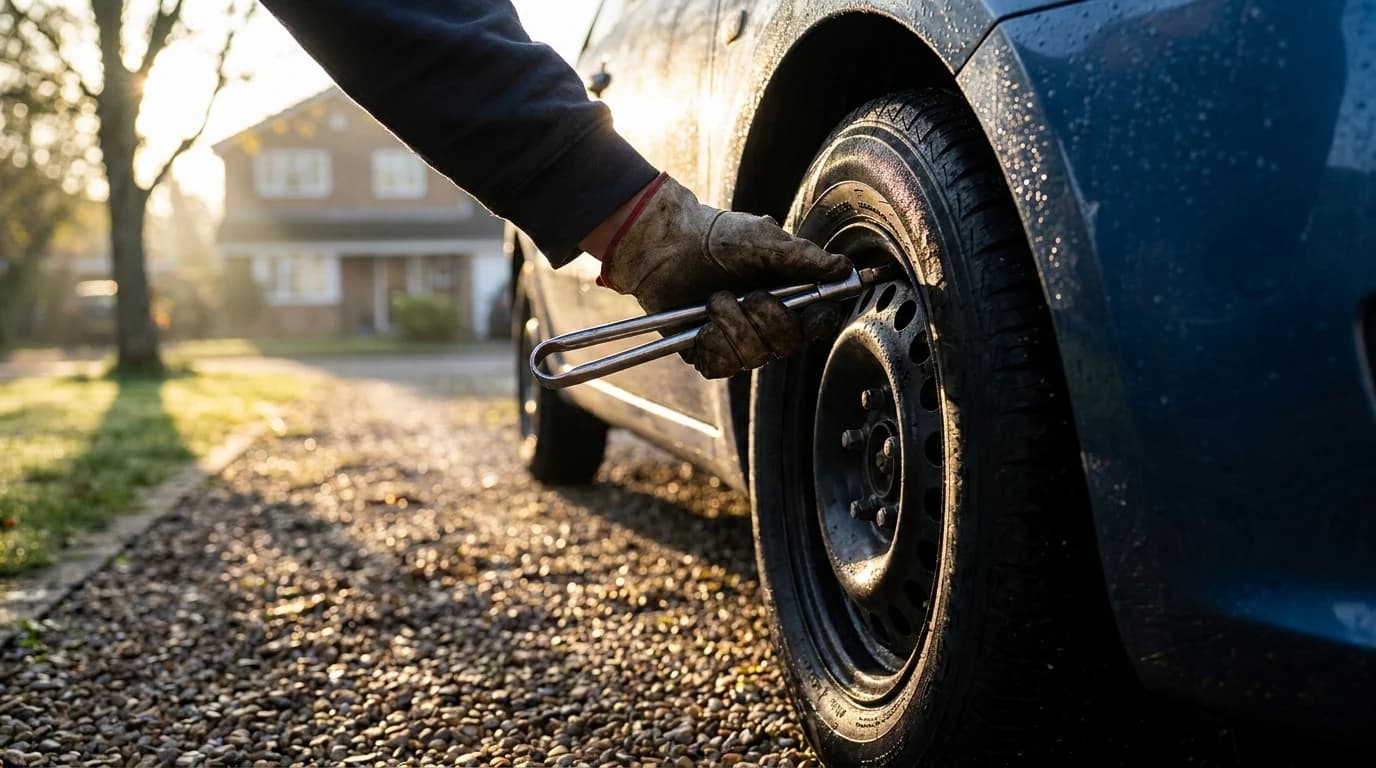
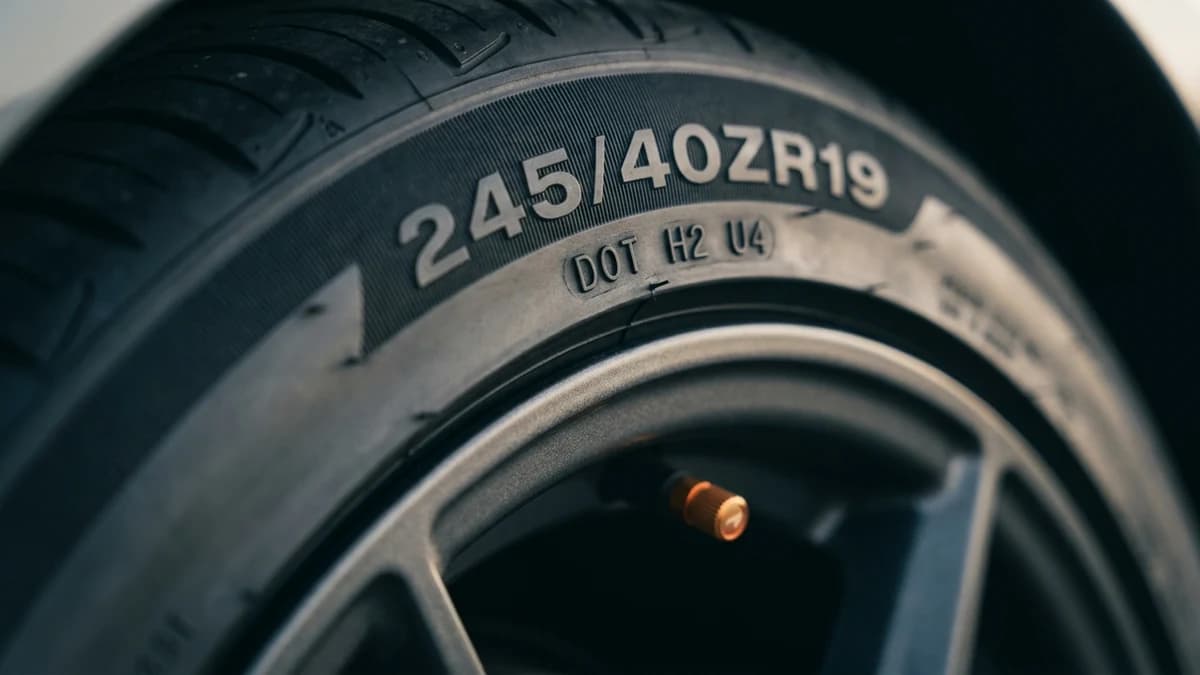
The trap: the number molded into the tire sidewall is something else entirely. Labeled "Max. Press," it is the maximum pressure the tire's structure can safely hold at its maximum rated load — a ceiling, not a recommendation. Inflate to it and you have stiffened the tire well past what your car was designed around: a harsher ride, a smaller contact patch, and longer wet stopping distances.
Always set them cold
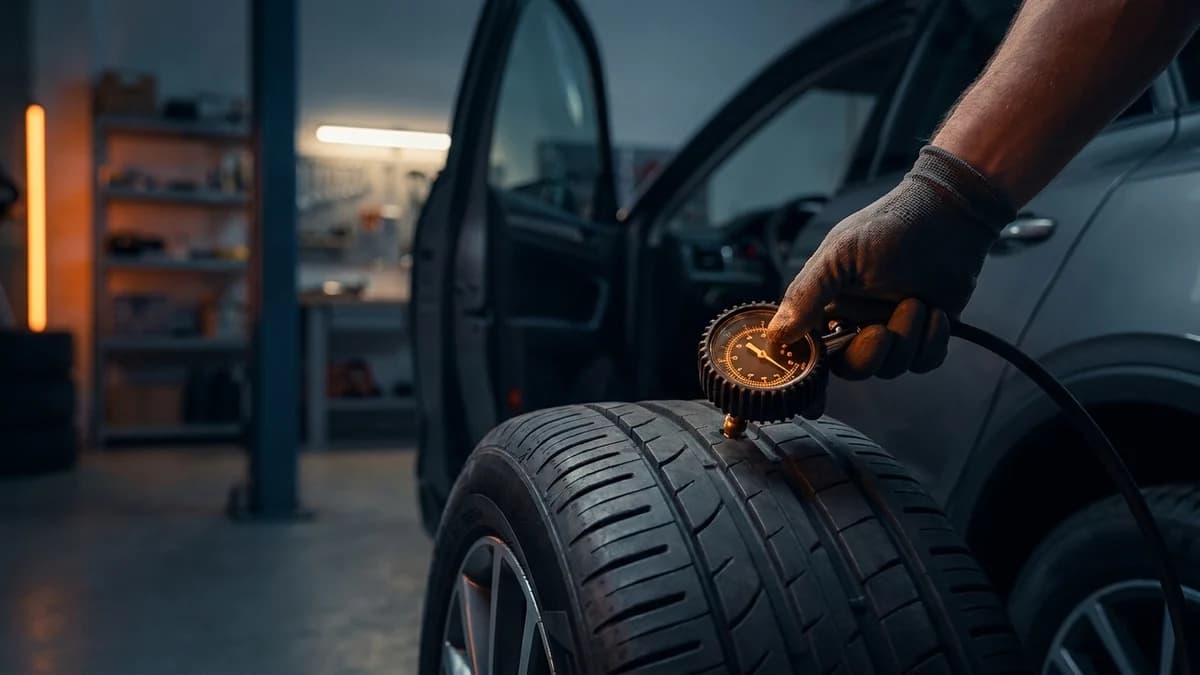
"Cold" here is not about the weather — it means the tires have not been driven on in the last few hours. Roll down the highway for twenty minutes and friction heats the air inside; pressure climbs and your gauge reads several PSI high. Set your pressure in that state and the tires are actually low once they cool back down. Check first thing in the morning, before you have driven more than a mile, and inflate to the placard then. A gauge or inflator with a trustworthy built-in readout turns this into a two-minute job — gas-station gauges are famously inaccurate.
Tire pressure in cold weather: the drift nobody plans for
Air contracts as it cools, so tire pressure falls with the temperature. Continental puts the rate at roughly 1 to 2 PSI for every 10°C (about 18°F) drop. That is exactly why the first real cold snap of autumn lights up dashboards across a city overnight.
| Temperature drop since you last set them | Approx. pressure lost |
|---|---|
| 10°F (~6°C) | about 1 PSI |
| 20°F (~11°C) | about 2 PSI |
| 30°F (~17°C) | about 3 PSI |
A car set to 35 PSI on a warm September afternoon can read 31–32 PSI on a frosty November morning — enough to dull the handling and cost you fuel, well before anything looks wrong to the eye.
Do not wait for the warning light
Here is the part most guides skip: the TPMS light is a late alarm, not a gauge.
Worth knowing: federal safety standard 49 CFR § 571.138 only requires the light to illuminate once a tire is 25% below the placard pressure. On a 35-PSI car that is roughly 26 PSI — deep into the zone where braking, cornering, and tread life all suffer.
Bridgestone says the same thing plainly: a tire can be below spec long before the light ever appears. If you only add air when the lamp comes on, you have been driving underinflated for weeks. And when the light flickers on cold mornings and clears once the tires warm up, that is not a glitch — it is a tire sitting right at the edge of the limit. If the light is already on, our guide to the tire pressure light covers finding the low tire, adding air and getting the light to reset.
Is 40 PSI too high for tire pressure?
On a car whose placard calls for 32 to 35 PSI, yes: 40 PSI is 5 to 8 PSI over, roughly 14 to 25 percent above what the vehicle maker specified. On a vehicle whose own placard lists 40, it is exactly right. The number on the tire does not settle it either way, because the sidewall maximum is the tire's ceiling at maximum load, not a target.
Is 27 PSI a good tire pressure?
Not on most cars. Against a 35 PSI placard, 27 PSI is about 23 percent low, just above the point where federal rules require the warning light: FMVSS 138 sets it at 25 percent below the placard pressure, which is 26.25 PSI on a 35 PSI car. Against a 32 PSI placard it is about 16 percent low. Either way, add air to the placard number when the tires are cold.
What PSI should 225 tires be?
Whatever your vehicle's placard says; the tire size does not set the pressure. In 225/65R17, 225 is the width and 17 is the wheel diameter, and neither is a pressure. The wording FMVSS 138 requires in owner's manuals is to inflate to the pressure on the vehicle placard, and, if your tires are a different size from the placard's, to determine the proper pressure for those tires. That is a question for the tire dealer, not a number to guess from the size.
What to do with the reading
| Cold reading vs your placard | Example on a 35 PSI placard | What to do |
|---|---|---|
| At the placard | 35 PSI | Nothing; check again in a couple of weeks |
| A few PSI low | 32–34 PSI | Top up to the placard; normal after a cold snap |
| 25 percent or more low | 26 PSI or less | Warning-light territory: inflate now and look for a leak |
| Above the placard | 36–40 PSI | Let air out to the placard, measured cold |
| At the sidewall maximum | For example 44 or 51 PSI on a passenger tire | Far too high for daily driving; that figure is a ceiling |
The 44 and 51 PSI figures are the maximum inflation pressures FMVSS 138's own table lists for standard-load passenger tires; yours is molded on the sidewall.
Why the modest number wins
Underinflation is not a rounding error, and overinflation is not the safe alternative. Both fail, in opposite directions.
What a soft tire costs you:
- It builds heat and flexes past its design
- It is the condition most likely to end in a blowout — NHTSA counts hundreds of tire-related traffic fatalities every year
What an over-hard tire costs you:
- A smaller contact patch
- Degraded wet grip
- Wear that eats the center of the tread first
The placard pressure is the balance point your car was actually engineered for.
When to deviate from the placard
The placard number is right almost all the time — but not quite always. The situations table above covers the handful of exceptions worth knowing: a fully loaded road trip (many placards list a higher "full load" figure), a compact spare (usually around 60 PSI), and a hard seasonal cold snap.
Rule of thumb: outside those exceptions, resist the urge to "round up for safety." A few extra PSI is not a margin — it is a downgrade.
A two-minute routine
- Check every two weeks, and before any long drive, per Continental's guidance.
- Do it cold, in the morning, on all four tires plus the spare.
- Compare every reading to the door placard — never the sidewall.
- Top up low tires with a portable inflator, and bleed down any that a shop overfilled.
- Re-check after the season's first hard freeze.
The bottom line
The correct tire pressure is not a mystery, and it is not the biggest number you can find. It is the modest figure on your door jamb — measured cold, kept honest through the temperature swings, and never left to the dashboard light to enforce. Get that one habit right and you have bought yourself shorter stopping distances, longer tread life, and a little more fuel economy, all for the price of two minutes with a gauge.
Your next step
Once you have the placard pressure, choose a portable inflator and check the rest of the tire.
Common questions
Should I use the PSI on the tire or the door?
Is 40 PSI too high for my car?
How often should I check tire pressure?
Do you add air when tires are cold?
Why does my tire light come on in the cold, then go off?
Does higher pressure improve fuel economy?
Research Sources
- NHTSA TireWise — Tire Safety and Maintenance
- Continental — Tire Pressure in Winter
- 49 CFR § 571.138 — Tire Pressure Monitoring Systems (25% threshold)
- Bridgestone — TPMS Light On: What It Means
- eCFR — 49 CFR 571.138 (FMVSS 138): the low-pressure telltale at 25 percent below the placard pressure, the Table 1 minimum activation and maximum inflation pressures, and the required owner's-manual wording on placard pressure and different-size tires