Tire Age and DOT Date Codes: When to Replace Tires
Find the full DOT Tire Identification Number and read its last four digits as production week and year: 2319 means week 23 of 2019. Check both sidewalls because the date may be printed only on one. Replace immediately for unsafe tread or serious damage; otherwise compare age with your vehicle and tire maker's guidance. NHTSA notes that manufacturer recommendations differ, commonly ranging from six to ten years regardless of tread.
Key takeaways
- Read the final four DOT digits as week and year. Code 2319 means the 23rd week of 2019, not March 2019.
- Check both sidewalls. The complete Tire Identification Number and date may appear only on the inward-facing side.
- Tread and age are separate clocks. A low-mileage tire can retain legal tread while aging toward its maker's replacement limit.
- Do not forget the spare. Unused rubber still ages, and manufacturer age guidance can include spare tires.
Tire replacement decision: age, tread, and condition
| If your situation is… | Pick | Why |
|---|---|---|
| Under 5 years, above 4/32 in, evenly worn, no damage | Keep in service and inspect monthly | Age alone is not the active limit; maintain placard pressure and watch tread, condition, and performance. |
| 5–6 years, usable tread, no visible damage | Check maker guidance; begin professional age inspections | Some makers call for annual professional inspections after five years, even when the tire looks sound. |
| 6–10 years, legal tread, benign storage | Replacement window — follow the more specific maker limit | NHTSA says vehicle and tire makers differ, with some recommending replacement in this range regardless of tread. |
| Any age at 2/32 in, or with bulge, cords, separation, or serious cracking | Replace now | Tread or damage has already reached the stop condition; the DOT birthday cannot make it safe. |
| Low-mileage spare or second-car tire near 10 years | Replace under applicable maker guidance | Unused tread does not pause aging; Michelin's ten-year maximum includes spares. |
Use this row to shortcut by situation.
A tire can pass the penny test and still be the one to replace. Tread measures how much patterned rubber remains. It does not tell you how long the tire has been aging through heat, sunlight, storage, and time. That distinction matters most on low-mileage second cars, collector vehicles, trailers, and the spare nobody remembers until a flat.
Short answer: find the full DOT Tire Identification Number on the sidewall and read its last four digits as week plus year. 2319 means the 23rd week of 2019. Check both sidewalls because the complete number may appear only on the inward-facing side. Treat age as a separate replacement input alongside tread depth and physical condition, not as a substitute for either.
How old are my tires?
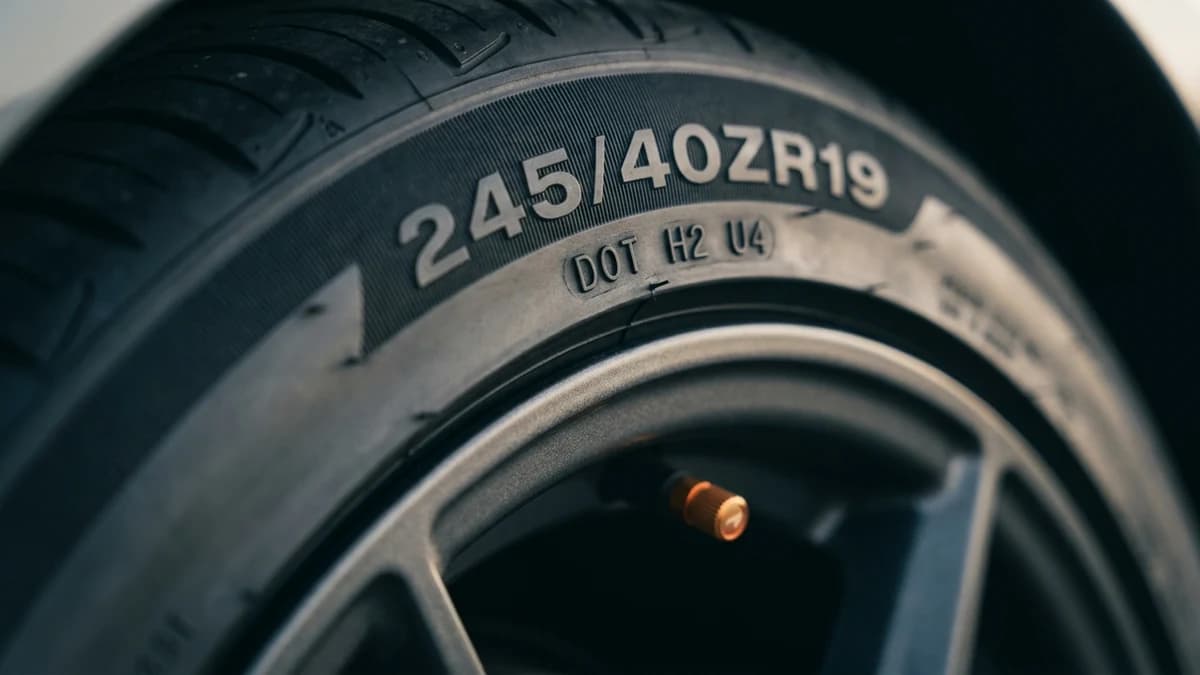
Read the last four digits of the DOT code on the sidewall: the first two are the week and the last two the year, so 2319 means the 23rd week of 2019. Our tire age decoder does the subtraction for you. Three steps get you to the number:
- Find the letters DOT. Follow the sidewall string that begins with
DOT. It also contains plant and manufacturer codes. - Locate the final four digits. On a modern tire, those four digits are the manufacture date. The first pair is the production week, from 01 to 53; the second pair is the two-digit year.
- Check the other sidewall if the date is missing, as the next section explains.

| Code | Decode | Age in July 2026 |
|---|---|---|
1424 | 14th week of 2024 | About 2 years |
5021 | 50th week of 2021 | About 4.5 years |
2319 | 23rd week of 2019 | About 7 years |
0816 | 8th week of 2016 | More than 10 years |
What if my tire doesn't have a date code?
Look at the other sidewall before you assume it has none. NHTSA explicitly notes that the complete Tire Identification Number may not be printed on both sides, so the outer face can show a partial DOT string while the four-digit date faces the car. Turn the steering wheel for front-tire access, or ask a tire shop to read it safely.
Worth knowing: the manufacture date starts the age clock even if the tire sat in storage before installation. Service history still matters, but "I barely drove it" does not reset the rubber.
Age × tread × condition: the replacement matrix
Use the structured decision table above as the fast answer. It deliberately does not invent one universal expiration date. NHTSA says some vehicle and tire manufacturers recommend replacement at six to ten years regardless of tread. Michelin's current guidance calls for annual professional inspection after five years of service and replacement by ten years from manufacture, including spares. Your vehicle maker or tire maker may set a more conservative limit, and that specific guidance governs.
The hard stops do not wait for a birthday. Replace, or get immediate professional advice, for any of these:
- Bulges, exposed cords, or separation
- Deep cracking
- An unrepairable puncture
- Repeated loss of pressure
- A new vibration that inspection traces to the tire
NHTSA also says the tire is unsafe at 2/32 inch tread depth.
Why legal tread is not an age test
Tread depth is visible, familiar, and easy to measure. Age-related change happens throughout the tire and is influenced by heat, climate, maintenance, and storage. NHTSA identifies sunlight, warmer climate, poor storage, poor maintenance, and infrequent use as contributors to tire aging. That is why two tires with the same date can deserve different urgency while neither should be judged by tread alone.
Rule of thumb: age and tread are parallel clocks, and the first limit reached wins. A nine-year-old tire with plenty of tread is not "new" — it is an old, low-wear tire. Conversely, a three-year-old tire at 2/32 inch is already due on tread.
The two tires people forget
The spare
A spare ages while doing nothing. Its tread may look untouched because it is untouched. Read its DOT code, inspect for cracking, and check pressure on the schedule in your owner's manual. NHTSA warns that a full-size spare should not become the routine replacement for a worn road tire except in an emergency. Michelin includes spares in its ten-year maximum guidance.
The low-mileage second car
A convertible, inherited sedan, or occasional-use truck can take a decade to wear its tread. Ask for the tire date when buying any low-mileage used vehicle; odometer mileage cannot date the tires. Long storage outdoors or in a hot climate moves the condition column in the wrong direction even when annual miles stay tiny.
A five-minute monthly check
- Read and record all five date codes once, including the spare.
- Measure tread at several points, not only the best-looking groove.
- Scan both sidewalls for bulges, cuts, cracking, and deformation.
- Look for uneven wear across the tread.
- Check cold pressure against the driver's-door placard using our tire pressure guide.
- Investigate new vibration, noise, pulling, or repeated pressure loss.
A portable tire inflator can correct pressure. It cannot correct age, damage, or exhausted tread. If a tire repeatedly needs air, find the leak rather than turning inflation into a ritual.
What most people get wrong
They ask for "the" tire expiration age. NHTSA does not publish one federal replacement birthday for every passenger tire; it points owners to the differing six-to-ten-year recommendations from vehicle and tire makers. The honest decision therefore has two layers: follow the most specific maker guidance available, and replace sooner when tread, damage, performance, or storage conditions demand it.
That uncertainty is not permission to ignore the date. It is the reason to read the code, know the applicable policy, and stop letting tread depth answer a question it was never designed to answer.
Your next step