Check Engine Light: Solid vs Flashing, and How to Read the Code Yourself
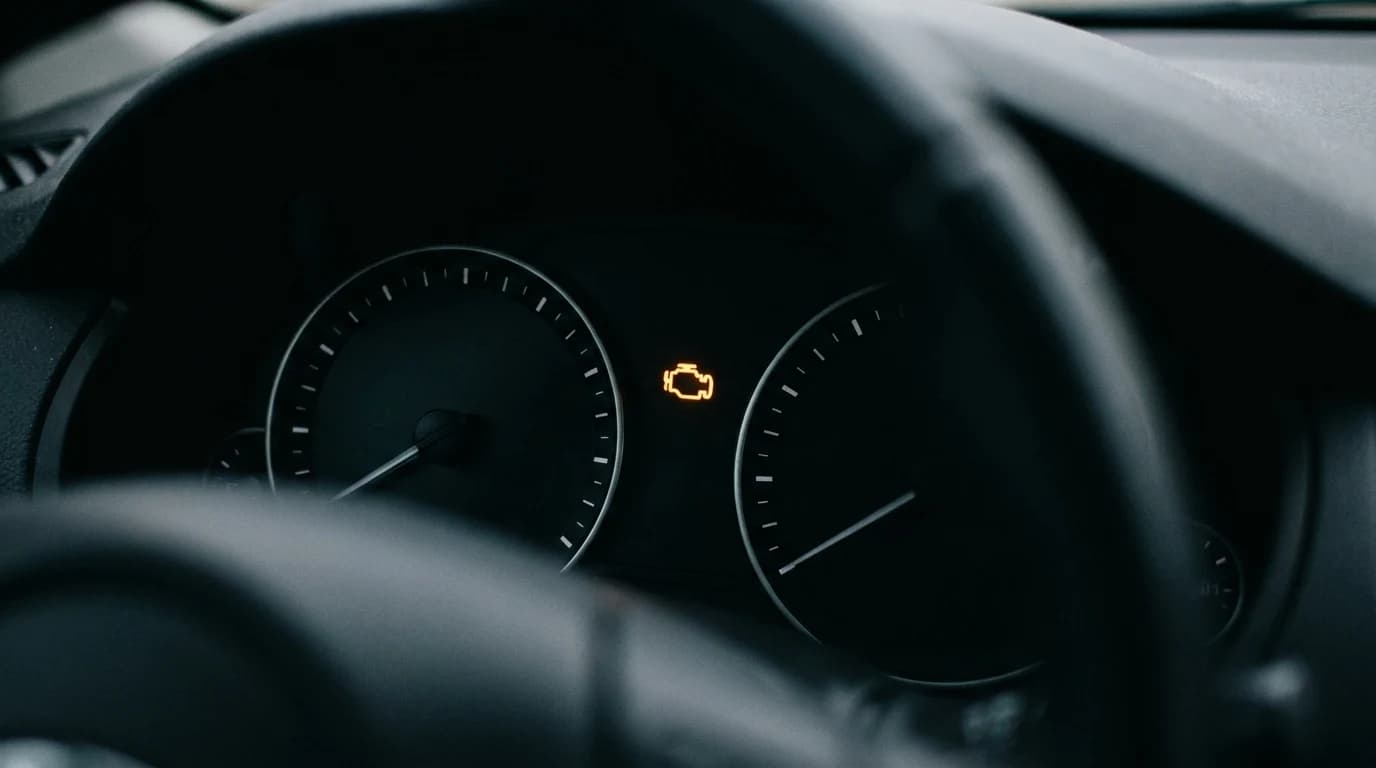
A steady check engine light means the car has stored an emissions-related fault: tighten the fuel cap, drive a few trips, and get the code read if it stays on. A flashing light means a misfire that can damage the emission control system and catalytic converter, so slow down, avoid hard acceleration and get to a shop soon. AutoZone and O'Reilly read codes free, or a code reader does it in your driveway.
Key takeaways
- Steady means a fault is stored; flashing means a misfire. Chevrolet, Nissan and Mazda all tell owners to slow down while it flashes.
- The Nevada DMV says a flashing light can cause immediate damage to the catalytic converter, and to get the car to a shop right away.
- Check the fuel cap first. Toyota's Tundra manual says to tighten it until it clicks, and the light should go off after several driving trips.
- Read the code yourself at the 16-pin port under the driver's side of the dash. The first letter names the system and a 0 in second place marks a generic SAE code.
- Clearing a code is not a repair. Autel says erasing also resets the emissions readiness monitors, and the code returns if the fault is still there.
- AutoZone and O'Reilly read codes free in store. A scanner of your own adds pending codes, readiness checks and a clear after the fix.
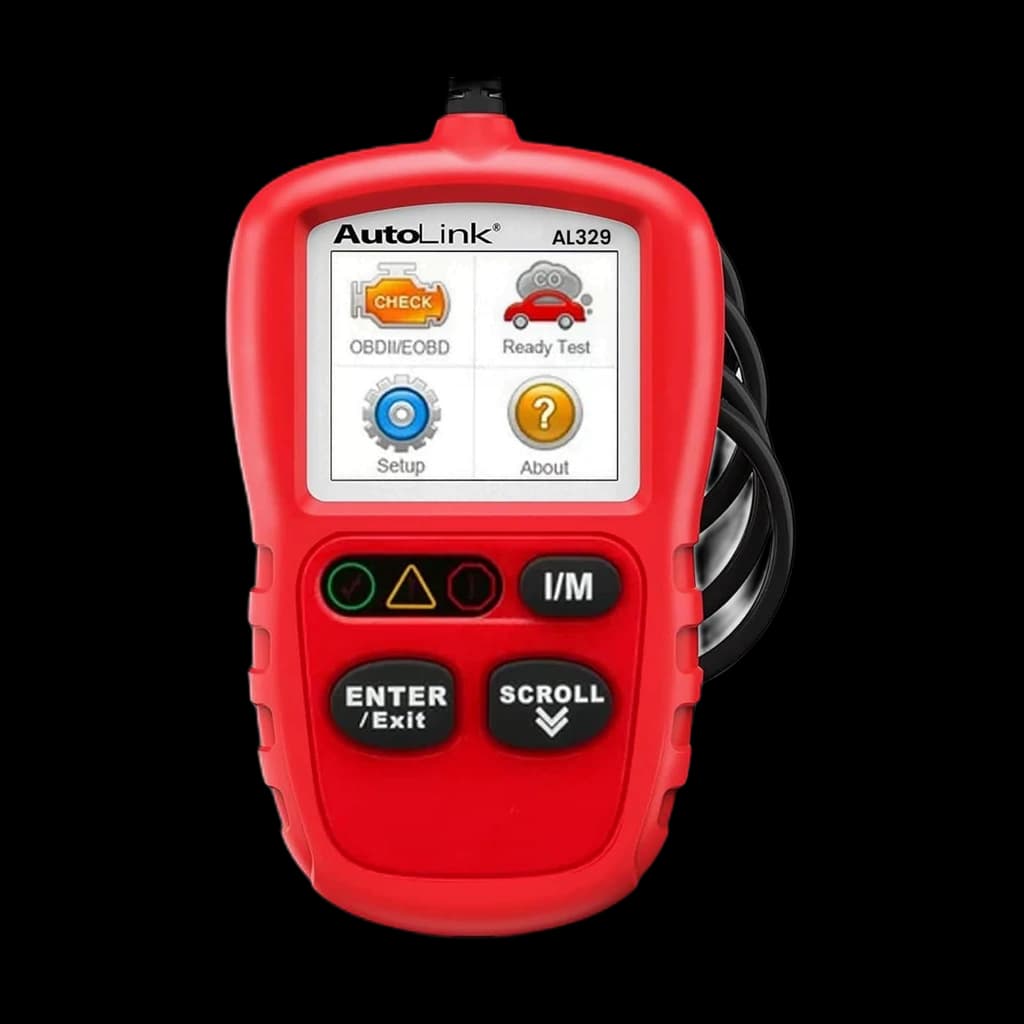
Autel AutoLink AL329 — enhanced OBD-II code reader (upgraded AL319)
- One-click I/M readiness check confirms smog-test state before you drive to the station
- Standalone handheld — no phone app, subscription or fees
- AutoVIN, Mode 6, freeze-frame and graphable live data on a color screen
Researched as the right tool for this job: it reads and clears engine codes, shows pending and permanent codes and freeze-frame data, and has a one-click emissions readiness key, on a standalone handheld that needs no phone app.
What the light is doing, and what to do next
| If your situation is… | Pick | Why |
|---|---|---|
| Light flashes while driving | Slow down, keep the load light, get it to a shop | Chevrolet, Nissan and Mazda all say to reduce speed, and the Nevada DMV warns a flashing light can cause immediate catalytic converter damage. |
| Steady light right after refueling | Tighten the cap until it clicks, then drive a few trips | Toyota and Nissan both list a loose cap as a first check and say the light should go off after several driving trips once it is fixed. |
| Steady light, cap is tight, car feels fine | Get the code read this week | Chevrolet says malfunctions are often flagged before any problem is noticeable, and the Nevada DMV says a car with the light on is likely polluting more and wasting fuel. |
| The light came back after a code was cleared | Fix the cause, not the code | Autel's code-reader manual says codes return if the underlying fault is not addressed, and permanent codes survive both a scan tool and a battery disconnect. |
| Emissions test coming up after a repair, jump start or new battery | Drive normally first, then check readiness | The Nevada DMV rejects cars whose monitors are not ready, and says they can need up to a week of mixed driving after codes are cleared or the battery is disconnected. |
Use this row to shortcut by situation.
A check engine light means the car's emissions computer has stored a fault. How it lights up tells you how fast to act: steady means book a diagnosis, flashing means slow down now. Either way, the code behind it can be read free at a parts store or with your own scanner, and that code is where the diagnosis starts.
Solid or flashing: what to do right now
| What the light does | What it means | Do this now |
|---|---|---|
| Comes on with the ignition, then goes out | A bulb check | Nothing |
| Stays on steady while driving | A fault is stored as a code | Check the fuel cap, then get the code read |
| Steady, with a check-fuel-cap message | The cap may be loose or missing | Tighten it, drive a few trips |
| Flashes while driving | A misfire that can damage the emission control system | Slow down, avoid hard acceleration, get it serviced |
A steady light does not mean pull over, but don't sit on it: the Nevada DMV says to seek service immediately, because a car that feels normal is likely still polluting more and wasting fuel.
Our pick
Autel AutoLink AL329 — enhanced OBD-II code reader (upgraded AL319)
What the check engine light actually is
Officially it is the malfunction indicator lamp, or MIL, part of the OBD-II system that the Nevada DMV describes as standard on every 1996 and newer light-duty vehicle sold in the US. For 2017 and newer vehicles, EPA's onboard-diagnostics rule requires it to detect emission control malfunctions, store trouble codes and alert the driver.
So it is an emissions light first. Chevrolet's 2024 Silverado 1500 manual adds a useful point: malfunctions are often flagged before any problem is noticeable.
Flashing means misfire: slow down now
Manufacturers word it differently but agree on the action:
- Chevrolet (2024 Silverado 1500): a malfunction that could damage the emission control system. Reduce speed, avoid hard acceleration and uphill grades, and if towing, haul less. If it keeps flashing, park, switch off for at least 10 seconds and restart; if it still flashes, see a dealer as soon as possible.
- Nissan (2013 Altima): an engine misfire that may damage the emission control system. Stay under 45 mph, avoid hard acceleration, hard deceleration and steep grades, and reduce cargo. Nissan says the car does not need to be towed.
- Mazda (2026 CX-90 PHEV): park somewhere safe and contact a dealer when the light comes on; if it stays on or keeps flashing, do not drive at high speed and have the car inspected as soon as possible.
The Nevada DMV names the part at risk: a flashing light can cause immediate damage to the catalytic converter, so stop driving and get the car to a shop right away.
A flashing light is the one to act on today. It means a misfire that can damage the emission control system, so slow down, keep the load light and get the car to a shop.
One cause to avoid: Genesis's 2024 G80 manual warns that driving with the low-fuel light on can make the engine misfire and damage the catalytic converter.
A steady light: check these first
- The fuel cap. Toyota's 2024 Tundra manual says to check first whether the tank is empty and whether the cap is loose. Tighten it until it clicks; Toyota says the light goes off after several driving trips. Nissan and Mazda list a loose or missing cap too.
- A capless filler. Chevrolet says the system can detect a capless funnel adapter left installed after refueling from a can.
- The fuel. Running very low is on Mazda's and Nissan's lists, and Chevrolet says poor fuel quality can trigger the light.
- Recent changes. Chevrolet cautions that engine, exhaust, intake or fuel-system modifications, or off-spec tires, can turn it on.
- Then read the code. If none of that applies, or the light survives several trips, the code tells you where to look.
Why a cap matters: the system checks the fuel vapor system for leaks. EPA's rule for 2017 and newer vehicles requires the system to detect a leak as small as 0.020 inch across (vehicles with tanks over 25 gallons can be approved for up to 0.040 inch), light the MIL and store a code such as P0456.
How to read the code yourself
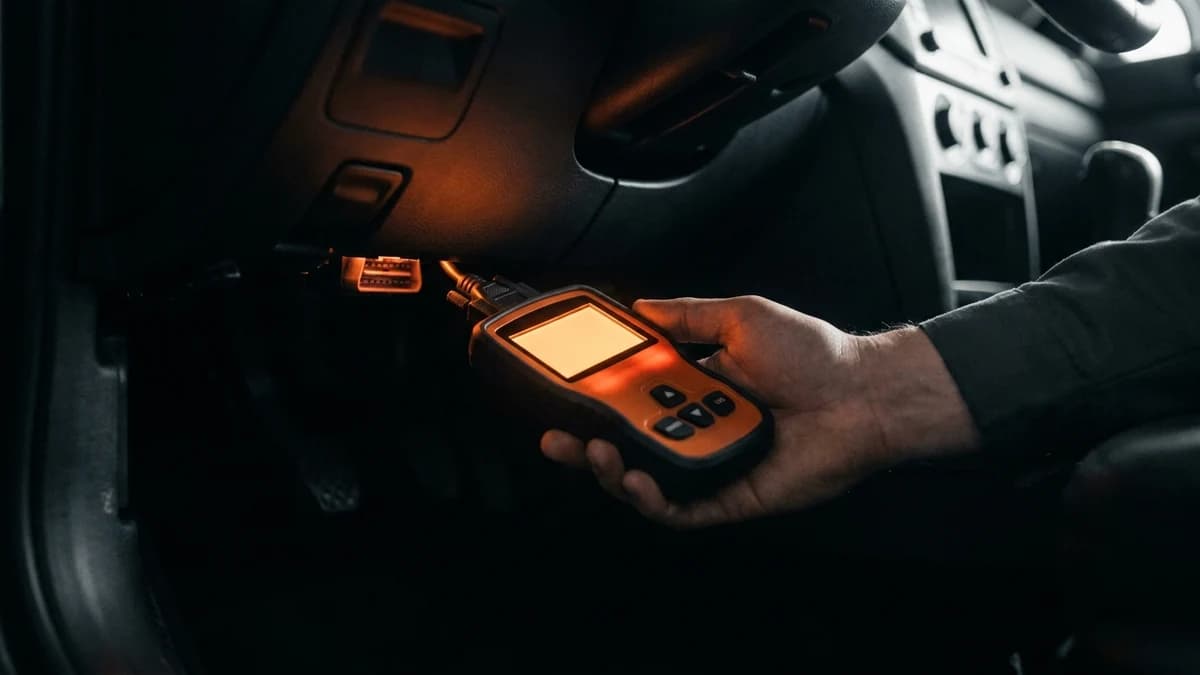
Every OBD-II car has the same 16-pin connector. Autel's MS309 manual places it under the dash on the driver's side on most vehicles, and behind the ashtray on some Asian and European models.
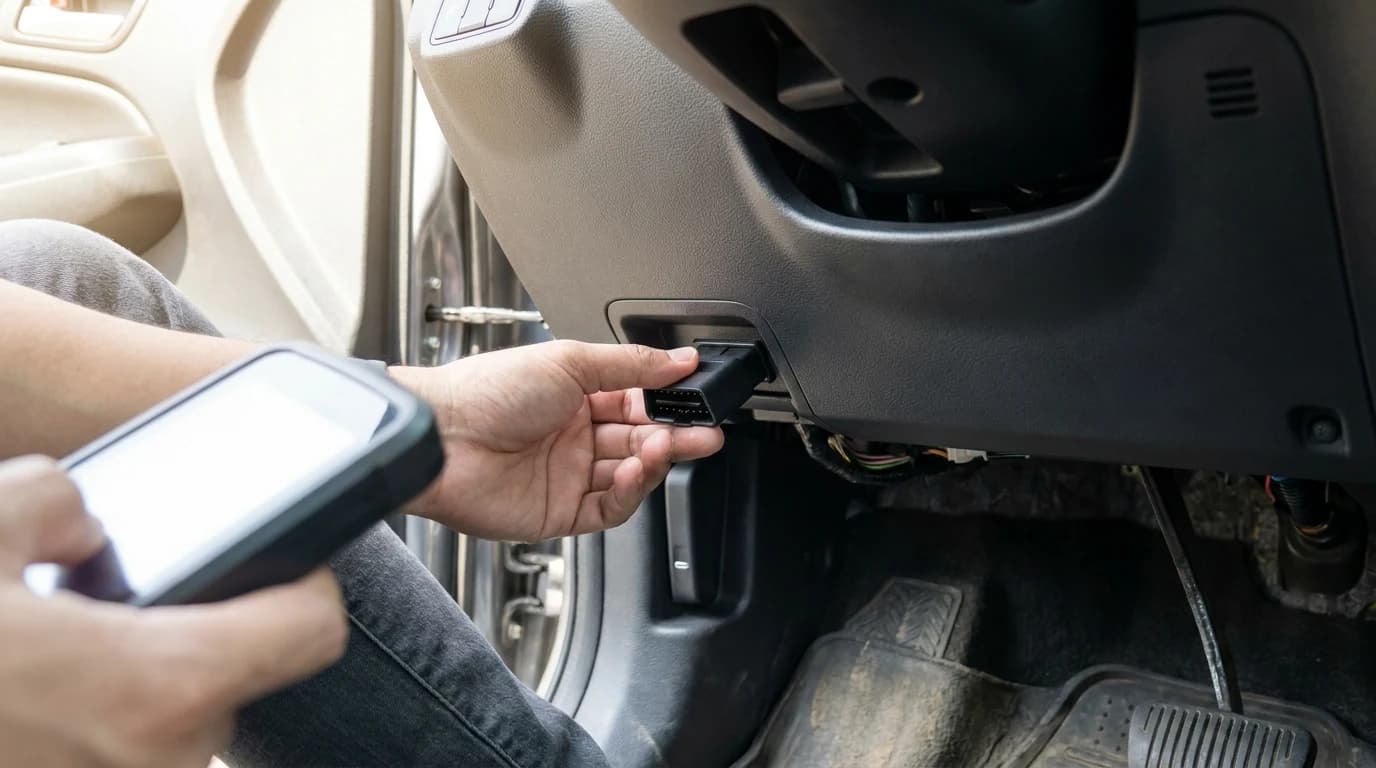
With a handheld reader, per Autel's AL329 manual:
- Turn the ignition off and plug the reader in.
- Turn the ignition on. The engine can be off or running.
- Choose OBD-II and let the tool detect the car.
- Read stored codes, then pending codes, and write each one down.
A Bluetooth scanner uses your phone instead. BlueDriver's setup: key on, engine off, plug the sensor in, connect from the app.
What you will see:
- Stored codes are confirmed faults, the ones that turn the light on.
- Pending codes were seen in the current or last drive cycle but have not matured, and do not light the MIL.
- Permanent codes stay until the car confirms the fault is gone.
How to read a P-code
Codes are five characters. This breakdown follows Autel's MS309 manual (its own example is P0202), applied here to P0456.
| Position | In P0456 | What it tells you |
|---|---|---|
| 1st, a letter | P | System: P powertrain, B body, C chassis, U network |
| 2nd, a digit | 0 | 0 (and 2) is a generic SAE code, 1 is manufacturer-specific |
| 3rd, a digit | 4 | Subsystem: 1 and 2 fuel and air, 3 ignition or misfire, 4 auxiliary emission controls, 5 speed and idle, 6 computer outputs, 7 and 8 transmission |
| 4th and 5th | 56 | The specific fault |
Autel calls a code a guide to where a fault might be occurring, not a verdict on which part failed.
A code points at an area, not a part. Treat it as where to start looking, and diagnose before you buy parts.
Clearing the code is not fixing it
Autel's AL329 manual says erasing removes the codes, the freeze-frame data and the readiness status of every emissions monitor, and that the codes come back if the fault is not fixed.
What actually turns the light off:
- Fixing the fault, then clearing the code
- Fixing a loose cap and driving; Nevada says the light may go off by itself after a few days
What only hides it, briefly:
- Clearing codes before a repair, or right before an inspection, which Nevada rejects as not ready
- Disconnecting the battery, which Nevada says also erases the computer's memory; Mazda's CX-90 PHEV manual says not to do it while the light is on
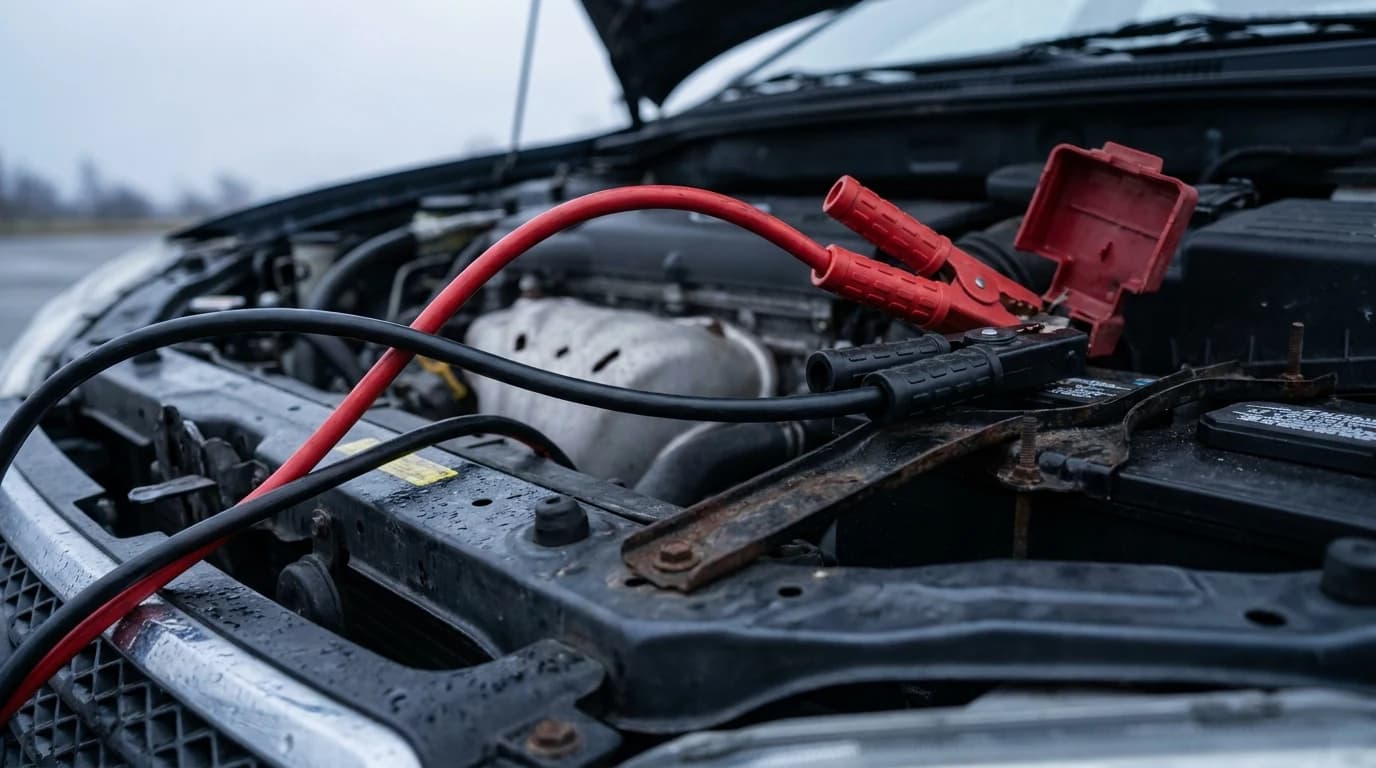
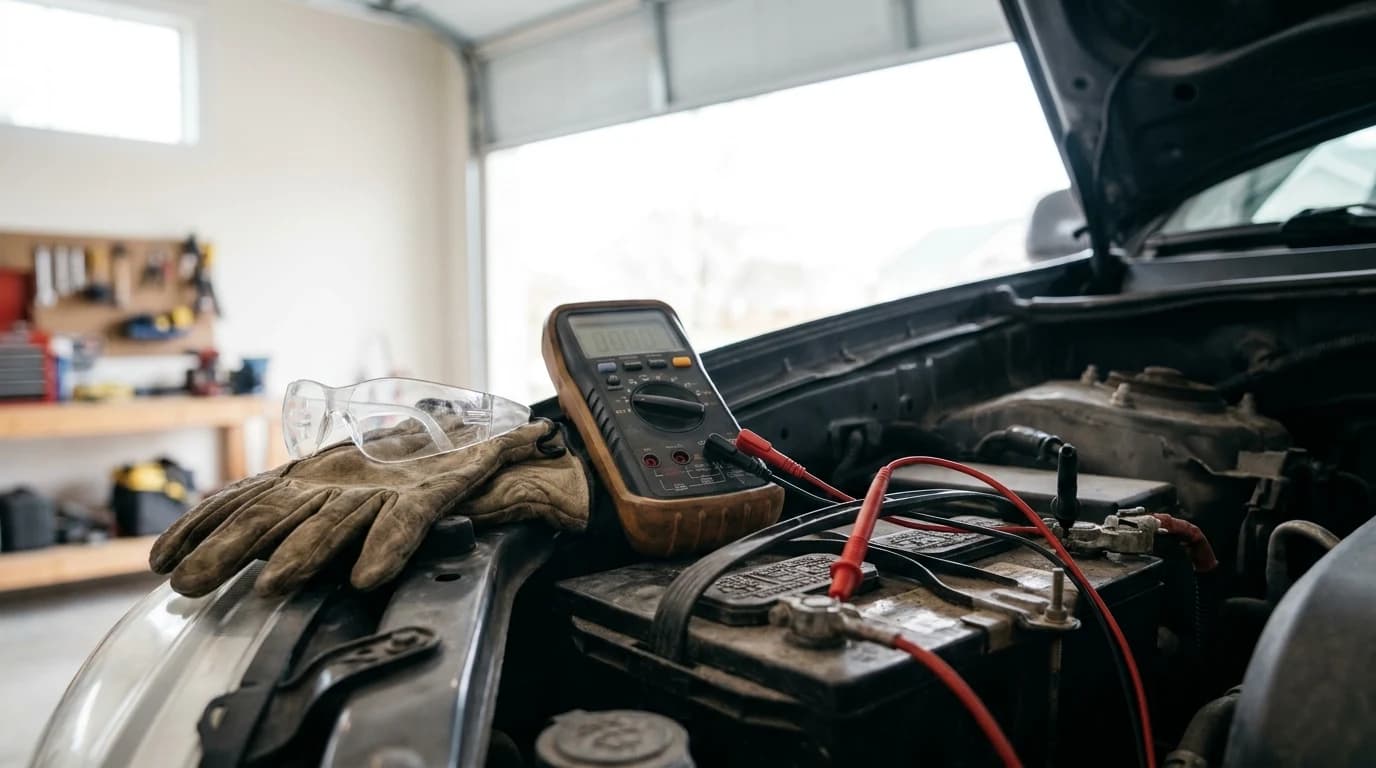
Autel adds that permanent codes survive any scan tool and a power disconnect. A dead or replaced battery resets the monitors too, and Nevada says they can need up to a week of mixed driving, so after a jump start drive normally before an emissions test.
A free code read, or your own scanner?
| Option | What you get | The catch |
|---|---|---|
| AutoZone Fix Finder | Free in-store read of check engine, ABS and maintenance lights, with emission readiness | The page does not mention clearing codes |
| O'Reilly VeriScan | Free code read for 1996 and newer vehicles, no appointment | O'Reilly says it does not replace a full mechanical inspection |
| Your own scanner | Codes, pending codes and readiness any time, and a clear after the repair | You pay once |
A free read answers why the light is on today. A scanner earns its keep when the light returns or a smog test is due.
The Autel AutoLink AL329 at $34.98 is our budget pick: it reads and clears engine codes and has a one-click emissions readiness key, on a standalone handheld. BlueDriver adds ABS, airbag and transmission codes and repair reports on your phone, with no subscription. Our best overall, the Autel MaxiCOM MK808S, suits people who do the repair too.
The OBD2 scanner chooser narrows it in three questions, BlueDriver vs the MK808S compares the two most-asked tools, and the OBD2 scanner guide covers ownership costs. Every ranked tool is in the OBD2 scanners category.
📋 The short version. Flashing: slow down and get it to a shop. Steady: tighten the cap, drive a few trips, then read the code. Clear it only after the fix.
Your next step
Read the code yourself, then choose the scanner depth the job actually needs.
Common questions
Can I drive with the check engine light flashing?
Why is my check engine light flashing but the car runs fine?
Can low oil cause the check engine light to come on?
Can AutoZone clear my check engine light?
How long after tightening the gas cap will the check engine light go off?
Will disconnecting the battery reset the check engine light?
Research Sources
- Nevada DMV — On-Board Diagnostics System: steady vs flashing light, gas cap, clearing codes and readiness
- Washington State Department of Ecology — Frequently Asked Questions about On-Board Diagnostics (OBD) and Emission Testing (PDF)
- eCFR — 40 CFR 86.1806-17 Onboard diagnostics (EPA rule for 2017 and later vehicles)
- Chevrolet 2024 Silverado 1500 Owner Manual (PDF) — Malfunction Indicator Lamp (Check Engine Light)
- Nissan 2013 Altima Owner's Manual (PDF) — Malfunction Indicator Light (MIL)
- Toyota 2024 Tundra Owner's Manual (PDF) — fuel tank cap and malfunction indicator lamp
- Mazda 2026 CX-90 PHEV Owner's Manual — Check Engine Warning Light
- Genesis 2024 G80 Owner's Manual (PDF) — Malfunction Indicator Lamp and low-fuel misfire warning
- Autel MaxiScan MS309 User Manual (PDF) — DTC structure and data link connector location
- Autel AutoLink AL329 User Manual (PDF) — reading and erasing codes, pending and permanent codes, I/M readiness
- BlueDriver — Bluetooth scan tool product page: setup steps and no-subscription statement
- AutoZone — Free Fix Finder Service (in-store warning light report)
- O'Reilly Auto Parts — Free Check Engine Light Test with O'Reilly VeriScan