Quick Answer
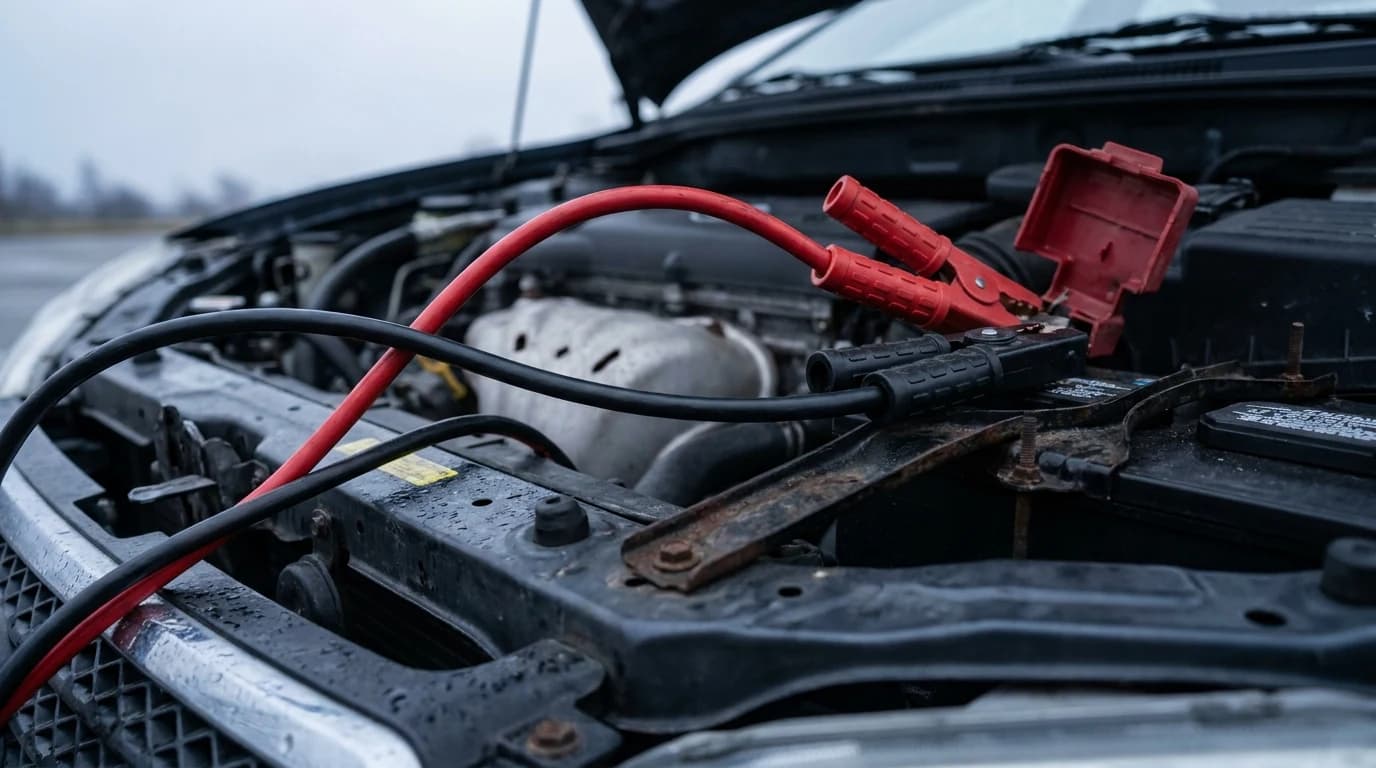
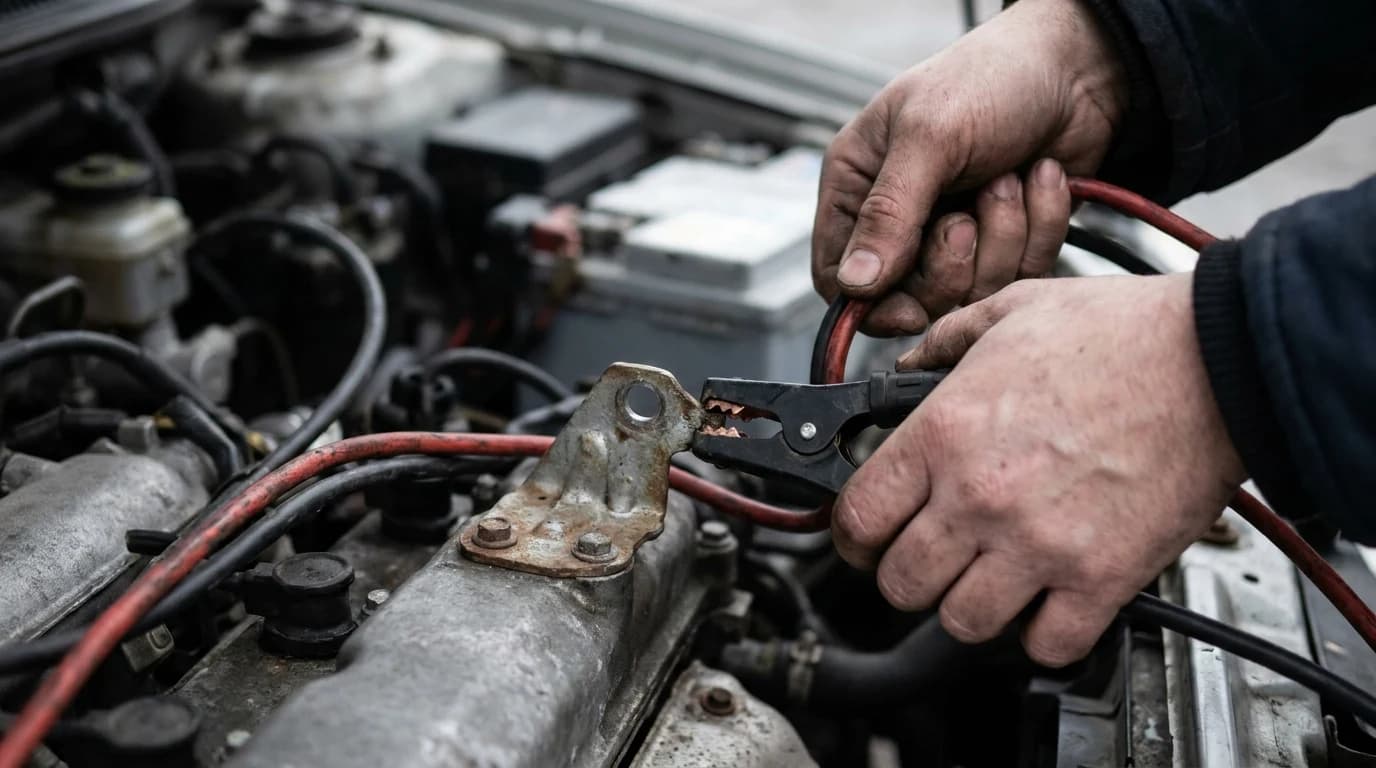
Turn both vehicles off. With jumper cables: red to the flat battery's positive post, red to the donor's positive post, black to the donor's negative post, and the final black clamp onto heavy unpainted engine metal or a remote negative terminal on the dead car — never onto the flat battery's negative post, because Chevrolet's manual warns that connection can cause sparks and that a battery contains gas that can explode or ignite. Remove the cables in the exact reverse order. With a lithium jump pack the rule is different: NOCO's GB40 guide tells you to clamp the black lead to the negative terminal or the chassis, because the pack keeps its output off until it detects a correctly connected battery. If it will not start after about five attempts, stop.
Key takeaways
- The cable rule and the pack rule genuinely differ. GM's owner manual forbids the black clamp on the flat battery's negative post; NOCO's jump-pack guide lists that same post as an approved connection. Cables are live from the donor car, a pack is not until it recognises the battery.
- Your manual names a specific ground point, and it is not always "any bare metal". On one Chevrolet truck the correct ground changes with the engine — an engine bracket, the generator bracket, or the auxiliary battery's negative post.
- Both makers publish a stopping rule. NOCO caps a pack at five consecutive attempts in fifteen minutes; GM says a vehicle that will not start after a few tries probably needs service.
- A jump starts the engine, it does not recharge the battery. A car that goes flat again within days needs a charger or a diagnosis, not a second jump.
Jump it, charge it, or call someone
| If your situation is… | Pick | Why |
|---|---|---|
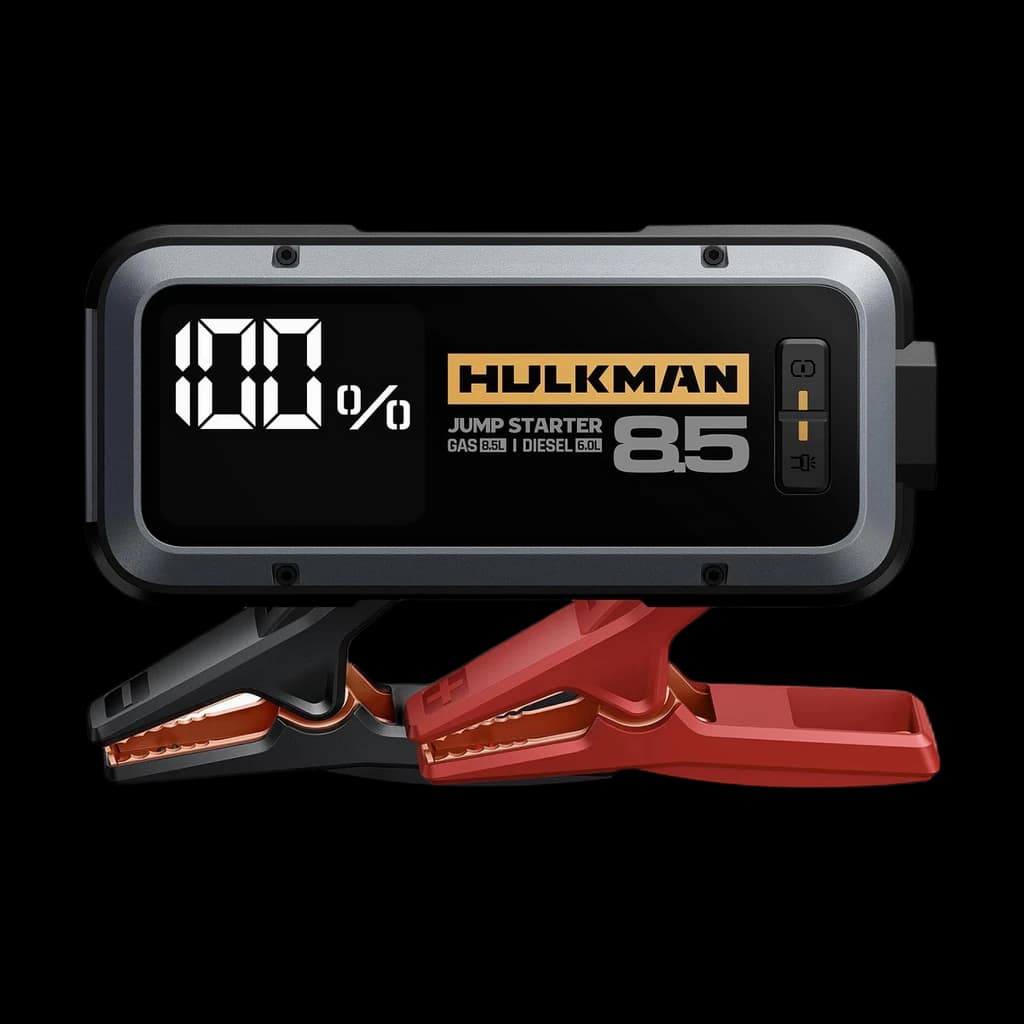
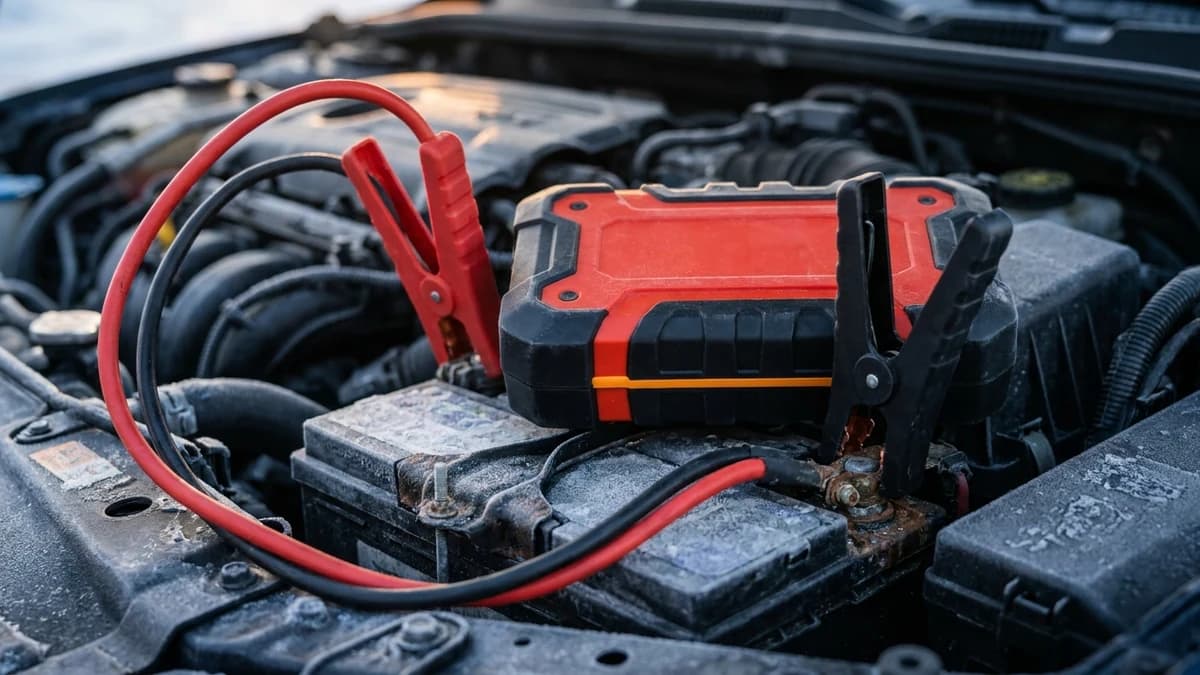
| Nobody around to help, or no second vehicle you would ask | Lithium jump pack, kept charged | It is the only option that works alone, and the pack's own detection circuitry is why its manual allows the clamp positions bare cables do not. |
| A willing donor car is already beside you and you own cables | Jumper cables, grounded on the engine | No charge to run down, and the sequence is written in your owner's manual — provided the last clamp lands on engine metal, not the flat battery's negative post. |
| It jumps fine, then is flat again a few days later | Charger or maintainer, overnight | A jump starts the engine without refilling the battery; a repeat flat means the battery or a drain, and another jump only buys another day. |
| The battery case is swollen, split or leaking, or it may be frozen | Roadside assistance or a tow | NOCO's guide says outright not to attempt a jump start on a damaged or frozen battery, and the failure mode here is the one the warning labels are about. |
| Five attempts in and the engine still will not turn over | Stop and call for service | NOCO caps a pack at five consecutive attempts per fifteen minutes and GM tells owners a car that will not start after a few tries probably needs service. |
Use this row to shortcut by situation.
Two sets of official instructions exist for reviving a dead 12-volt battery, and on the single most-argued detail they contradict each other. Chevrolet's owner manual tells you never to clamp the black cable to the flat battery's negative post. NOCO's manual for its jump pack says that post is fine.
Both are correct. What decides it is not the clamp — it is what is on the other end of the black lead.
The short version: with jumper cables and a donor car, the final clamp goes on bare, unpainted metal on the dead car's engine, well away from the battery. With a lithium jump pack, follow the pack's own manual, because most modern packs are designed to be clamped straight onto the terminals.
The two procedures, side by side
| # | Jumper cables and a donor car | Lithium jump pack |
|---|---|---|
| 1 | Both vehicles off, close enough to reach but not touching | Vehicle off, accessories off; clamps into the pack's 12V output port |
| 2 | Red clamp to the flat battery's positive post | Red clamp to the flat battery's positive post |
| 3 | Other red clamp to the donor's positive post | — |
| 4 | Black clamp to the donor battery's negative post | Black clamp to the negative post or the chassis |
| 5 | Final black clamp to heavy unpainted engine metal on the dead car | Power on, wait for the ready indicator |
| 6 | Start the donor, let it run, then crank the dead car | Crank — up to 30 seconds connected first is normal |
| 7 | Remove in the exact reverse order | Remove in reverse, negative lead first |
That cable sequence is Chevrolet's own, down to the detail almost every guide leaves out: if the two vehicles touch, GM warns, the contact can create an unwanted ground connection that stops the jump working and can damage the electrical systems. Reversing the sequence exactly on removal is in there for the same reason — out of order, the cables can short.
"Heavy unpainted engine metal" is the fallback, not the instruction. GM points first to a remote negative terminal if the vehicle has one, then names a different ground point per engine on the same truck: an engine-mounted bracket on the 4.3L, 5.3L and 6.2L; the generator bracket on the 6.0L; the auxiliary battery's negative post on the 6.6L diesel. Your manual has the equivalent page — read it parked at home, not by phone light.
Why the last clamp goes anywhere but the battery
GM's manual states the two halves of the reason a few pages apart and never joins them.
- In the warning box explaining why batteries are dangerous: they contain gas that can explode or ignite, and using an open flame near one can make that gas explode — "people have been hurt doing this, and some have been blinded."
- In the connection steps: do not connect the negative cable to the negative terminal on the dead battery, because this can cause sparks.
The gas is hydrogen, and the workplace-safety literature is where it is quantified. OSHA's interpretation of the Hazard Communication Standard states plainly that lead-acid batteries "have the potential to emit hydrogen gas, which may result in a fire or explosion upon ignition." The Canadian Centre for Occupational Health and Safety puts the explosive range at 4.1 to 72 percent hydrogen in air — an unusually wide window.
What we can and cannot say: no document we could find states outright that the connection order exists because of hydrogen. GM writes "sparks." OSHA and CCOHS document the gas. The join between them is an inference — a well-supported one — but it is ours, not a manufacturer's claim, and we would rather label it than dress it up.
Why a jump pack is allowed to break that rule
The NOCO Boost GB40 user guide dated March 2025 gives step three as: connect the black clamp to the negative battery terminal or vehicle chassis. The terminal comes first.
The difference is when current is present. Cables from a donor car are live the moment the fourth clamp lands, so the last connection is a switch being closed. A pack holds its output off until it recognises a correctly connected 12-volt battery — the guide describes a white boost light that appears only once the connection is right, and a red error light when the clamps are reversed. NOCO calls that spark proof, and names the feature explicitly in the one place where it stops working.
That place is manual override. For a battery below 2 volts the GB40 cannot detect one at all, so NOCO provides an override that forces the jump function on — cautioning, in capitals, that in this mode "both the spark proof and reverse polarity protection features are disabled." Two more lines are worth borrowing whatever pack you own: never jump a damaged or frozen battery, and make no connections to the carburettor, fuel lines or thin sheet metal.
Manual override is the one pack mode with cable rules. Spark-proof protection is off there, so ground the black clamp on the chassis, away from the battery.
Both manufacturers tell you when to stop
The instruction almost no how-to includes is the one that saves a starter motor.
- NOCO's limit, in writing: no more than five consecutive attempts in a fifteen-minute period, then let the pack rest fifteen minutes, waiting 20 to 30 seconds between tries.
- GM's limit, in writing: "if it will not start after a few tries, it probably needs service."
A battery that refuses a jump from a good donor or a charged pack is telling you something a sixth attempt will not change.
A jump is not a charge
Starting the engine and refilling the battery are separate jobs. A battery pulled down far enough to need a jump wants hours of controlled charging, not a commute.
If the car is flat again within days, the fault is the battery or something draining it, and each extra jump buys one more day. That is the point for a charger and maintainer overnight — units such as the Schumacher SC1281 pair automatic charging with an engine-start mode, covering both jobs from a garage outlet.
What to keep in the car
- A pack works alone, at 3am, in an empty car park — and only if you charged it. Ours are ranked in portable jump starters; if the amp numbers on the boxes look invented, how many amps you actually need unpicks peak versus cranking current. The NOCO GB40 sits at the compact end of the jump starters we track.
- Cables never go flat and cost a fraction as much, but need a second vehicle and a willing stranger. They usually arrive inside a kit, bundled with the rest of the roadside gear worth carrying.
The habit that matters more than either: whichever you carry, read your own vehicle's jump-starting page once while parked at home. The ground point, the remote terminals and the accessory warnings are model-specific, and that is the page you will not be able to find when you need it.
Your next step
Choose between a portable pack and cables after checking the engine requirement.
Common questions
Which cable do you connect first when jump starting a car?
Why can't the last clamp go on the dead battery's negative terminal?
Can I clamp a portable jump starter straight onto the battery terminals?
How long should I leave the cables connected before starting the car?
Do I need to drive the car afterwards, and for how long?
Research Sources
- Chevrolet 2015 Silverado Owner Manual — Jump Starting procedure, warnings and per-engine ground points (pp. 10-91 to 10-95)
- NOCO Boost GB40 User Guide (rev. 03.07.2025) — connection sequence, attempt limits, and the manual-override caution
- OSHA Standard Interpretation (June 20, 1997) — Hazard Communication Standard: lead-acid batteries emit hydrogen gas that may cause fire or explosion on ignition
- CCOHS OSH Answers — Battery Charging, Industrial Lead-Acid Batteries: hydrogen explosive limits of 4.1 to 72 percent in air