Quick Answer
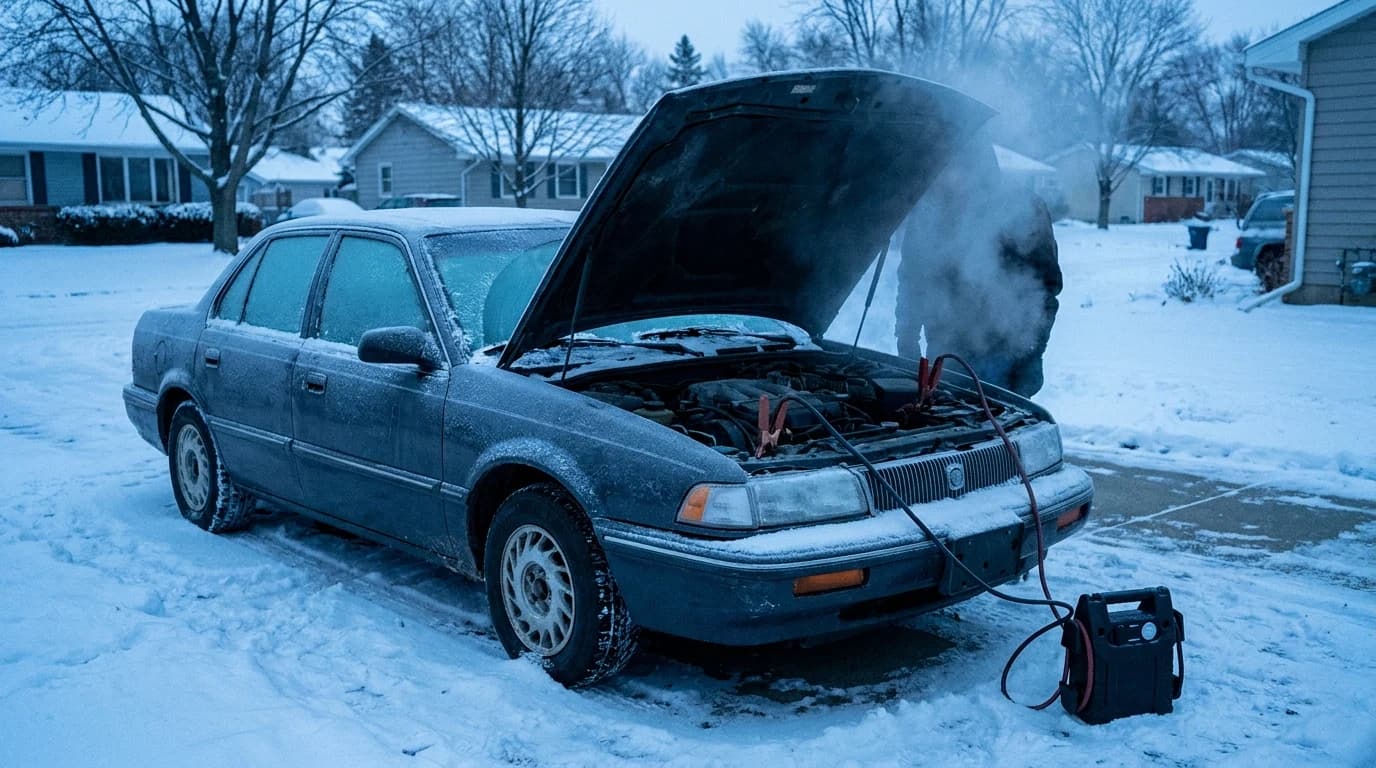
Listen to the key. Rapid clicking or a slow crank on a cold morning means the battery can't deliver enough power: stop cranking, check the clamps, jump it in the maker's order, then test the battery. NHTSA says battery power drops as the temperature falls while engines need more of it to start. If the engine cranks at full speed but won't fire, the battery is fine and the problem is fuel, spark or air. Silence with some electronics on points to a blown fuse.
Key takeaways
- Clicks and slow cranking are power problems. AAA says rapid clicking typically means there is not enough power to engage the starter.
- Full-speed cranking with no fire is not the battery. Interstate Batteries says engines need fuel, spark and air, and a new battery can mask the real fault.
- Cold works on both ends: NHTSA says battery power drops with the temperature, and AAA says starting takes 30% more energy at 32°F and 50% more at zero.
- Crank in short tries. Interstate says starters are not designed to run for more than 30 seconds at a time.
- Test the battery after any jump. AAA's Via magazine advises it, and recommends an annual pre-winter test.
- Prevention beats a jump: Zerostart says to plug a block heater in at least 3 to 4 hours ahead, and diesel owners should run winterized fuel to avoid gelling.
Side-by-side comparison
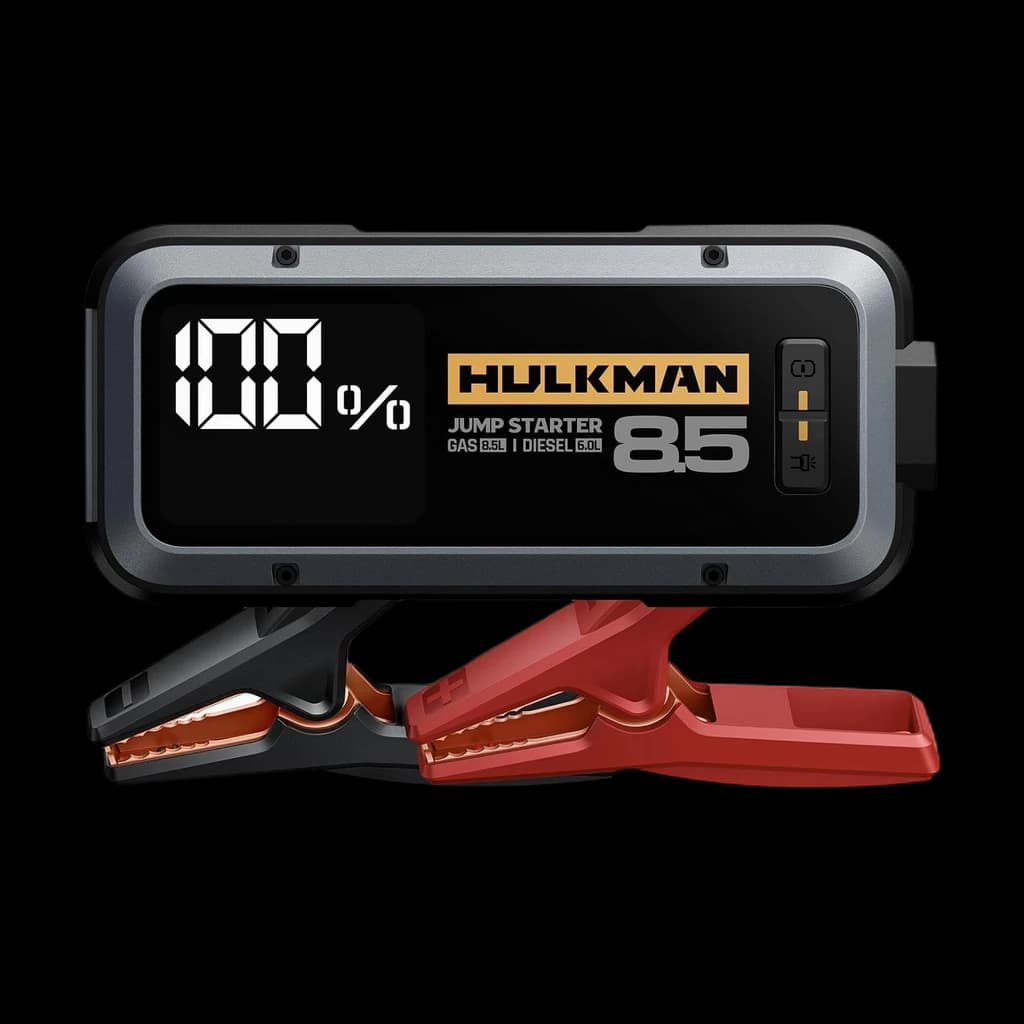
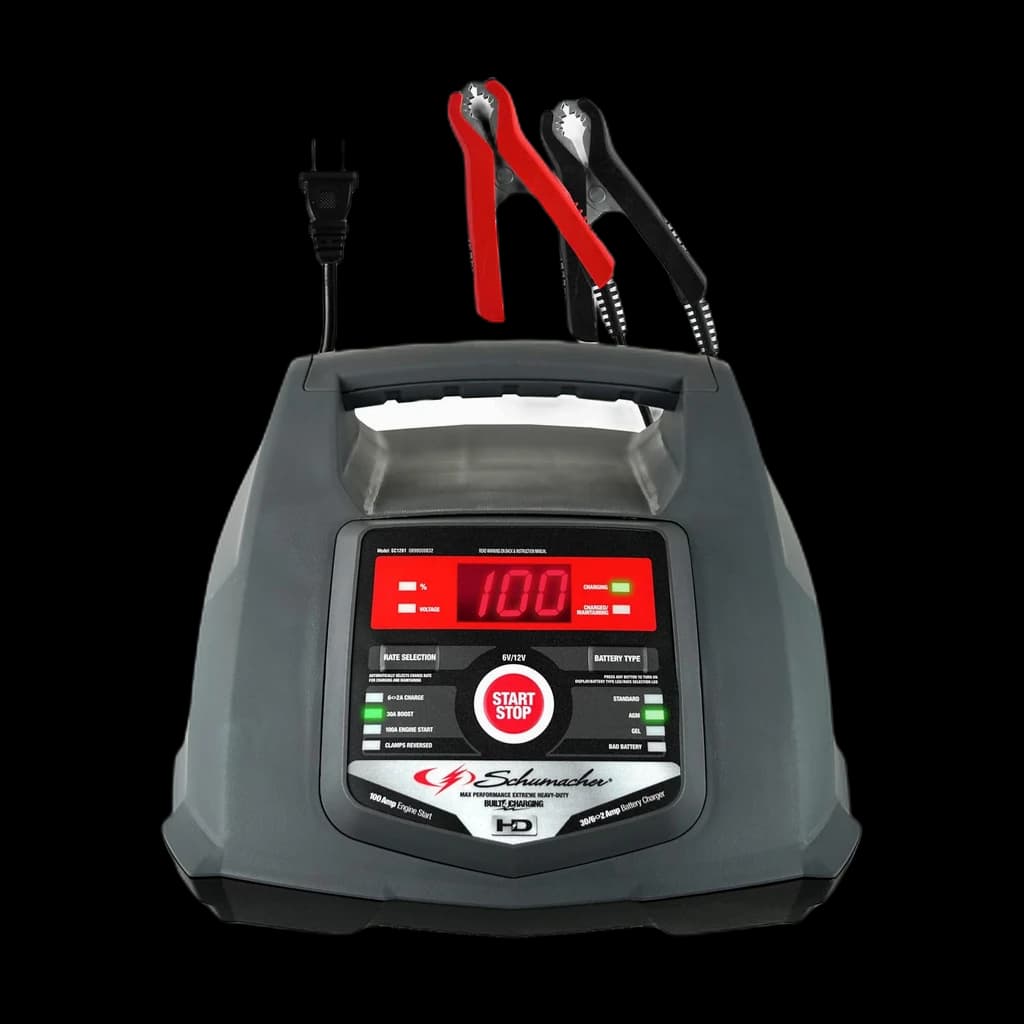
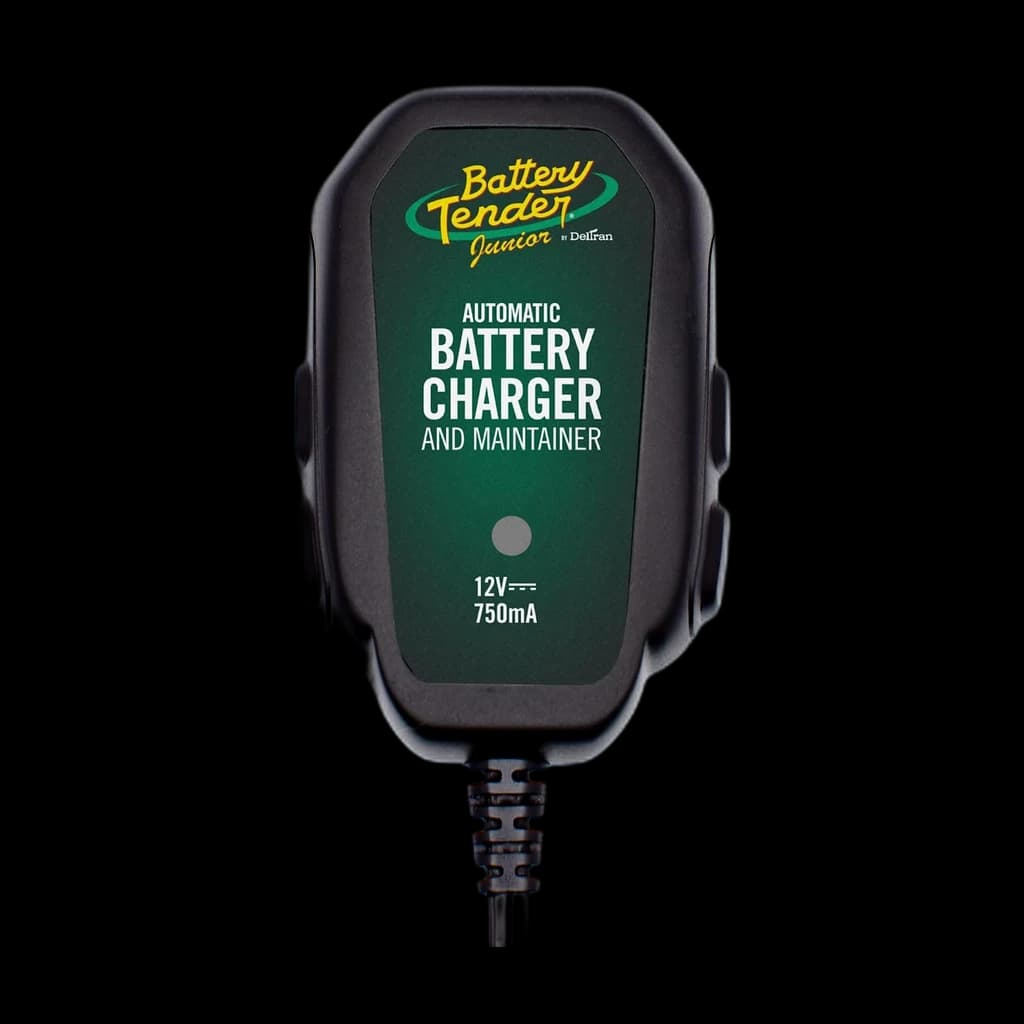
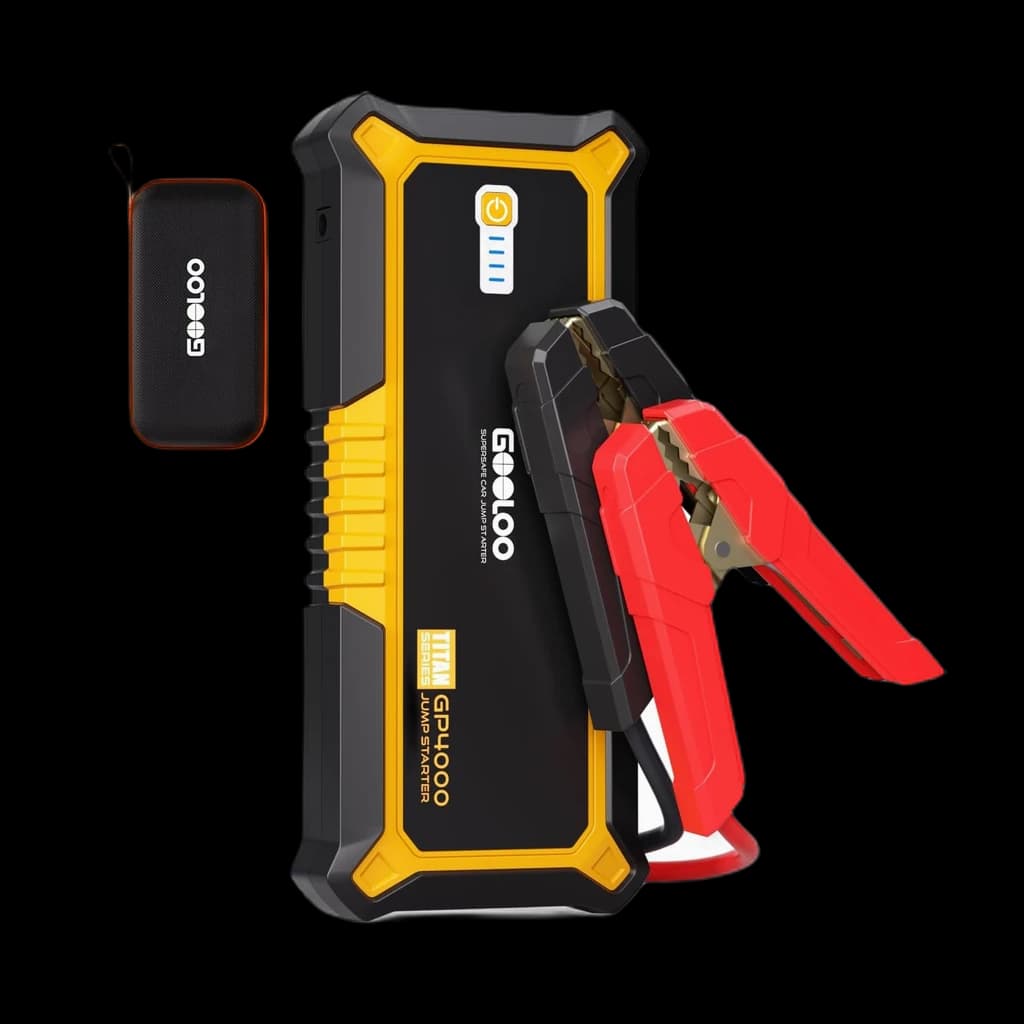
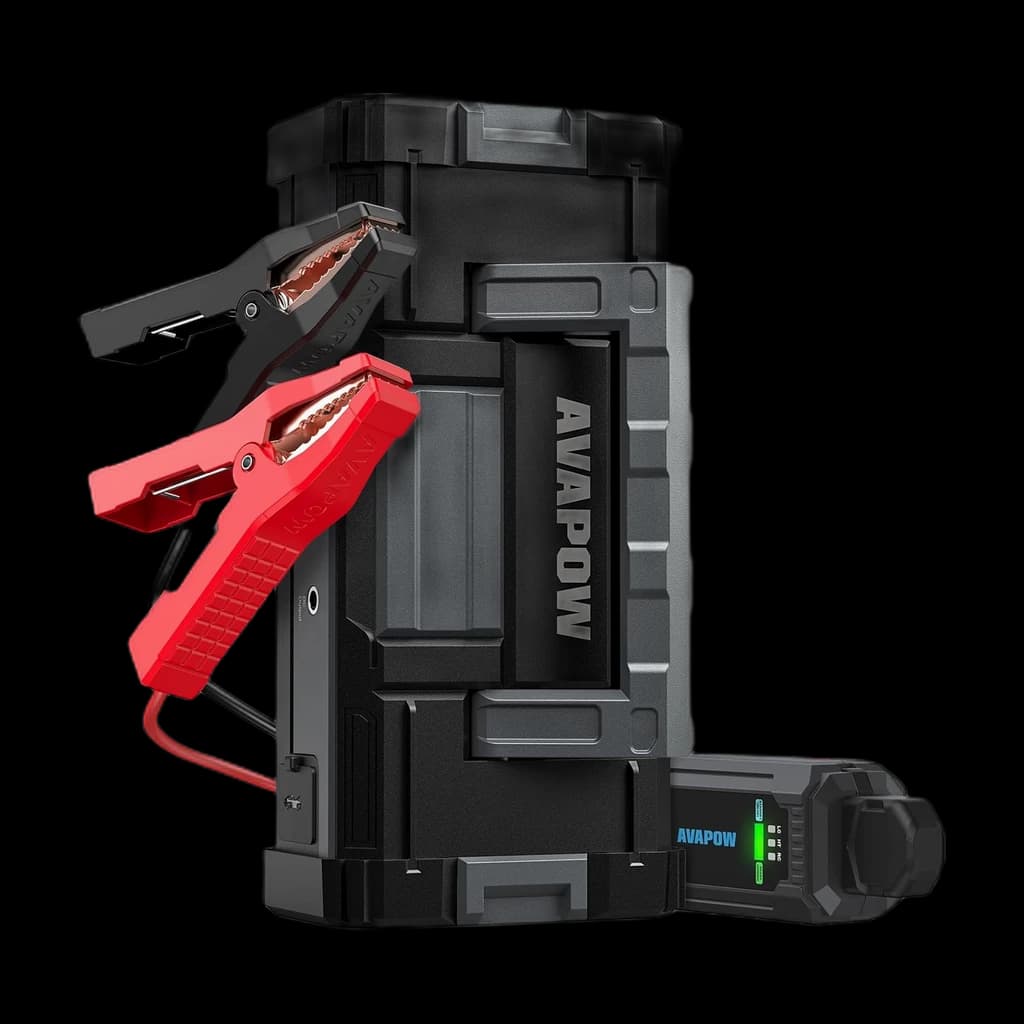
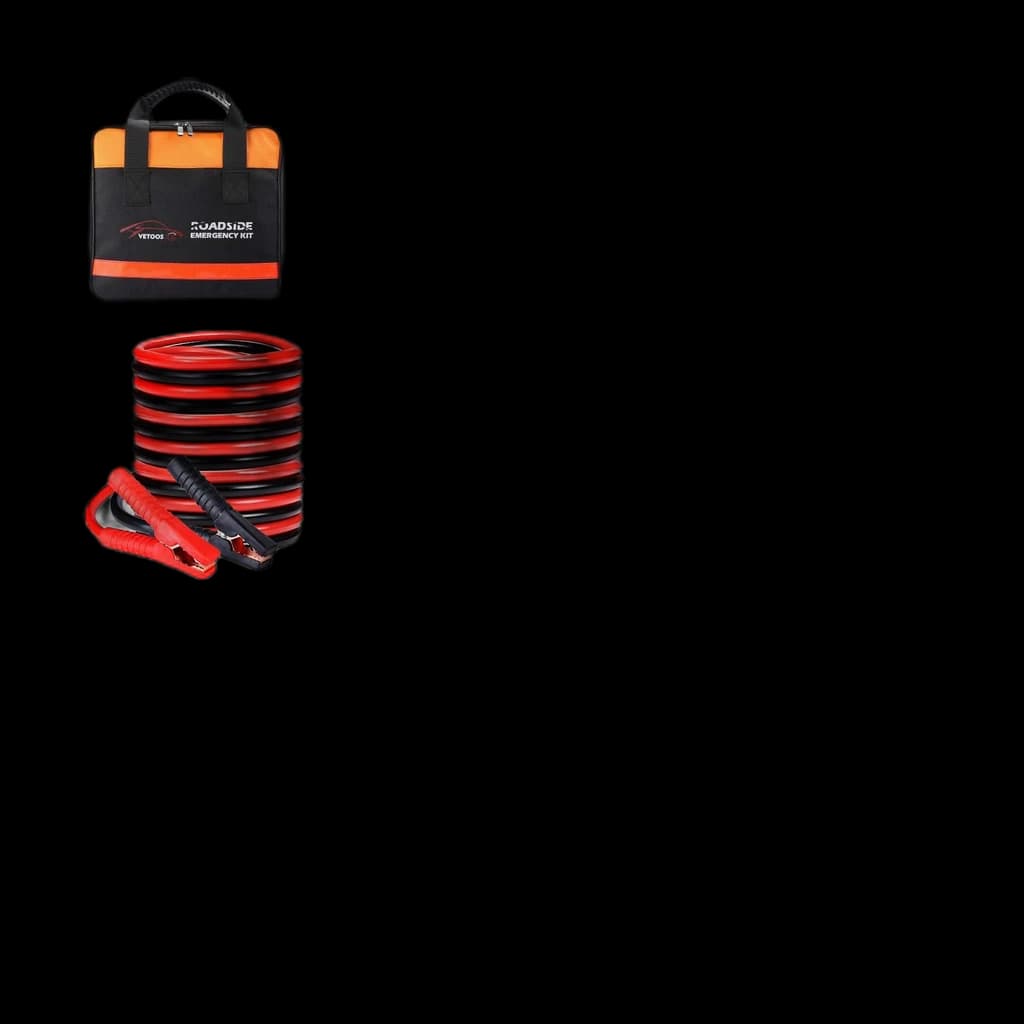
#1Hulkman Alpha85 — 2000A, 74Wh, 3.3in display 4.7 | #2Schumacher SC1281 — 6A automatic charger, maintainer & engine starter 4.5 | #3Battery Tender Junior 021-0123 — 0.75A maintainer 4.8 | #4GOOLOO GP4000 — 4000A, dual USB output 4.6 | #5AVAPOW A68 — 6000A, USB3.0 power bank 4.4 | #6Vetoos Winter Roadside Emergency Kit — 142-piece with folding shovel 4.7 | |
|---|---|---|---|---|---|---|
 |  |  |  |  |  | |
| DriveScored | ||||||
| Verdict | The value pick for people who want the pack to double as a laptop/phone bank: 2000A of starting power — enough for a big V8 — plus 65W USB-C PD that charges in and out. The 3.3-inch screen reports exact charge and fault state rather than making you guess at LED bars. | Researched as the do-it-all pick for a garage that also wants a jump: the SC1281 is a 6A automatic charger and maintainer with a 30A boost and a 100A engine-start, so it revives a flat battery and then babysits it through winter. Owners rate it 4.5/5 across 12,000+ reviews. The trade-off versus a pure maintainer is size and price, and it's lead-acid/AGM only with no lithium profile. | Researched as the simplest set-and-forget maintainer: the 021-0123 Junior runs a 4-step charge-then-float cycle at 0.75A and is the default for keeping a motorcycle, classic, or seasonal car topped off. It includes a quick-connect ring harness so you leave a pigtail on the battery. | The high-amp budget option: 4000A peak rated for all gas engines and diesels up to 10.0L, with SuperSafe clamp protection and a big enough cell to work as a dual-USB power bank. Note this is the GP model — GOOLOO's pricier GT4000S is the one with 100W two-way USB-C, which this does not have. | The headroom option for big trucks and diesels: AVAPOW rates the A68 at 6000A peak and up to a 12L diesel, with an eight-layer clamp protection system and indicator lights that make a wrong connection hard to complete. It also works as a dual-USB power bank with a 3-mode LED light. Overkill for a commuter car, right-sized if you regularly start large diesel powerplants. | Researched as the cold-weather pick: a 142-piece kit that adds a folding survival shovel and winter-focused gear on top of 6-gauge jumper cables and a repair tool set. Those 6-gauge cables are the heaviest in this group — AWG runs backwards, so 6-gauge carries more current than the 8-gauge sets. It's aimed at drivers in snow country who want recovery tools, not just a first-aid pouch, at a mid-range price. |
| Price | ~$109.99Buy on Amazon | ~$89.99Buy on Amazon | ~$36.96Buy on Amazon | ~$79.99Buy on Amazon | ~$142.46Buy on Amazon | ~$39.99Buy on Amazon |
| Peak Amps | 2000A | - | - | 4000A | 6000A | - |
| Capacity | 74Wh (~20,000mAh) | - | - | - | - | - |
| USB Output | USB-C PD 65W (in/out) | - | - | Dual USB output | Dual USB incl. USB3.0 | - |
| Display | 3.3in smart screen | - | - | - | - | - |
| Amps | - | 6A charge (2A/6A) · 30A boost · 100A start | 0.75A | - | - | - |
| Chemistry | - | 6V/12V lead-acid, AGM, gel, deep-cycle | Lead-acid | - | - | - |
| Modes | - | Charge / Maintain / Desulfate / Test / Boost-Start | Charge / Maintain | - | - | - |
| Engine Support | - | - | - | All gas / up to 10.0L diesel | All gas / up to 12L diesel | - |
| Pieces | - | - | - | - | - | 142-piece |
| Jumper Cables | - | - | - | - | - | 6-gauge |
| Case | - | - | - | - | - | Bag |
| Buyer sentiment | Reliability Quality Ease Of Use Value for money Buyers praise reliability, quality, ease of use and value for money. Mixed feedback on battery life. Based on 3,417 user mentions | - | Functionality Quality Battery Life Ease Of Use Buyers praise functionality, quality, battery life and ease of use. Mixed feedback on reliability. Based on 17,605 user mentions | Functionality Quality Ease Of Use Value for money Durability Buyers praise functionality, quality, ease of use and value for money. Mixed feedback on battery life. Some flag durability. Based on 3,265 user mentions | - | Quality Value for money Included Accessories Emergency Use Buyers praise quality, value for money, included accessories and emergency use. Based on 194 user mentions |
| Pros |
|
|
|
|
|
|
| Cons |
|
|
|
|
|
|
* Prices are approximate. Click Buy to see current pricing on Amazon.
What to do, by what you hear
| If your situation is… | Pick | Why |
|---|---|---|
| Rapid clicking and dim dash lights | Jump it, then test the battery | AAA says rapid clicking typically means there is not enough power to engage the starter, which a jump supplies. |
| One loud click, then nothing | Tighten and clean the clamps, then jump | Interstate Batteries reads one loud click as a battery too dead to turn the starter; if clicking survives a good jump, suspect the starter. |
| Slow, labored cranking on a very cold morning | Jump it, then test the battery and check the oil grade | NHTSA says engines take more battery power to start in the cold, and Castrol says the W number governs how oil flows at a cold start. |
| Cranks at normal speed but never fires | Stop cranking and look at fuel or ignition | The battery is doing its job. Interstate says an engine needs fuel, spark and air, and a new battery can mask the real fault. |
| A diesel that cranks well but won't run in deep cold | Warm the fuel system and switch to winterized diesel | ExxonMobil says fuel gelling can cause fuel starvation and stalling, and winterized fuel with a cold-flow improver helps prevent it. |
Each pick is one of the products ranked below - this row is for shortcutting based on your situation, not a separate recommendation.
Listen to what happens when you turn the key. Rapid clicking or a slow, labored crank on a cold morning almost always means the battery can't deliver enough power: jump it, then test it. If the engine cranks at normal speed but never fires, the battery is doing its job, and the problem is fuel, spark or air. Silence with some lights on points to a fuse.
Diagnose it by the sound
Each row below comes from AAA's winter battery guide or Interstate Batteries' no-start troubleshooting. Start in the left column and work right.
| What you hear or see | Most likely cause | Do this now | Then |
|---|---|---|---|
| Rapid clicking, dim dash lights | Not enough power to engage the starter | Stop cranking and jump it | Test the battery once it runs |
| One loud click, then nothing | A battery too dead to turn the starter, or a loose, corroded clamp | Check the clamps are tight and clean, then jump | Clicking after a good jump points to the starter |
| Slow, labored cranking | A weak battery, working against cold, thick oil | Jump it rather than grinding on | Test the battery, check the oil grade |
| Normal-speed cranking, no fire | The battery is fine; fuel, spark or air is missing | Stop cranking and check the fuel gauge | A shop diagnosis, or gelled fuel in a diesel |
| A brief sputter, then it dies | Empty tank, clogged fuel filter or failing pump | Add fuel if the tank is low | A pump or filter needs a shop |
| No noise at all, some electronics work | A blown fuse | Don't keep trying and don't jump it | Check the fuse box |
The sources disagree about clicks, and it doesn't change the fix. AAA says rapid clicking typically means there isn't enough power to engage the starter. Interstate Batteries reads one loud click as a battery too dead to keep trying, and says rapid clicking that continues during a jump could be the starter. Either way, treat a click as a power problem first. Suspect the starter only if the clicking survives a good jump.
Why cold finds the weak battery
Cold attacks from both ends at once: the battery delivers less while the engine asks for more.
- Less power out. NHTSA says that when the temperature drops, so does battery power, and that gasoline and diesel engines take more battery power to start in cold weather.
- More power needed. AAA puts it at 30% more energy to start at 32°F, rising to 50% at zero degrees.
- Thicker oil. Castrol explains that the number before the W describes how oil flows cold at start-up, and the lower it is, the faster the oil flows.
- Old damage shows up now. AAA's Via magazine notes that hot weather does most of the damage, which only becomes evident when the cold demands more power.
That last point is why a battery that seemed fine in October fails on the first hard frost. How long car batteries last covers the climate effect in detail.
Clicks or a slow crank: jump, then test
- Stop cranking. Interstate says starters aren't designed to run for more than 30 seconds at a time.
- Look at the terminals. A loose clamp can mimic a dead battery, and AAA says corrosion reduces conductivity. Tighten and clean them before anything else.
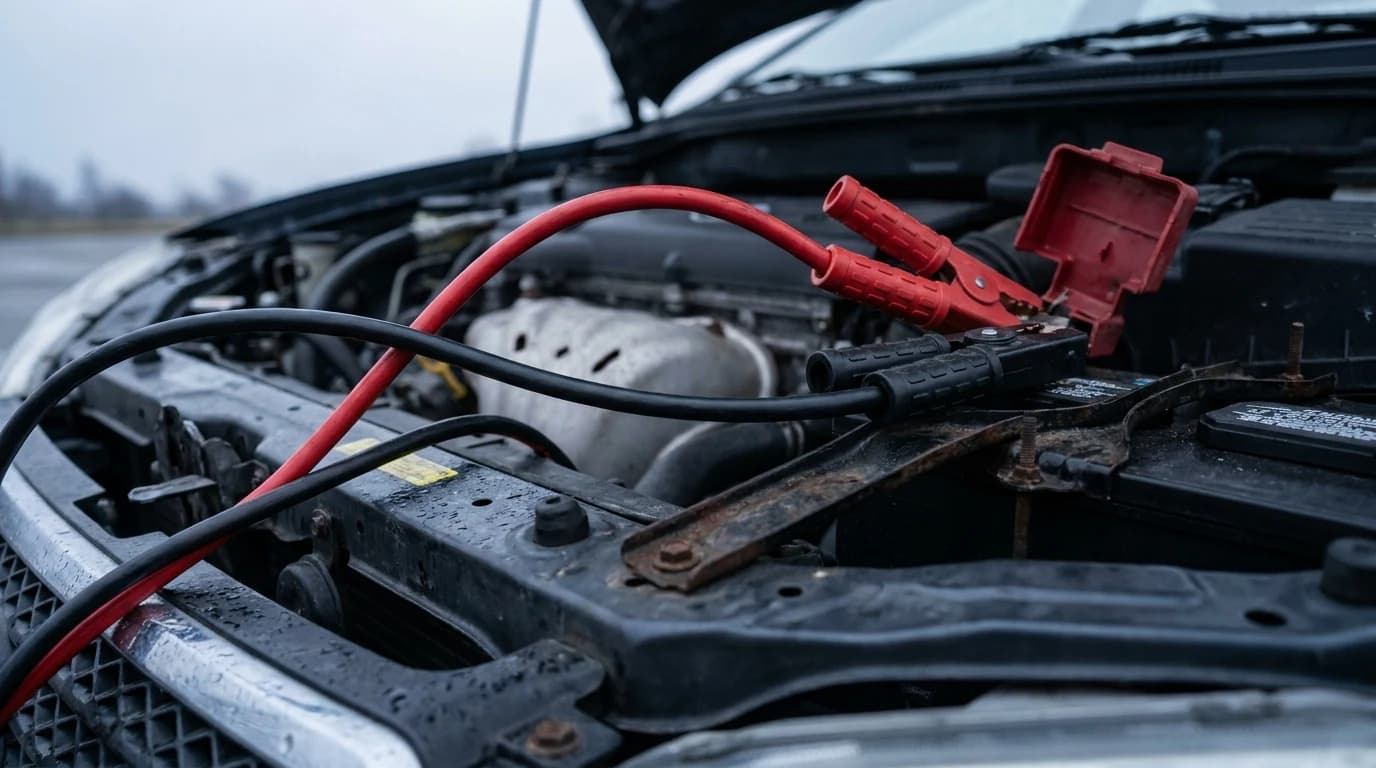
- Jump it in the maker's order. Follow your owner's manual or the pack's instructions exactly; how to jump start a car walks through both cables and packs. A charged pack such as the Hulkman Alpha85 means you don't need a second car. For a big V8 or a diesel, GOOLOO rates the GOOLOO GP4000 for diesels up to 10.0L and AVAPOW rates the AVAPOW A68 up to 12L. Jumping with cables instead? The Vetoos Winter Roadside Emergency Kit pairs 6-gauge cables with a folding shovel.
- Put charge back in. AAA's Via says repeated short trips can drain a battery without giving the alternator a chance to recharge it. How to charge a car battery explains amps and time; the Schumacher SC1281 charges, tests and can boost-start.
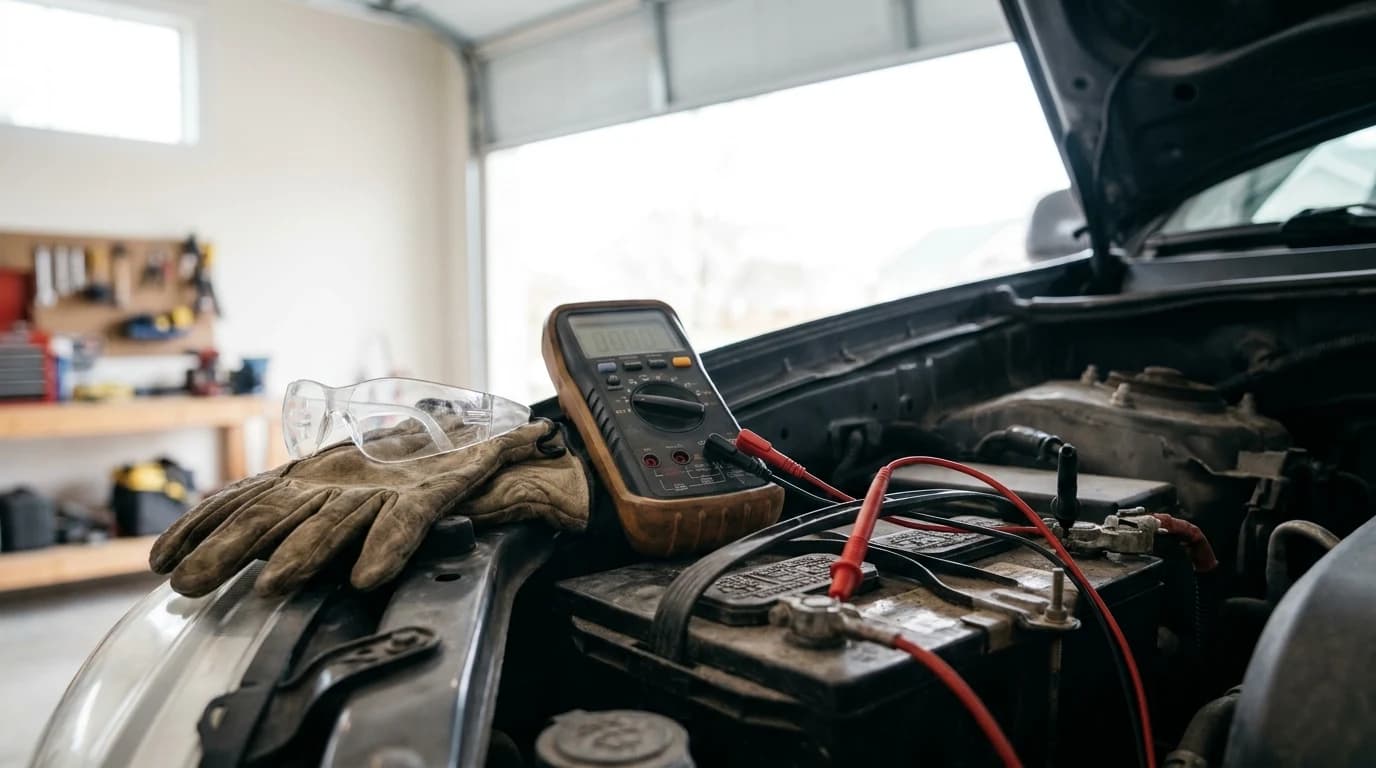
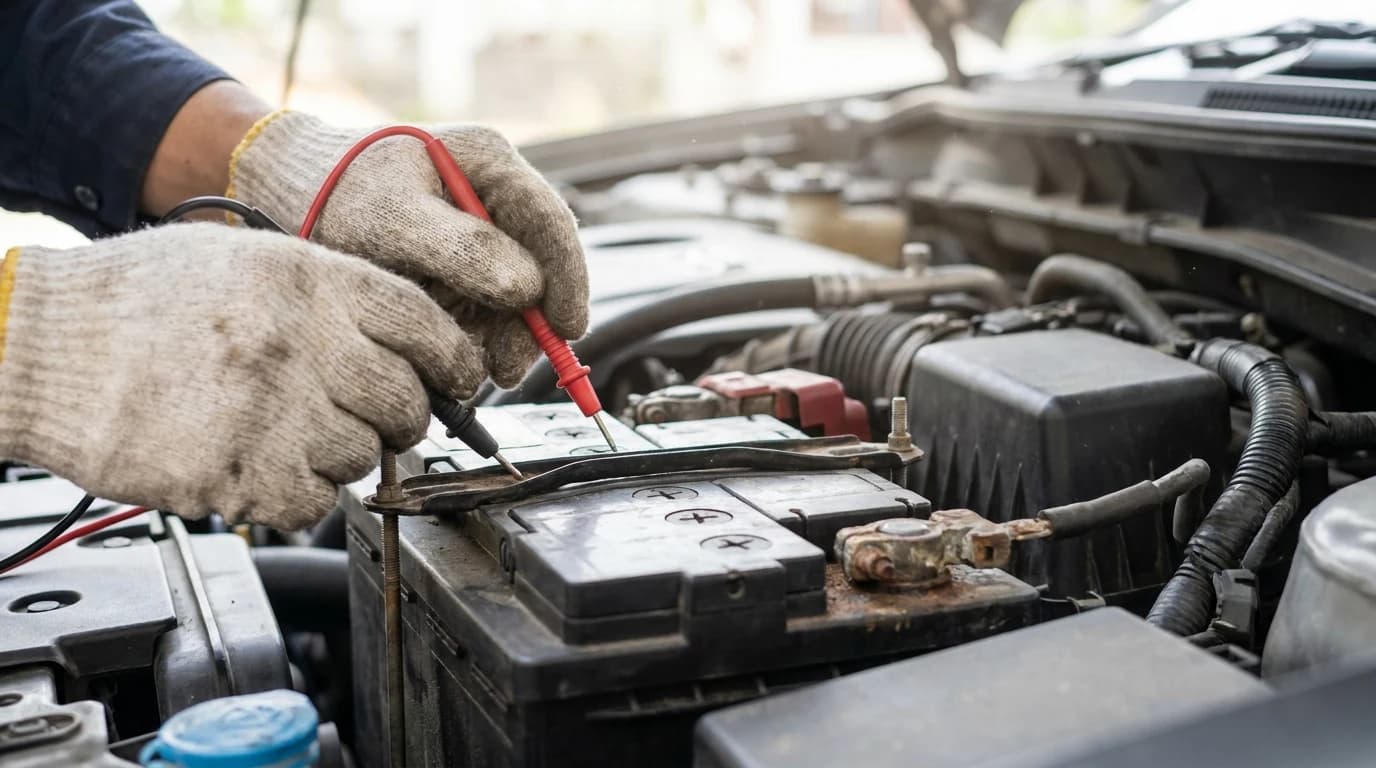
- Test it. AAA advises checking the battery after any jump to confirm it wasn't the root cause. How to test a car battery has the voltage chart.
Is it the battery or not?
Signs it is the battery:
- Rapid clicks with dim dash lights
- A crank that gets slower with each try
- It starts after a jump, then won't start again within a day, which Interstate treats as a battery that can't hold a charge
Signs it is something else:
- The engine cranks at full speed but never catches
- It sputters briefly, then stalls
- Nothing at all happens while some electronics still work
A new battery won't fix the second list. Interstate warns that a brand-new battery can mask the real fault.
Diesel owners: check the fuel before the battery. Diesel adds a cold-only failure. ExxonMobil says fuel gelling can cause fuel starvation, loss of engine power and stalling, and that winterized fuel with a cold-flow improver helps prevent it. A diesel that cranks strongly but won't run on a very cold morning needs warmth and winter fuel, not a new battery.
Stop it happening again
| Fix | What the source says | Best for |
|---|---|---|
| Block heater | Zerostart says to plug in at least 3 to 4 hours to pre-warm, and overnight does no harm | Cars parked outside near an outlet |
| Park in a garage | AAA says a few degrees of difference can decide whether the battery cranks the engine | Anyone with the option |
| Battery warmer or blanket | AAA's Via recommends one for extreme cold if you park outdoors | Very cold regions |
| Longer drives or a maintainer | Via says repeated short trips drain the battery; it suggests a 30-minute drive once a week | Short-trip commuters, cars that sit |
| Pre-winter battery test | Via advises an annual test and flags batteries more than 3 to 5 years old | Every car, every autumn |
| The manual's oil grade | Castrol says the owner's manual names the correct oil | Every engine |
For a car that sits for days, a maintainer like the Battery Tender Junior holds the charge on float. It is too slow to revive a flat battery, so pair it with a charger or a pack. Before buying a pack, how many amps you need sizes it to your engine, and the jump starter guide compares the options.
📋 The short version. Clicks or a slow crank mean power: jump, then test. Full-speed cranking with no fire means fuel, spark or air, and no battery will fix it. Plug in, park warm, and test the battery before the first freeze.
Common questions
Why does my car not start when it's cold?
How long should I wait between start attempts?
Can I jump start a car in freezing weather?
How long should I plug in a block heater?
My car cranks fine but won't start in the cold. Is it the battery?
Research Sources
- AAA (The Auto Club Group) — How to protect your car battery this winter: cold-start energy, warning signs including rapid clicking, and prevention
- AAA Via magazine — How Cold Weather Impacts Your Battery: slow crank, dim lights, testing after a jump, and prevention
- AAA (The Auto Club Group) newsroom — Low Temps Lead to High Number of Dead Car Batteries
- Interstate Batteries — Why My Car Won't Start If the Battery's Still Good: clicks, starter limits, fuel and fuse faults
- NHTSA — Winter Driving Tips: batteries lose power in the cold
- Phillips & Temro (Zerostart) — FAQ: how long to plug in a block heater
- ExxonMobil — Pre-additized winter diesel fuel: gelling and cold-flow improvers
- Castrol USA — Oil Viscosity Chart and Oil Grades Explained: what the W number means