How Long Do Car Batteries Last? Climate Decides It
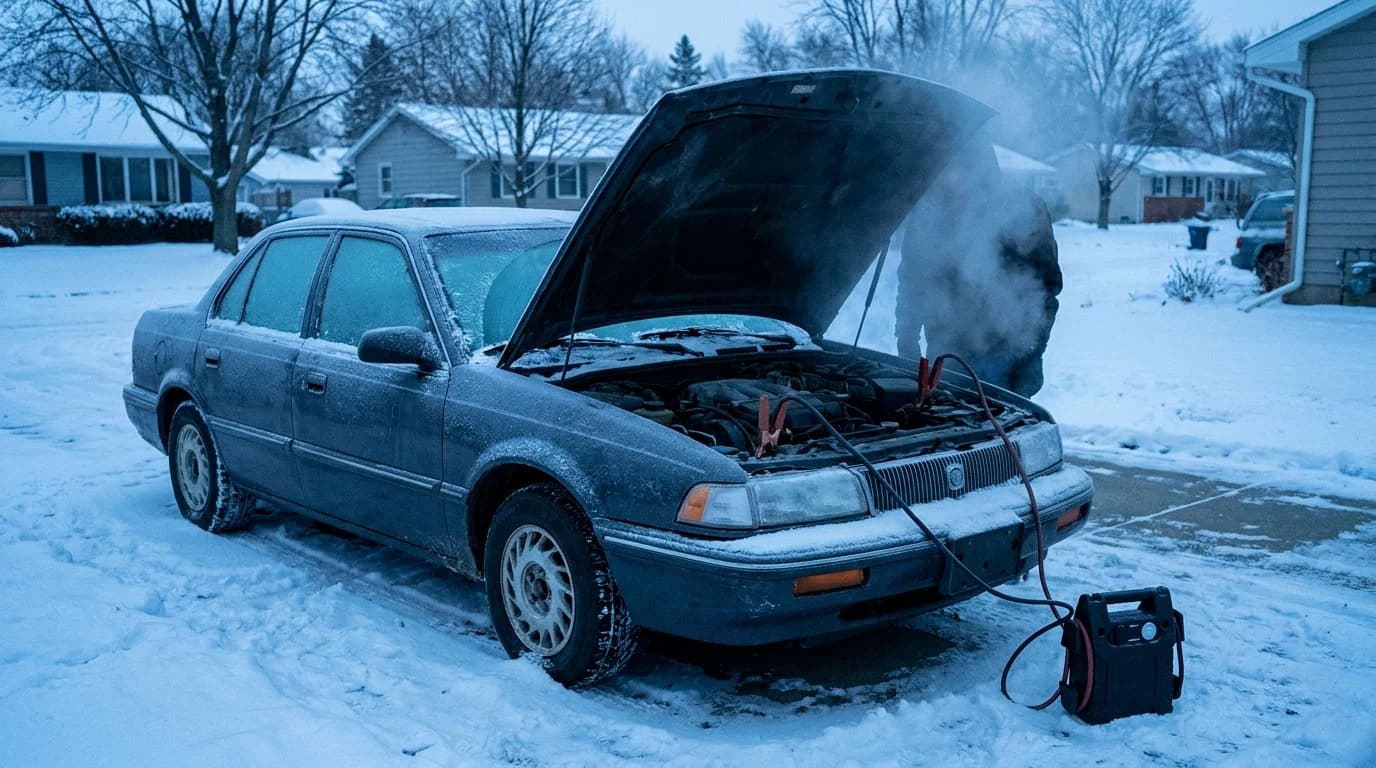
Three to five years is the usual range, and climate decides where you land. AAA reports five years or longer in cooler northern climates but approximately three years in hot southern locales, where under-hood heat can exceed 200°F. Short trips shorten it too, because Interstate says the alternator cannot fully recharge a deeply discharged battery. Parked, Interstate gives a sitting battery about four weeks to two months before key-off drain flattens it. Test it every year from year three.
Key takeaways
- Climate, not the calendar, decides which end of the range you land on. AAA reports five years or longer in cooler northern climates and approximately three years in hot southern locales, with under-hood temperatures that can easily exceed 200 degrees Fahrenheit.
- Heat causes the damage and cold reveals it. The AAA Automotive Research Center puts the loss of cranking strength at about 35 percent at 32°F and about 60 percent at 0°F, while a cold engine can demand up to twice its normal current.
- The universal voltage chart is wrong for AGM batteries. Optima states its YELLOWTOP and most BLUETOP lines are fully charged at about 13.0 to 13.2 volts, not 12.6 — read one against a generic chart and a full battery looks half flat.
- 12.4 volts is the number that matters. Optima says sulfation begins below it, and Interstate explains that the alternator cannot supply the voltage a deeply discharged battery needs, which is what makes short-trip driving so expensive.
- The round sticker on the battery is not the date code. Optima's date code is a ten-digit serial on the white Non-Spillable label, and it warns the round retailer stickers may differ from the production date by up to a year or more.
- Voltage measures charge, not health. Interstate says a reading around 12.5 volts does not mean a good battery, and AAA notes a battery can show a full charge and still carry internal damage.

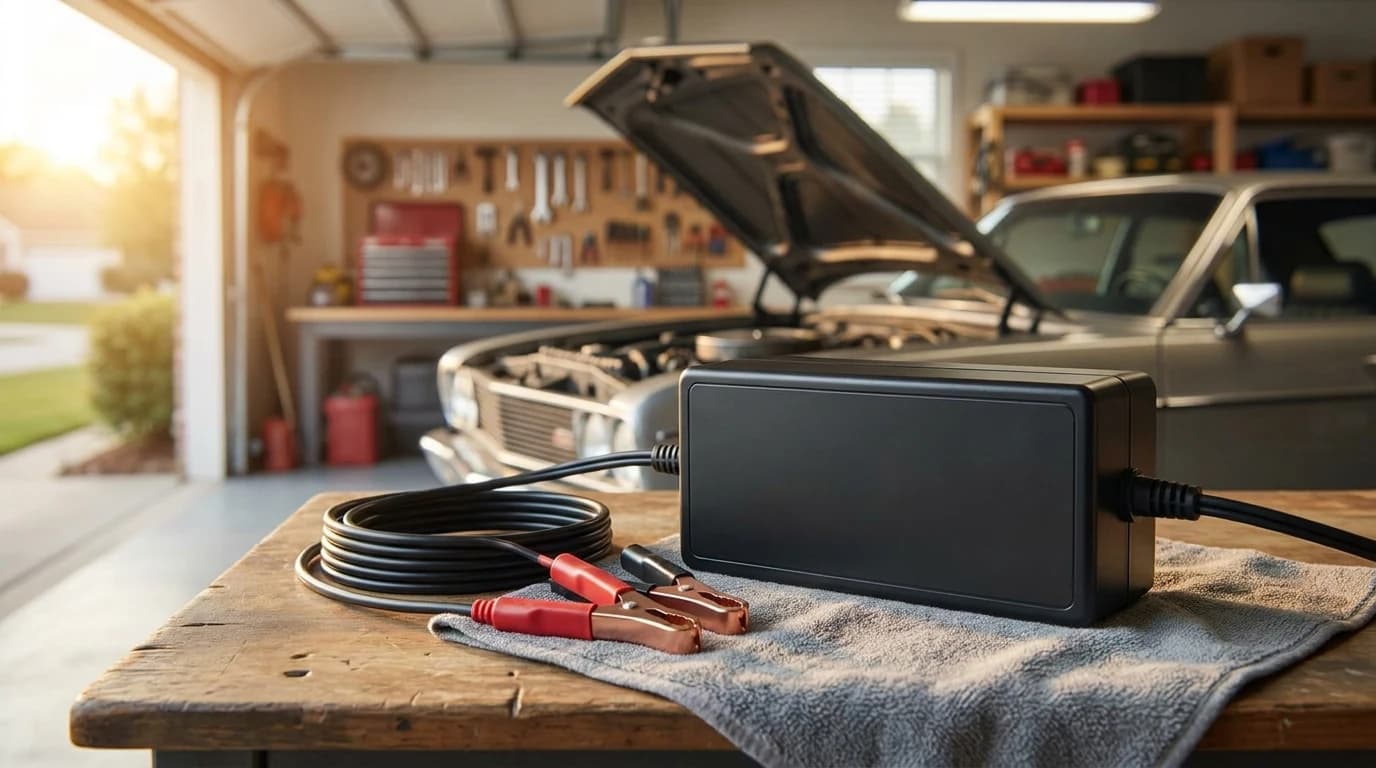
CTEK MXS 5.0 — 4.3A 8-step charger & conditioner
- Rated by CTEK to charge 12V batteries from 1.2 to 110Ah and maintain up to 160Ah
- Dedicated AGM mode plus EFB support and built-in temperature compensation
- 8-step cycle includes a recond stage for deeply discharged batteries
Our #1 charger and maintainer: CTEK's 8-step program adds AGM and Recond modes to a 4.3-amp charge, and CTEK rates it for batteries from 1.2 to 110 Ah, maintaining up to 160 Ah. Lead-acid and AGM only, with no lithium profile.
What to do, by age, climate and symptom
| If your situation is… | Pick | Why |
|---|---|---|
| Under three years old, driven daily, no symptoms | Do nothing except find the real date code | AAA's advice is to begin annual testing once a battery reaches its third year, so before that the useful action is establishing when year one actually started — from the serial on the white label, not the round retailer sticker. |
| Any age, but the car does short hops or sits for weeks | A maintainer, before you consider a replacement | Interstate states a deeply discharged battery needs more voltage than the alternator produces, and Optima says most alternators are built to maintain a battery near full rather than recover a flat one. Driving more is not the fix. |
| Three to five years old in a hot-climate state | Test it now, and again every year | This is the band where AAA's hot-locale figure of approximately three years already applies, and heat damage accumulates without an obvious symptom until the first cold morning. |
| Past five years, still starting normally | Get a load test rather than a voltage reading | Interstate is explicit that around 12.5 volts does not mean a good battery, and AAA notes a battery can show a full charge while carrying internal damage. Only a load test separates charge from capacity. |
| Slow crank, dash warning lamp, or repeat jump-starts | Test the charging system too, not just the battery | AAA lists a malfunctioning charging system as a cause of shortened battery life, and Interstate treats a running voltage below 13 volts as pointing at the alternator as much as the battery. |
Use this row to shortcut by situation.
"Three to five years" is true the way "adults are five to six feet tall" is true. The range decides nothing. Two variables collapse it: where the car lives, and how far you drive it.
"Three to five years" is an average, not a forecast
AAA names three factors behind battery life — time, heat and vibration — then does what most guides skip and splits it by geography: "In cooler northern climates, a battery may last five years or longer, but in hot southern locales, a car battery will typically last approximately three years." A two-year swing, decided by where you park.
The damage is heat. Heat drives the reaction that makes electricity and the reactions that wear the battery out, and AAA notes under-hood temperatures "can easily exceed 200 degrees Fahrenheit in hot weather" — which is why automakers hide batteries behind heat shields or move them out of the engine bay entirely.
Cold gets blamed because cold is when failures surface. The AAA Automotive Research Center puts the loss of cranking strength at about 35 percent at 32°F and about 60 percent at 0°F, while a cold engine can demand up to twice its normal current. When that morning comes, the sound the car makes tells you whether the battery is the problem.
| Where the car lives | Service life AAA reports | The damage | What to do |
|---|---|---|---|
| Cooler northern climates | Five years or longer | Time and vibration | Test annually from year three |
| Hot southern locales | Approximately three years | Under-hood heat above 200°F | Test annually, and act on it |
| Short trips only | No year figure published | Drives too short to replace what starting used | A maintenance charger |
| Parked for weeks | No year figure published | Self-discharge while it sits | A maintenance charger |
Heat does the damage, cold sends the invoice. Summer is when the capacity goes; winter is when its absence becomes a no-start, with roughly 60 percent less to give at 0°F.
Read your own battery in three minutes
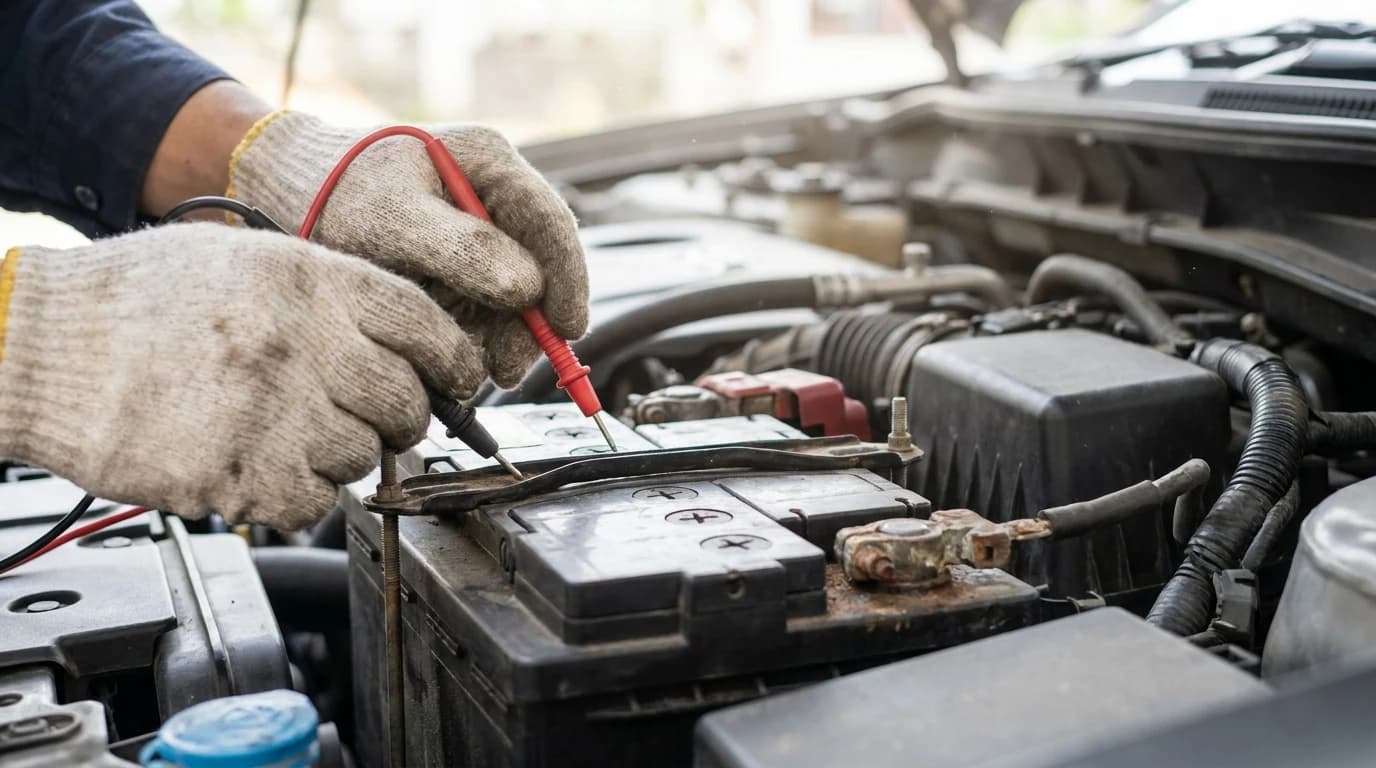
Interstate Batteries' multimeter walkthrough has three steps, and everybody skips the first.
- Headlights on for about two minutes, then off. This burns off the surface charge that would otherwise flatter the reading.
- Set the meter to the 0–20 volt range, red probe to positive, black to negative. Interstate tells DIYers to expect a resting figure around 12.5 volts.
- Start the engine and read again. You want more than 13 volts; less points at the alternator or the battery.
Interstate's FAQ sharpens the edges: a charged battery should measure 12.6 volts or higher, the running figure lands between 13.7 and 14.7 volts, and at 11.9 volts or below it is considered dead.
The full routine, including how long to let a battery rest first, is in how to test a car battery. Then comes the part the universal "car battery voltage chart" gets wrong: full is not one number.
| Resting reading | What it means | Whose figure |
|---|---|---|
| 13.0–13.2 V | Fully charged — YELLOWTOP and most BLUETOP AGMs, not the 34M | Optima |
| 12.6–12.8 V | Fully charged for a conventional flooded battery or a REDTOP | Optima |
| Around 12.5 V | What Interstate tells DIYers to expect at rest | Interstate |
| Below 12.4 V | Sulfation begins, taking capacity and lifespan with it — charge it | Optima |
| Around 11.8 V at 80°F | Roughly 25 percent charged; AAA's replace-consideration mark | AAA |
Six cells at about 2.1 volts each is where 12.6 comes from, and Optima breaks the chart: "a battery could be fully-charged at only 12.5 volts or 12.8 volts and some batteries may be fully-charged at even higher rates", with its YELLOWTOP and most BLUETOP lines full at about 13.0 to 13.2 volts. Read one against a generic chart and you will call a full battery half flat.
Voltage tells you charge, not health. Interstate says it plainly: around 12.5 volts does not mean a good battery, and AAA notes one can show a full charge and still carry internal damage. A load test measures what voltage cannot.
What actually shortens a battery's life
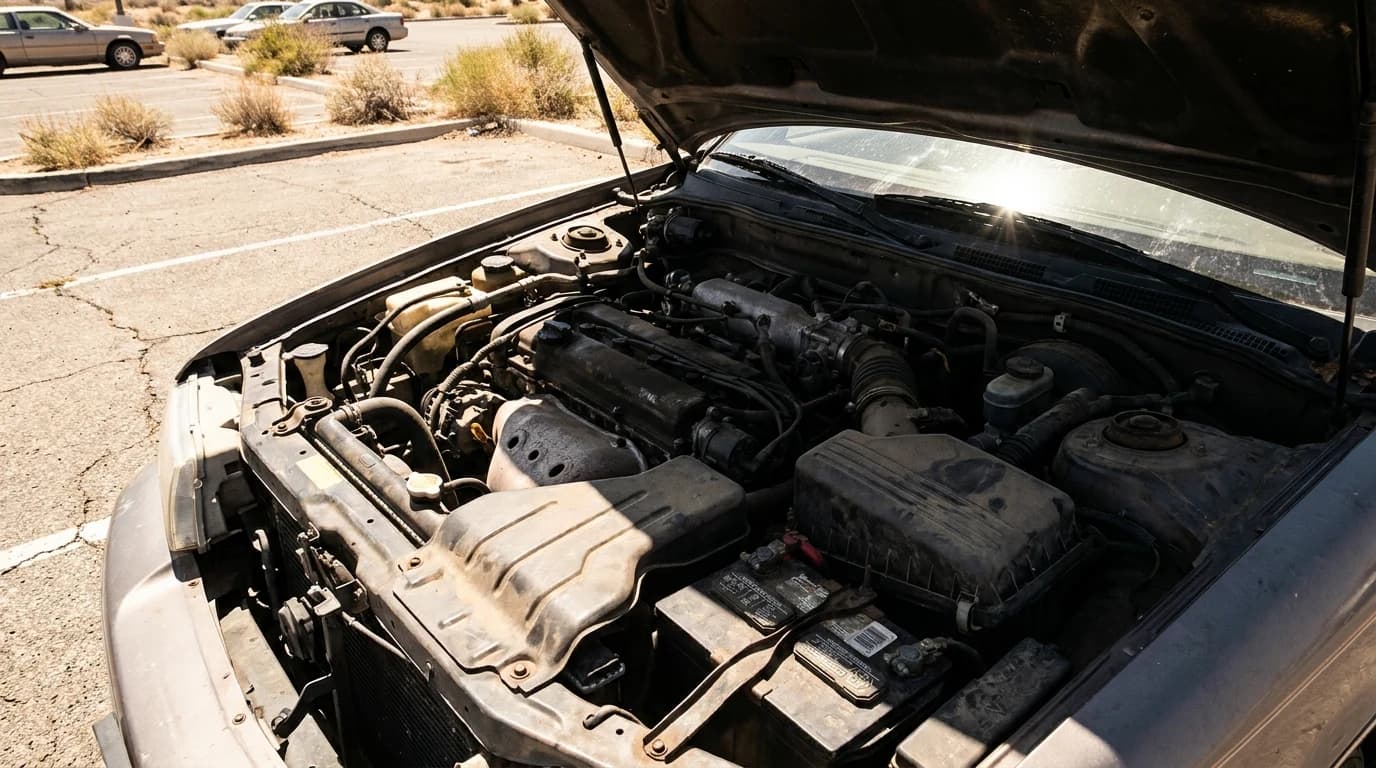
The short-trip problem has a mechanism, and Interstate spells it out: the alternator holds charging voltage low to protect vehicle electronics, so the voltage needed to fully recharge a deeply discharged battery is higher than the alternator can produce. Fifteen to twenty minutes of driving is an adequate top-up normally; a deeply discharged battery takes many hours, and after a jump-start Interstate says it may never reach full charge without a charger. Optima agrees — most alternators are built to maintain a battery near full, not recover a flat one. Which is why 12.4 volts matters more than 12.6.
What genuinely extends the life:
- Keeping it above 12.4 volts — for a short-trip or seasonal car that means a maintainer, not more driving.
- Never letting it go flat. AAA says a full discharge takes a big chunk out of a battery's lifespan even after a successful recharge.
- Clean terminals and intact hold-downs. Vibration is one of AAA's three factors, and loose hardware shortens life significantly.
- Replacing like with like, because AAA says the car's charging strategy was tuned for the original battery type.
What does not:
- Idling to "charge it up". At idle, Interstate notes, alternator current may be less than adequate.
- Running accessories with the engine off. A 12V plug-in heater or seat heater draws straight from the battery, which is why carmakers' manuals warn against it.
- Buying more cold cranking amps than the car asks for — AAA notes a higher-rated battery may have a shorter service life in hot climates.
How long does a car battery last when the car isn't driven?
Weeks, not years. Interstate Batteries puts a car left sitting at about four weeks to two months before the battery dies, because the clock, radio memory, computers and alarm keep drawing current with the key off. Interstate calls it key-off, or parasitic, drain, and says the exact time depends on the car.
What Interstate says keeps a parked battery alive:
- A drive of at least 30 minutes at highway speed once a week, rather than short hops to the store.
- A trickle charger or maintainer plugged in for a long absence.
- Leaving the alarm off in a secure garage, since a running security system drains the battery faster.
A flat battery is also a freezing risk. Interstate's FAQ says a fully charged battery will not freeze until about 75°F below zero, but a discharged one can freeze at 15°F. For a car that sits through winter, that makes a maintainer sized for a car battery the cheapest insurance on this page: CTEK rates the MXS 5.0 below to maintain batteries up to 160 Ah.
The signs that mean something, and the ones that fool people
From AAA's eight warning signs, the ones worth acting on:
- A slow engine crank, the most direct symptom.
- The battery or charging warning lamp.
- Dim incandescent headlights, particularly at idle.
- A rotten-egg smell, which Interstate attributes to overcharging.
- A swollen case, which AAA reads as overcharging or overheating.
And the ones that mislead:
- A clicking key. AAA lists it as a possible bad connection — clean and tighten the terminals first.
- A healthy resting voltage, for the reason above.
- A January no-start blamed on the cold, when summer did the work.
The date on the battery is not the date you think
"Test it at three years" only works if you know when year one began, and most people read the wrong sticker. Optima's guidance puts the real code on the white "Non-Spillable" label: a ten-digit serial whose first four digits are the year and day of production, so one built on the 86th day of 2026 starts 6086. The round coloured stickers are retailer inventory stickers, which Optima warns "may also differ by up to a year or more" from the production date.
The trade body everyone cites for the three-to-five-year rule does not publish it. Battery Council International's public library covers industry economics, recycling and safety; its vehicle battery work is fitment data — Group Sizes across 160,000-plus vehicles — sold as a data book. Every service-life figure here comes from AAA, Interstate or Optima, because that is who publishes them.
What we rank, and what we do not
Our battery chargers and maintainers category is small on purpose: several well-known units are unbuyable on the listings we track, and three we stand behind beats six we cannot.
- CTEK MXS 5.0 — our #1: 4.3A, with a Recond mode CTEK says restores deeply discharged batteries, and a maintenance rating up to 160 Ah on CTEK's own page.
- Schumacher SC1281 — 6A charging and maintaining, plus an engine-start mode for the morning it has gone flat.
- Battery Tender Junior 021-0123 — a 0.75A maintainer that Battery Tender scopes to 3 to 30 Ah batteries, such as motorcycles, mowers and classics, pointing anything larger to its Plus.
We rank no batteries, deliberately: replacement is a per-vehicle fitment question, which is why BCI sells that Group Size database rather than a best-batteries list.
If yours has already died, our jump-start walkthrough covers the cable order and how many amps a jump starter needs covers the pack. Once it runs again, charging it properly decides whether you repeat all of this next month.
Your next step
Keep it above 12.4 volts, then test it when the reading says nothing.
Common questions
How long does a car battery last in a hot climate?
Does cold weather kill car batteries?
Do AGM batteries last longer than flooded ones?
Will driving the car recharge a flat battery?
What resting voltage means my car battery is bad?
How do I find out how old my car battery is?
What are the signs of a dying car battery?
Does idling the car charge the battery?
Research Sources
- AAA Automotive — How Long Do Car Batteries Last: the three-to-five-year range, the time/heat/vibration factors, the northern-versus-southern climate split, the 200°F under-hood figure and the advice to test annually from year three
- AAA Automotive — Know When to Replace the Car Battery: the eight warning signs, the note that a battery can show a full charge while carrying internal damage, and the roughly 11.8-volt-at-80°F figure for about 25 percent charge
- AAA Oregon/Idaho — Winter Battery Preparation, citing the AAA Automotive Research Center for the roughly 35 percent loss of strength at 32°F, the roughly 60 percent loss at 0°F, and the up-to-twice-normal current a cold start demands
- AAA Auto Club Group — AGM Battery vs Lead-Acid Battery: the 40 to 100 percent cost premium, the up-to-10-year AGM figure against a typical three-to-five-year flooded life, and AGM's advantage in high-heat, high-demand use
- Interstate Batteries — FAQs: the 12.6-volt charged figure, the 13.7 to 14.7-volt running range, the 11.9-volt dead threshold, and the explanation that the alternator cannot supply the voltage a deeply discharged battery needs
- Interstate Batteries — How to Test a Battery Like a Pro: the headlights-for-two-minutes surface-charge step, the around-12.5-volt resting expectation, the above-13-volts running check, and the warning that 12.5 volts does not mean a good battery
- OPTIMA Batteries — Basic Information on Battery Voltage: the six-cells-at-2.1-volts arithmetic behind 12.6, the YELLOWTOP and BLUETOP full-charge range of about 13.0 to 13.2 volts, and the statement that sulfation forms below 12.4 volts
- OPTIMA Batteries — "Why Does My Car Battery Keep Dying?": alternators are designed to maintain a battery near a full state of charge, not recharge deeply discharged batteries
- OPTIMA Batteries — Where is the Date Code: the ten-digit serial on the white Non-Spillable label whose first four digits encode year and day of production, and the warning that round retailer stickers may differ by up to a year or more
- Battery Council International — Vehicle Battery Replacement Data: the association's vehicle battery publication is fitment data (recommended BCI Group Sizes for more than 160,000 vehicles) sold as a Data Book, not consumer service-life guidance
- Interstate Batteries — How Long Can a Car Battery Sit Unused?: about four weeks to two months before key-off (parasitic) drain flattens it, and the weekly 30-minute highway drive, trickle-charger and alarm advice
- CTEK MXS 5.0 NA product page — 4.3A output, charges batteries up to 110 Ah and maintains up to 160 Ah