How Many Amps Do You Need in a Jump Starter?
For most 4-cylinder gas cars, a compact lithium jump starter rated around 1,000 peak amps is plenty. Larger V6 and V8 gas engines are safer with roughly 1,500 to 2,000 peak amps, and diesels or big trucks want 2,000-plus peak amps or a dedicated heavy-duty unit. Size to your biggest likely vehicle and add headroom for cold weather.
Key takeaways
- Peak amps is a brief marketing headline number; the spec that actually cranks an engine is sustained cranking current, which most portable units do not clearly publish.
- Bigger engines need more current: small 4-cylinder gas engines are easy, while diesels and large V8s demand substantially higher output.
- Cold weather raises the requirement because batteries weaken and oil thickens, so buy with extra headroom if you park outside in winter.
- Size the unit to your largest likely vehicle and weigh build quality and safety features like reverse-polarity protection as heavily as the amp number.
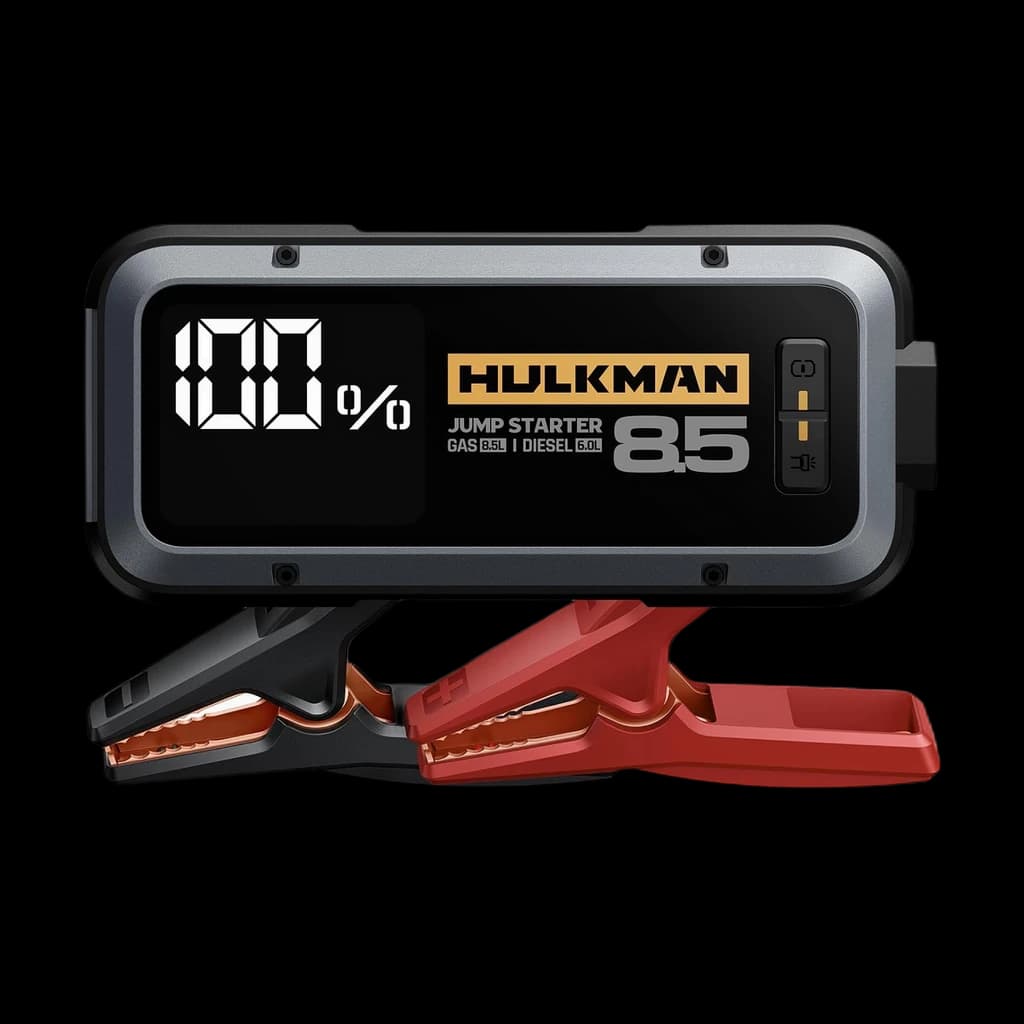
Hulkman Alpha85 — 2000A, 74Wh, 3.3in display
- Hulkman rates it for gas engines up to 8.5L and diesels up to 6.0L
- 3.3-inch smart screen shows charge level, status and fault warnings instead of LED bars
- 65W USB-C Power Delivery in and out, so it recharges fast and runs a laptop
Our #1 jump starter: a 2000A-peak lithium pack whose 3.3-inch screen reports charge level and fault state instead of LED bars, with 65W USB-C Power Delivery in and out so it recharges quickly between uses. Like any pack, it only helps if you keep it charged.
Jump starter amp guidance by vehicle and climate
| If your situation is… | Pick | Why |
|---|---|---|
| Small gas car (compact 4-cylinder, roughly 1.0-2.0L) | Compact lithium unit around 800-1,000 peak amps | These engines have small displacement and low cranking demand, so an entry-level pocket unit starts them easily with room to spare. |
| Mid-size gas car or small SUV (larger 4-cylinder or V6) | Mid-tier unit around 1,000-1,500 peak amps | More displacement means more current to crank, and the extra headroom keeps the unit reliable as its internal battery ages. |
| Full-size truck or SUV with a large gas V8 | Higher-output unit around 1,500-2,000 peak amps | Big V8s draw substantially more cranking current, and undersized units can struggle or need several attempts on a fully dead battery. |
| Diesel engine or heavy-duty pickup | Dedicated heavy-duty unit at 2,000-plus peak amps, ideally diesel-rated | Diesels use high compression and often larger or dual batteries, so manufacturers publish separate, higher gas-versus-diesel ratings for a reason. |
| Any vehicle parked outdoors in a cold climate | One tier up from your engine's baseline, plus a unit rated for low temperatures | Cold weakens the car battery and thickens the oil, raising the current needed to crank, so extra amp headroom is cheap insurance. |
Use this row to shortcut by situation.
The amp number on the box is not the number that starts your car
Walk down the jump-starter aisle and every box shouts a bigger figure than the last: 1,500 amps, 2,000 amps, 3,000 amps. It looks like a simple more-is-better ladder. It isn't.
The trap: that headline is almost always the peak amp rating, a burst the unit can deliver for a fraction of a second. The spec that actually turns your engine over is the sustained cranking current the unit can hold while the starter motor spins, and most portable lithium units simply don't advertise it clearly.
So the honest answer to "how many amps do I need" starts with a reframing: match the unit to your engine and your climate, treat peak-amp claims as rough guidance, and give as much weight to build quality as to the number on the front.
Peak amps vs cranking amps, in plain terms
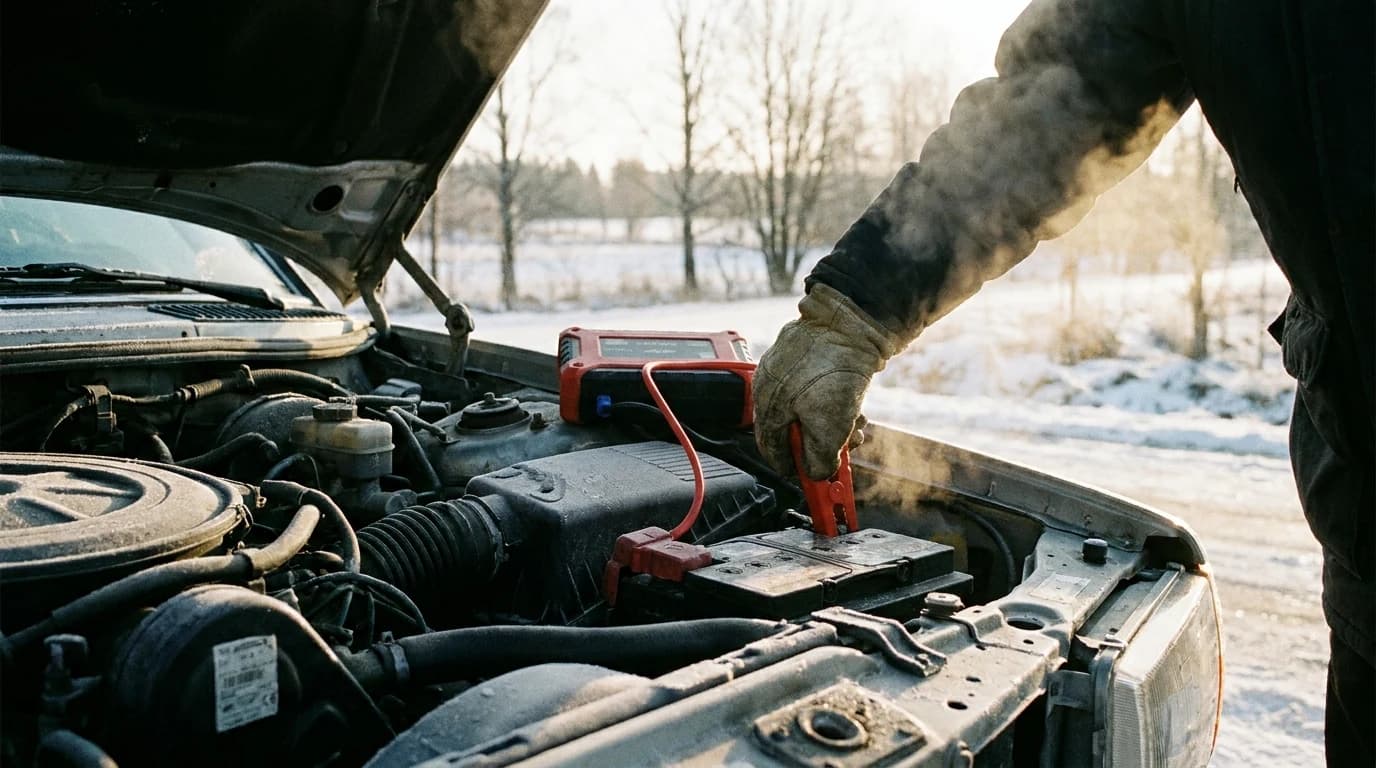
Think of peak amps as the sprint and cranking current as the pace you can sustain. When you crank a cold engine, the starter draws a heavy load for a second or two, not a millisecond. A unit that peaks impressively but sags under sustained load may still fail to start a stubborn engine, while a well-engineered unit with a more modest headline number holds its output and gets the job done.
Because the sustained figure is the one that matters and the peak figure is the one that sells, you are usually shopping with incomplete information. That is fine, as long as you know it. Build in headroom rather than buying exactly to a threshold, and lean on owner reviews, which consistently report whether a unit actually starts the engines people own.
Size to the engine: a rough amp ladder
Engine size is the biggest driver of cranking demand. Displacement, cylinder count, and compression all raise the current the starter pulls:
| Vehicle type | Rough peak-amp guidance | Notes |
|---|---|---|
| Small 4-cylinder gas | ~800–1,000 | Easiest case; most pocket units cover it |
| Larger 4-cyl / V6 | ~1,000–1,500 | Mid-tier units with headroom |
| Large gas V8 | ~1,500–2,000 | Higher draw; undersized units struggle |
| Diesel / big truck | 2,000+ (diesel-rated) | High compression, often dual batteries |
The pattern is clear: small gas engines are forgiving, and the requirement climbs steeply toward large V8s, diesels, and heavy-duty trucks. Manufacturers usually publish separate gas and diesel ratings on the same unit precisely because a diesel's compression and battery size push the demand well past what a compact car needs.
Rule of thumb: if a unit lists only a single figure with no diesel rating, take that as a sign it isn't intended for one.
For a numbers-in, recommendation-out version of this, our jump-starter sizing tool walks through engine type and climate, and the jump-starters category collects the units we cover.
Cold weather moves the goalposts
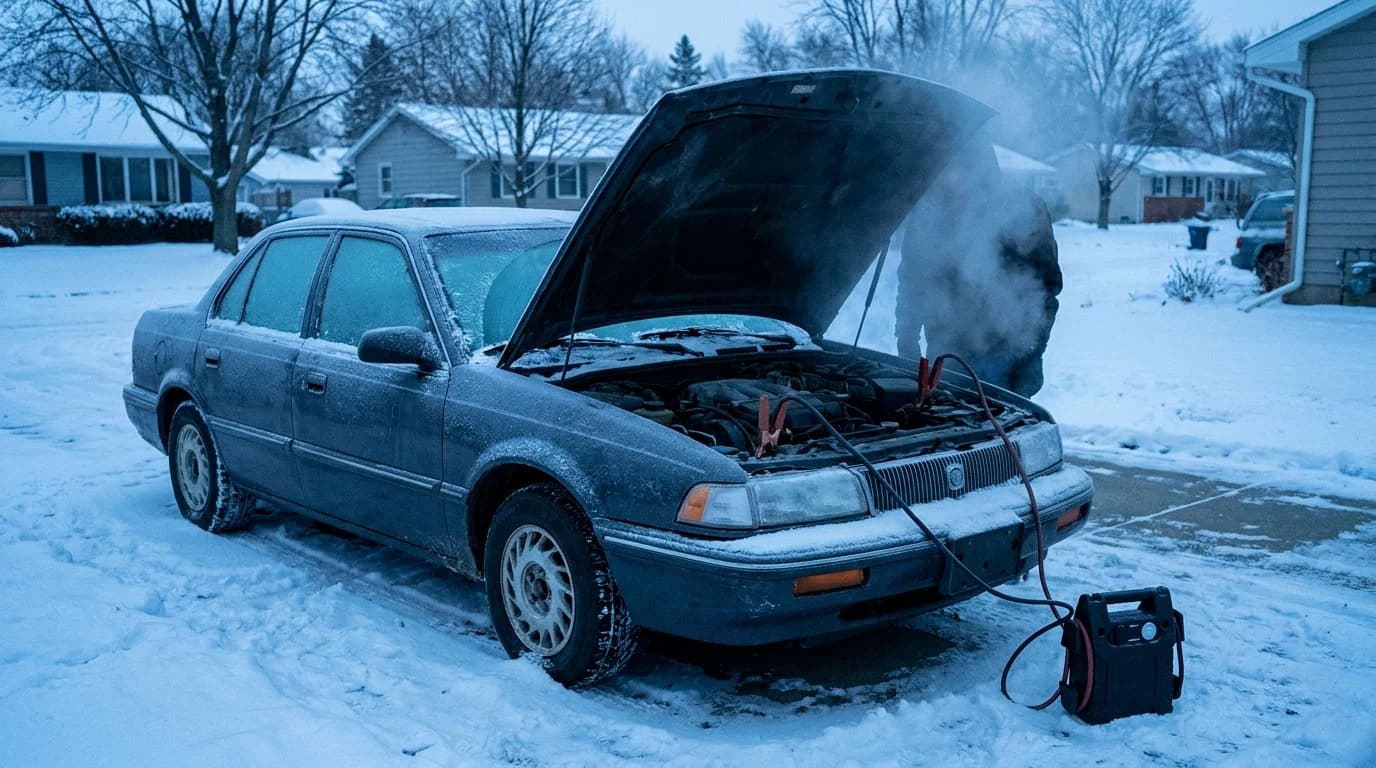
Amp requirements are not fixed. Cold weather raises them from both directions at once: low temperatures reduce a lead-acid battery's available output, and thick, cold oil makes the engine physically harder to turn. The result is that the same car that fires instantly in July can need noticeably more cranking current on a frigid January morning. Consumer Reports notes that cold is exactly when weak batteries fail, which is why a jump starter earns its keep in winter. If the car only clicks on a cold morning, diagnose it by the sound before you blame the pack.
The practical rule: if you park outside in a cold climate, buy one tier above your engine's fair-weather baseline and confirm the unit is rated to operate at low temperatures, not just survive storage there. Lithium packs lose punch in the cold, so headroom is cheap insurance. Keeping the battery healthy in the first place helps too; our guide to what tire pressure you should run is a reminder that cold changes more than just your battery.
Build quality and safety belong in the decision
A jump starter is a dense lithium battery you clamp directly to a car's electrical system, often in the dark and often flustered.
What deserves weight in the decision:
- Reverse-polarity protection — reversing the clamps on an unprotected unit can damage the vehicle, the pack, or you
- Spark-proof clamps and short-circuit protection
- Owner feedback on the engines people actually own
- Headroom above your largest vehicle's baseline
What deserves less than you'd think:
- The peak-amp headline, measured inconsistently between brands, so two units printing the same figure may not perform the same in your driveway
- Capacity claims that say nothing about sustained cranking current
A slightly lower-rated unit with solid protection and good clamps is a better buy than a bare unit chasing the biggest number on the shelf. Treat the number as a starting filter, then let build quality, protection features, and owner feedback break the tie.
The bottom line
Buy for your largest likely vehicle, not your smallest, so one unit covers the whole fleet, then add headroom for cold. A compact ~1,000-peak-amp unit handles most small gas cars; step up to 1,500–2,000 for large V8s and 2,000-plus for diesels. Read the amp number as guidance, weigh safety features heavily, and you'll end up with a starter that actually starts the car. When you're ready to compare specific units, see our roundup of the best portable jump starters, and how to jump start a car for the clamp order once it arrives.
Your next step