Tire Pressure Light On: Find the Low Tire, Add Air, Reset the Light
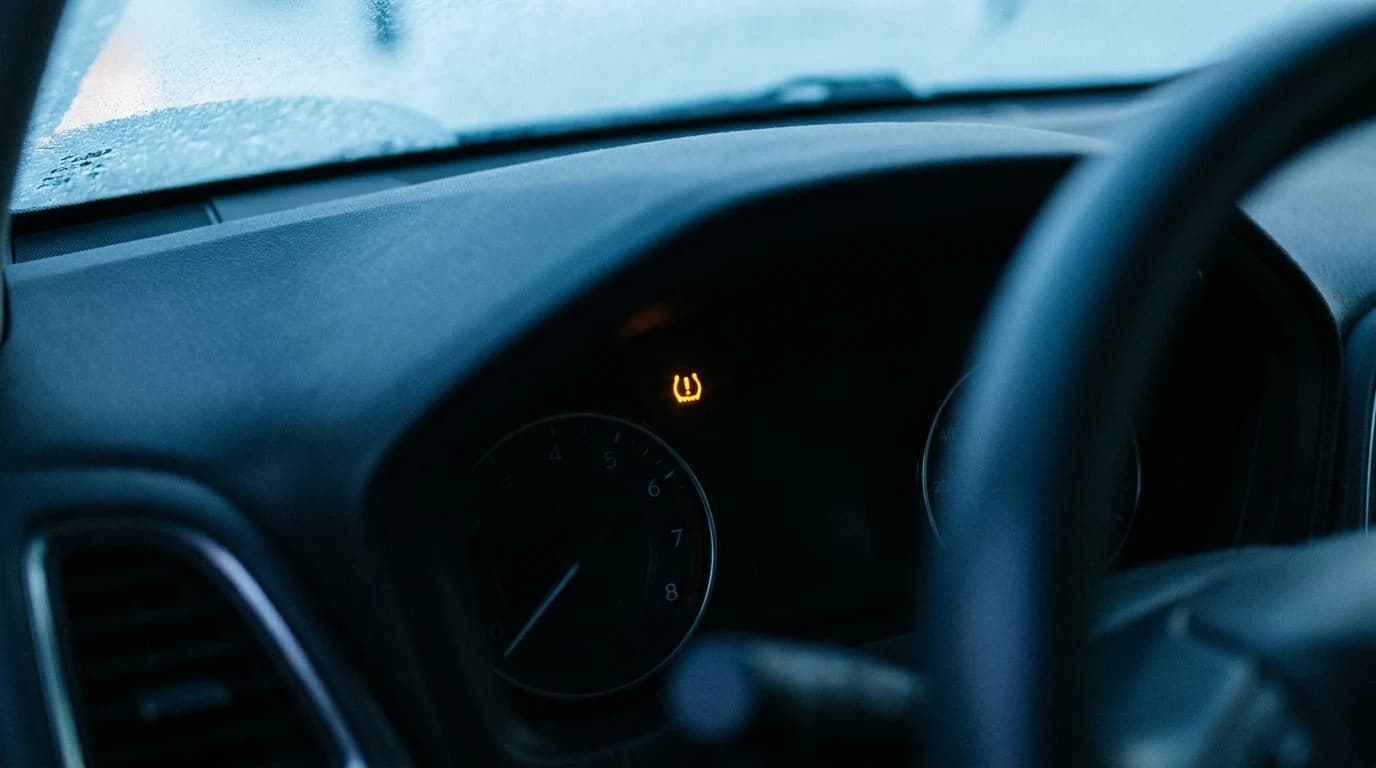
A solid tire pressure light means at least one tire is significantly underinflated. Check all four with a gauge while cold, add air to the pressure on the driver's door placard, then follow your owner's manual if the light needs a reset or calibration drive. If it flashes for about a minute at start-up and then stays on, the system has a fault: check the pressures yourself and have it inspected.
Key takeaways
- A solid light means a significantly low tire. FMVSS 138 requires it within 20 minutes of a tire reaching 25 percent below the placard, roughly 26 PSI on a 35 PSI placard.
- A light that flashes for about a minute at start-up and then stays on is a system fault, not a low tire. NHTSA says to have the system inspected, and the owner's-manual wording FMVSS 138 requires warns that until then the system may not detect a low tire.
- Inflate to the cold pressure on the driver's door placard, never the sidewall maximum, and confirm with your own gauge: AAA and Michelin both say air-pump gauges can be off.
- Measure while cold, before driving, and add the missing pounds at the pump, as NHTSA suggests. If the tires are warm, NHTSA, AAA and Michelin each give a different fix, and all three end with a cold recheck.
- Some cars clear the light on their own once pressure is right, some need a reset button, some a calibration drive and some a sensor relearn tool. Your owner's manual says which.
- A portable inflator with auto-stop avoids the warm-tire problem. Set it to the placard number and respect its duty cycle: AstroAI caps one model at 20 minutes of continuous use.
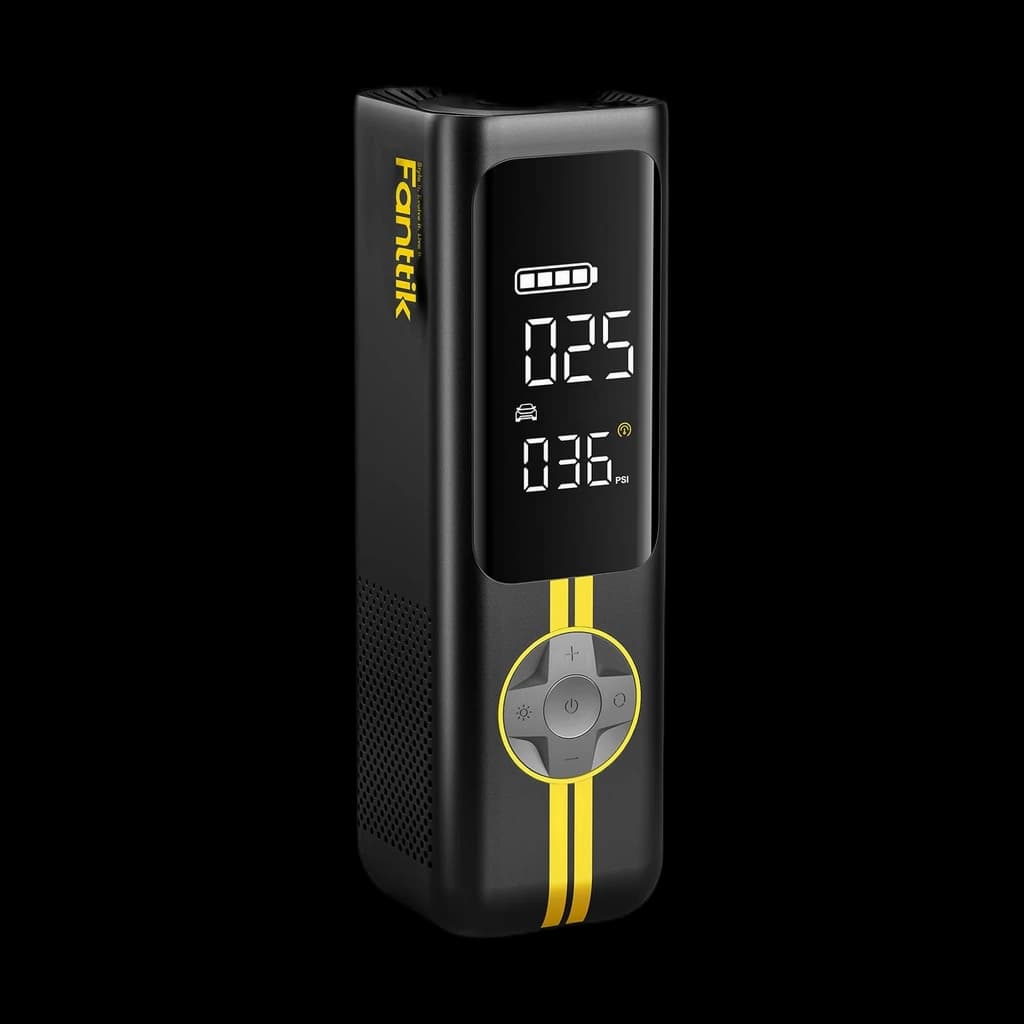
Fanttik X8 Apex — 150 PSI cordless tire inflator
- Rated 150 PSI with roughly one-minute car-tire top-ups
- Rechargeable battery means no cord or 12V socket needed
- Dual LED display, preset modes (car/bike/moto/ball) and auto shut-off
Our #1 tire inflator for topping up at home: Fanttik says the X8 Apex runs on its own battery, takes a custom preset for your placard pressure and stops automatically when it gets there. Fanttik now sells newer models above it but still sells this one new.
What to do, by what the light is doing
| If your situation is… | Pick | Why |
|---|---|---|
| Light comes on and stays on while driving | Stop when safe, gauge all four tires, inflate to the placard | FMVSS 138 requires the light once a tire reaches 25 percent below the placard pressure, and its required owner's-manual wording says to stop and check as soon as possible. |
| On during a cold morning, off after a few miles | Top up all four tires while they are cold | NHTSA says marginally low pressure dips below the threshold overnight and recovers as the tires warm, so the tires are close to the warning line. |
| Flashes for about a minute at start-up, then stays on | Check pressures by hand, then have the system inspected | NHTSA describes this sequence as a system malfunction that repeats at every start until fixed, and says to contact your dealer. |
| Still on after every tire is at the placard | Do the reset or calibration in your owner's manual | Toyota's Highlander guide uses a reset button after adjusting pressures, and Honda's instructions call for a recalibration and about 30 minutes of driving. |
| Fault light appeared right after a tire rotation or new wheels | Have the sensors relearned or checked | Chevrolet's 2019 Equinox manual says sensors must be matched to their new wheel positions with a relearn tool after a rotation. |
Use this row to shortcut by situation.
A solid tire pressure light means at least one tire is significantly underinflated. Check all four with a gauge, add air to the cold pressure on your driver's door placard, and the light should go out, sometimes after a reset your owner's manual describes. A light that flashes for about a minute at start-up, then stays on, is the system reporting a fault, and air won't clear it.
Solid, flashing or on-and-off: what the tire pressure light means
NHTSA says the symbol is either a tire cross-section with an exclamation mark or a top view of a car. How it behaves matters more.
| What the light does | What it means | What to do |
|---|---|---|
| Comes on and stays on | At least one tire is significantly underinflated | Stop when safe, check all four with a gauge, inflate to the placard |
| On during a cold morning, off after driving | Pressure is marginal: it dipped below the threshold overnight and recovered as the tires warmed | Check and top up all four while cold |
| Flashes for about a minute at start-up, then stays on | A system malfunction, repeated at every start until it is fixed | Check pressures by hand, then have the system inspected |
| Stays on after you filled every tire | A tire is still low, or the system needs a reset, calibration or relearn | See the reset section below |
"Significantly" has a legal meaning. The federal standard, FMVSS 138, requires the light within 20 minutes of a tire reaching 25 percent below the placard pressure, or a floor value for that tire type if higher. On a 35 PSI placard that is roughly 26 PSI, so by the time it lights, the tire is already well below spec.
Flashing is a different warning. A light that flashes for about a minute, then stays on, reports a system fault. Until it is fixed, the system may not warn you about a low tire, so check the pressures yourself.
Causes in Chevrolet's 2019 Equinox manual include the sensorless spare fitted as a road wheel, a relearn skipped after a tire rotation, damaged sensors and non-matching replacement wheels. NHTSA says to contact your dealer for a system inspection.
Find your number, then the low tire
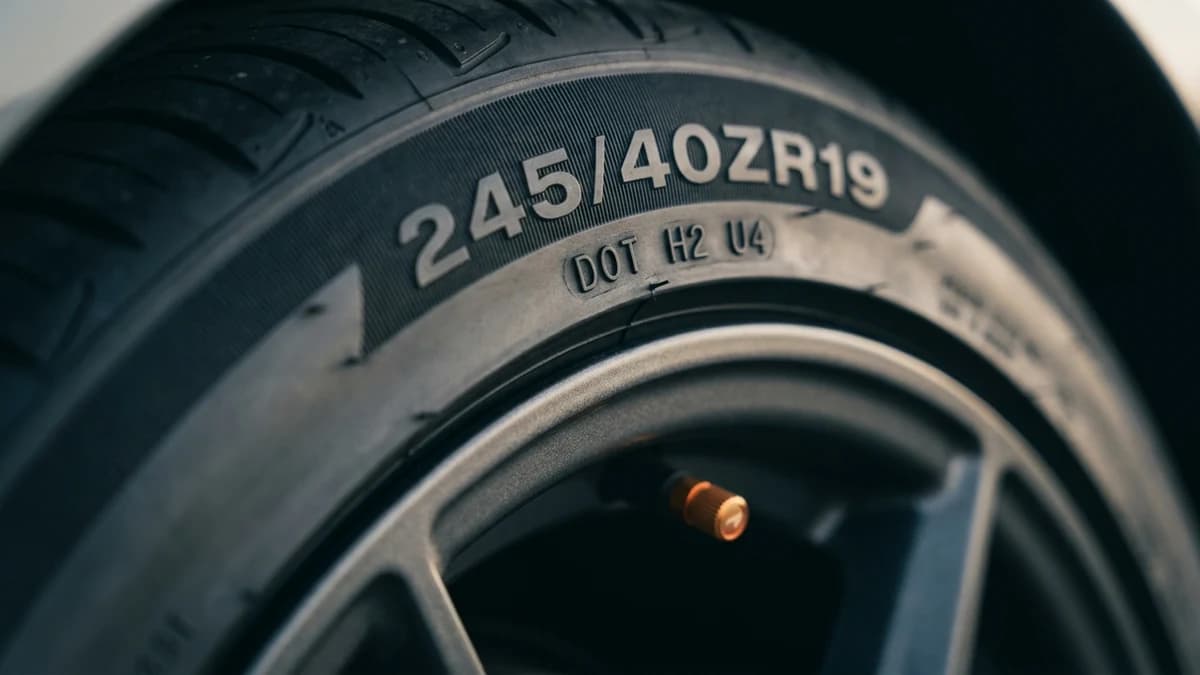
Your target is the cold pressure on the label on the driver's door edge or jamb, or in the owner's manual, never the maximum molded into the sidewall. What tire pressure you should run explains why. Then find the low tire:
- Read the dash first. Bridgestone says many newer vehicles show which tire is low, with each tire's pressure.
- No per-tire readout? Check all four. NHTSA says some systems use sensors in the tires and others infer pressure from wheel speed.
- Don't trust your eyes. NHTSA says underinflated tires are visually difficult to detect, and a tire can lose pressure suddenly after a pothole or a curb strike.
- A flat isn't a top-up job. Les Schwab advises switching to the spare if you get a flat you can't immediately fill.
How to check tire pressure with a gauge
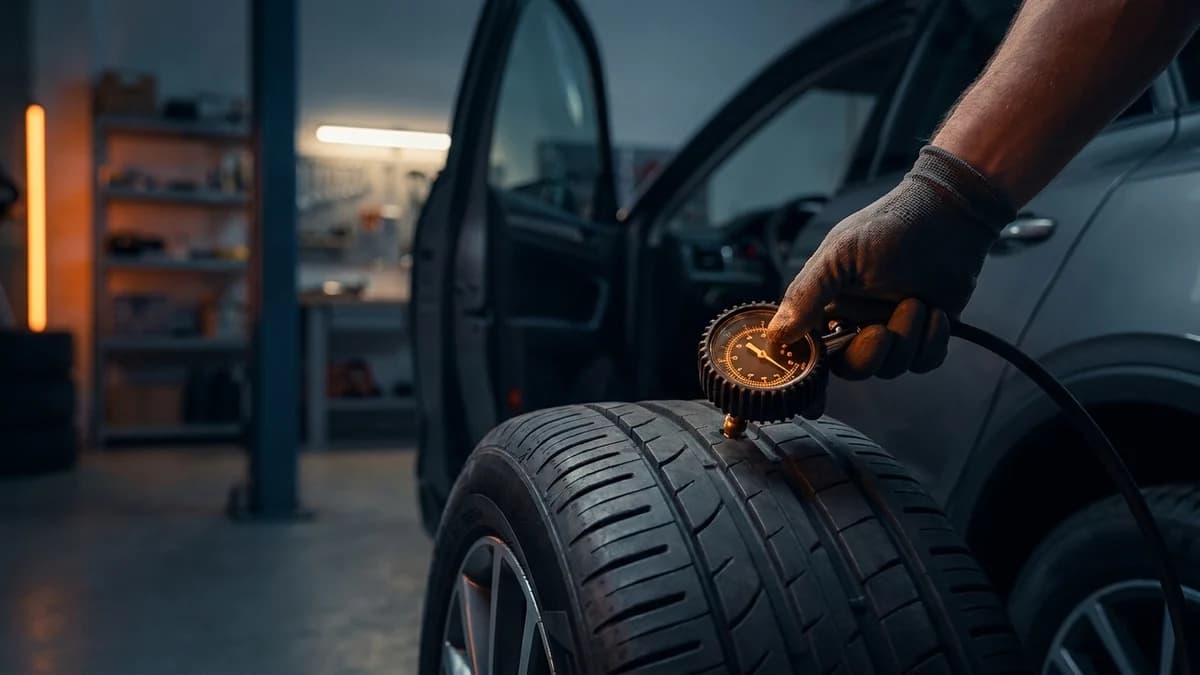
- Check cold. NHTSA defines cold as not driven for at least three hours. Michelin accepts under 2 miles at low speed, or 2 hours parked.
- Remove the valve cap and press the gauge squarely onto the valve stem.
- Write down the shortfall. NHTSA calls the gap to the placard the missing pounds: what you need to add.
- Repeat on every tire, and on the spare if yours has one.
Which gauge? Of the stick, dial and digital types, AAA calls digital the most accurate unless its batteries are worn. AAA warns that air-pump gauges suffer from weather and overuse, and Michelin says station gauges are not always calibrated, so keep your own in the glovebox.
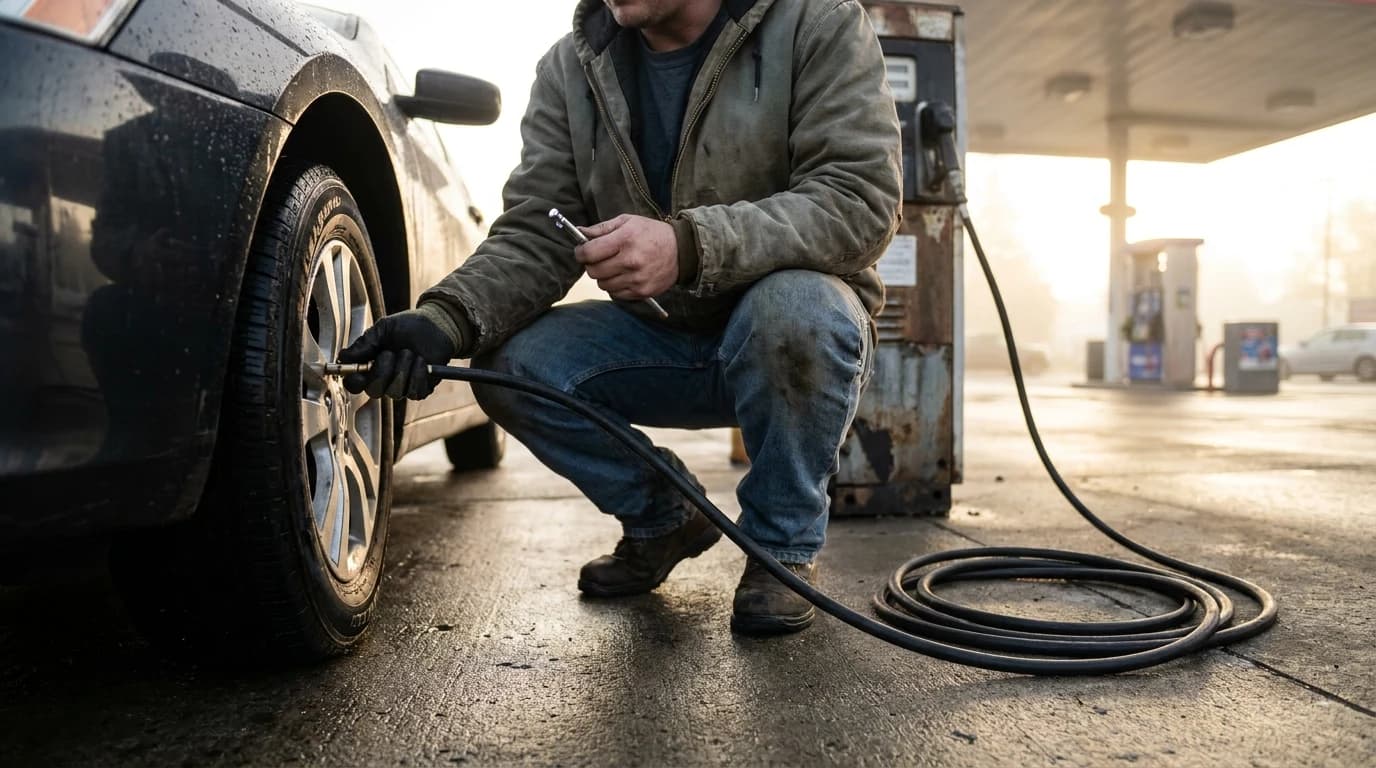
How to put air in tires at a gas station
NHTSA's trick avoids the warm-tire problem: measure at home while the tires are cold, note the missing pounds, and add exactly that at the pump.
- Park so the hose reaches all four tires. Les Schwab says the compressor may take a few quarters.
- Remove the valve cap and press the fitting firmly onto the stem. If you hear air escaping, reseat it.
- Add air in short bursts, checking often, since compressors fill at different rates. AAA says some pumps stop by themselves at a preset pressure.
- Overshot? Press the valve's center pin to let air out.
- Refit the cap, which Les Schwab says keeps dirt out of the valve.
- Finish all four, then check they match, unless your placard gives different front and rear pressures.
What if you had to drive to the pump?
Driving warms the tires and raises the reading, and the sources disagree on the fix:
| Source | What it says to do with warm tires |
|---|---|
| NHTSA | Fill to the placard's cold pressure anyway; slightly low beats significantly low. Recheck cold |
| AAA | Fill to 4 PSI above the recommended pressure, then let air out to the placard the next morning |
| Michelin | Add 0.3 bar (4.35 PSI) to the recommended pressure, then readjust cold. Never let air out of a warm tire |
Every method ends with a cold recheck. NHTSA, AAA and Michelin all treat a warm fill as temporary, to be corrected once the tires are cold.
How to add air at home with a portable inflator
At home the car never moves, so the tires stay cold. The steps from Fanttik's X8 Apex instructions and AstroAI's inflator manual line up:
- Fit the right nozzle and connect it to the valve.
- Set the target to your placard number. Fanttik's smart mode applies a generic car preset, but Fanttik itself says each vehicle is different, so enter your own figure in custom mode.
- Start it and let it stop. Both makers say their pumps shut off at the preset pressure. AstroAI says to make sure the preset is higher than the tire's current pressure.
- Respect the duty cycle. AstroAI caps that model at 20 minutes of continuous use, then at least 10 minutes of rest. Fanttik says the X8 Apex runs 40 minutes continuously on a full charge. Check your own pump's manual.
- Confirm with your own gauge.
Our #1 pick in the tire inflator rankings is the Fanttik X8 Apex, currently $69.99: battery-powered, with a custom preset and auto-stop. Fanttik now sells newer models above it but still sells this one new. The EPAuto 12V, currently $35.97, runs from the 12V socket with programmable auto shut-off. The inflator buying guide compares all five.
Why the tire pressure light stays on after filling
Cars clear the light in one of a few ways, and your owner's manual says which. These examples from three makers' manuals are not instructions for your car:
| How the system clears | Example from an owner's manual | What you do |
|---|---|---|
| It goes out once pressure is right | 2019 Chevrolet Equinox: the light returns at every ignition cycle until the tires are inflated correctly | Inflate all four; nothing to press |
| Reset button | 2017 Toyota Highlander guide: after adjusting pressures, ignition on, hold SET until the indicator blinks three times, then wait a few minutes | Inflate first, then reset |
| Calibration, then a drive | Honda's TPMS instructions (2016 Civic Coupe): recalibrate whenever you inflate, change or rotate tires; it needs about 30 minutes of cumulative driving at 30 to 65 mph | Start calibration from the button or menu, then drive |
| Sensor relearn tool | 2019 Equinox: after a rotation or sensor replacement, each sensor is matched to its wheel position with a TPMS relearn tool | Dealer, tire shop, or your own relearn tool |
FMVSS 138 allows this range: the light stays on while a tire is low, or until it is manually reset following the vehicle maker's instructions.
What fixes it:
- All four tires at the placard pressure, measured cold
- The reset or calibration your manual describes, done after inflating
- A sensor relearn after a tire rotation, on cars that need one
What only hides it, or does nothing:
- Pressing reset before inflating; Toyota's procedure starts after you adjust the pressures
- Adding air to fix a flashing light, a system fault that repeats until repaired
- Waiting for a warm afternoon to switch it off, when NHTSA says an on-and-off light means check the tires
Why the light comes on in the cold, then goes off
NHTSA's explanation: marginally low pressure dips below the threshold overnight, then rises as the tires warm with driving or the day. Chevrolet calls it a possible early sign the tires need air. Top up while cold. Our tire pressure guide covers how far pressure falls with the temperature, and the tires hub collects our sidewall, age and pressure guides.
Your next step
Once the light is out, set the right pressure and keep an inflator in the car for the next cold morning.
Common questions
Is it safe to drive with the tire pressure light on?
Is 29 PSI too low?
How do you put air in your tires at a gas station?
How do I turn off the tire pressure light?
Who resets the TPMS light for free?
Can you check tire pressure on the dashboard?
Research Sources
- NHTSA — Tires: TPMS symbols, what solid, on-and-off and flashing lights mean, checking cold pressure and adding the missing pounds
- eCFR — 49 CFR 571.138 (FMVSS 138): the 25 percent low-pressure threshold, the 60 to 90 second malfunction flash, manual reset, and the required owner's-manual wording
- Bridgestone — TPMS Light On? What It Means and What You Need to Do
- Les Schwab — How to Put Air in Your Tires: gas station and home steps
- AAA — How To Check Tire Pressure: gauge types, air-pump gauges and filling warm tires
- Michelin — How to Properly Inflate Your Car Tires: cold vs warm tires and station gauge calibration
- Chevrolet — 2019 Equinox Owner's Manual: TPMS operation, malfunction causes and the sensor matching (relearn) process
- Toyota — 2017 Highlander Quick Reference Guide: TPMS reset (SET button) after adjusting pressures
- Honda — 2016 Civic Coupe Tire Pressure Monitoring System: recalibrate after inflating, about 30 minutes of driving at 30 to 65 mph
- Fanttik — X8 Apex tire inflator: custom and smart preset modes, auto-stop and continuous run time
- AstroAI — JY16P160-18 portable tire inflator user manual: preset auto shut-off and the 20-minute continuous-use limit