Tire Size Explained: How to Read the Numbers on a Tire
The main size string, for example P215/65R16, gives section width in millimeters, aspect ratio, radial construction, and wheel diameter in inches. Next to it, the load index and speed rating tell you how much weight and how fast the tire is rated to carry. When replacing tires, match the size, load index, and speed rating shown on your door placard or original tire. The rest, including the DOT date code and UTQG grades, is informational.
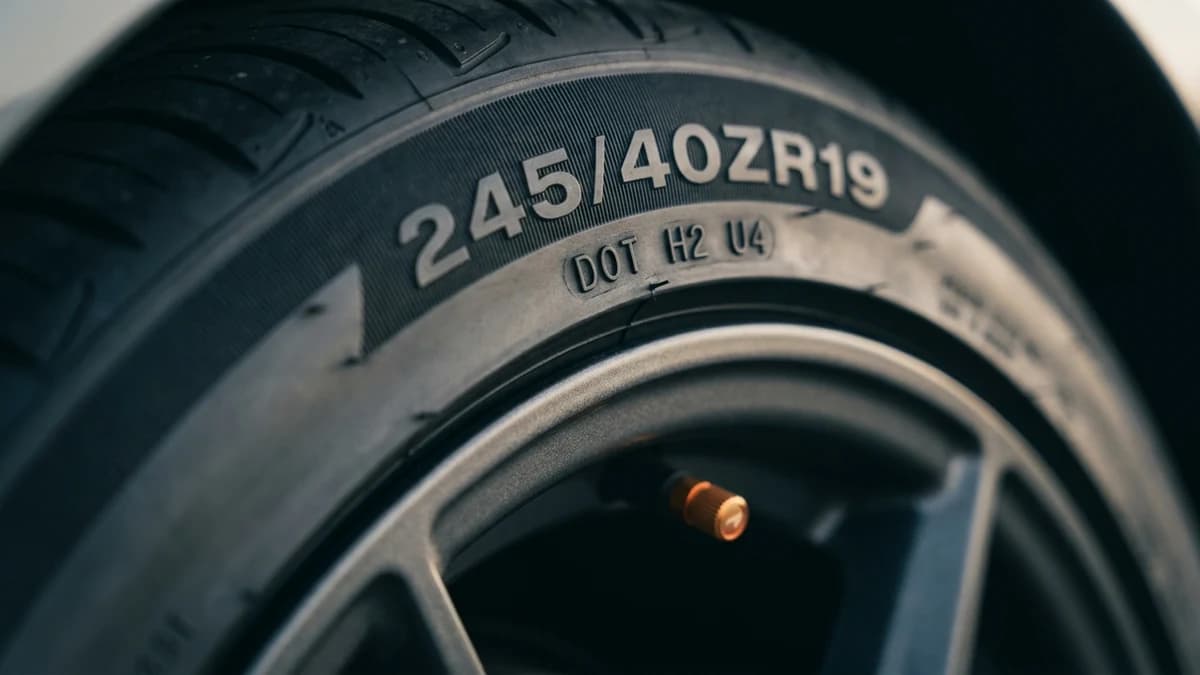
Key takeaways
- The size string (like P215/65R16) encodes section width, aspect ratio, radial construction, and wheel diameter.
- Load index and speed rating are the two numbers most people overlook, yet they define how much weight and speed the tire is rated for.
- The DOT code ends in four digits that give the week and year the tire was built, which matters for age even on unused tires.
- When shopping, match size, load index, and speed rating to your door placard or original tire; everything else is informational.
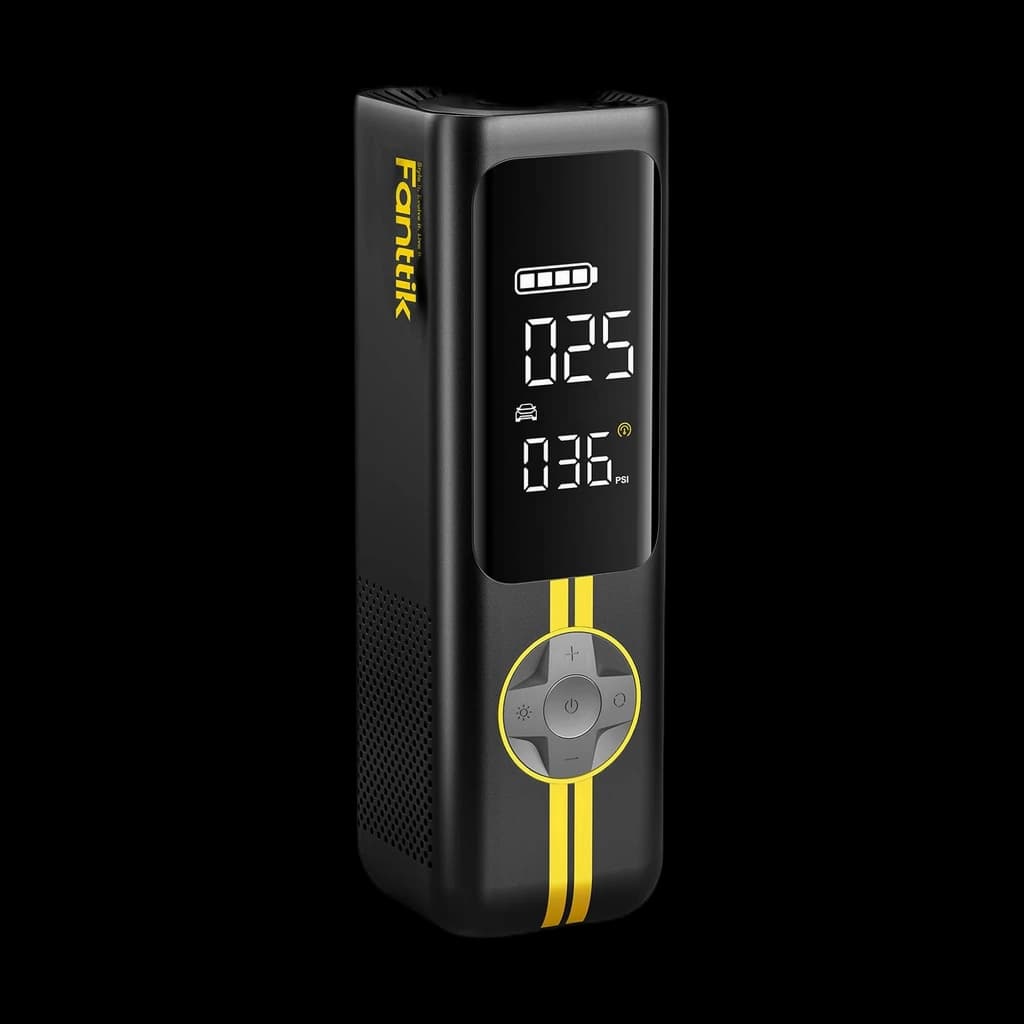
Fanttik X8 Apex — 150 PSI cordless tire inflator
- Rated 150 PSI with roughly one-minute car-tire top-ups
- Rechargeable battery means no cord or 12V socket needed
- Dual LED display, preset modes (car/bike/moto/ball) and auto shut-off
Our top-ranked tire inflator: a cordless 150 PSI pump with auto shut-off, so you can set the door-placard pressure the moment new tires go on rather than the sidewall maximum.
Which sidewall number to check for your situation
| If your situation is… | Pick | Why |
|---|---|---|
| Buying replacement tires and want a like-for-like match | Size string plus load index and speed rating | These three define fit and rating. Match them to the door placard or the original tire so handling, load capacity, and speedometer accuracy stay correct. |
| Checking how old a tire is before buying or keeping it | The four-digit DOT date code | The last four digits give the week and year of manufacture. Rubber ages even unused, so a deeply discounted tire may already be several years old. |
| Comparing how long two tires might last | UTQG treadwear grade | A higher treadwear number generally suggests longer wear, though the rating is comparative within a brand and not a mileage guarantee. |
| Driving through real winters with snow and ice | The three-peak mountain snowflake symbol | M+S alone only describes tread pattern. The snowflake means the tire met a severe-snow traction standard, which is what actually matters in deep cold. |
| Towing, hauling, or running higher loads | Load index and the max load and pressure line | The load index and the molded max load at max pressure tell you the tire's ceiling, so you do not exceed it when the vehicle is heavily loaded. |
Use this row to shortcut by situation.
The sidewall of a tire looks like a random wall of raised letters and numbers, but almost every marking is standardized and each one tells you something specific. Learn to read it once and you can size a replacement correctly, spot a tire that has been sitting in a warehouse for years, and know exactly what your tires are rated to handle. Here is what each marking means, in the order you will usually find it.
What do the numbers on a tire mean?
The big code is the tire's size: width in millimeters, sidewall height as a percentage of that width, construction, and the wheel diameter in inches. The most prominent version of it reads something like P215/65R16 95H. Read it left to right:
- P marks a P-metric passenger tire. An LT prefix means light truck; no letter often means a Euro-metric passenger tire.
- 215 is the section width in millimeters, measured across the widest part of the inflated tire.
- 65 is the aspect ratio: the sidewall height is 65 percent of that width. A lower number means a shorter, sportier sidewall.
- R means radial construction, which is what virtually every modern road tire uses.
- 16 is the wheel diameter in inches the tire is designed to mount on.
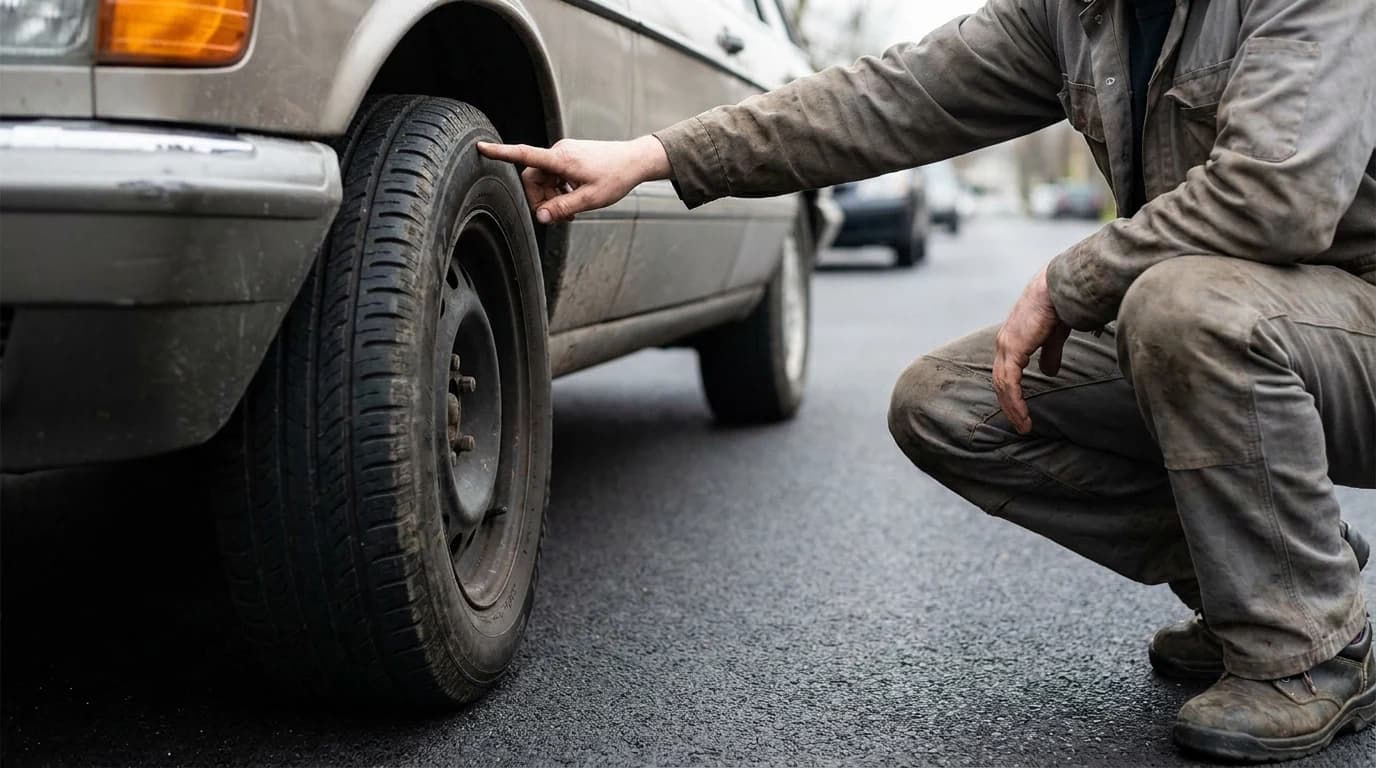
The two characters right after the size, 95H in this example, are the load index and speed rating, covered next. Getting the size right is what keeps your speedometer accurate and your fenders clear, so it is the first thing to match.
Tire size math, worked through
Because the middle number is a percentage of the first, two tires can share an aspect ratio and still have different sidewalls. NHTSA's tire guide defines the pieces: width in millimeters from sidewall edge to sidewall edge, aspect ratio as height relative to width, and the rim diameter in inches. The rest is arithmetic, with 1 inch equal to 25.4 mm:
| Size | Sidewall height | Overall diameter |
|---|---|---|
| 225/60R17 | 225 × 0.60 = 135 mm (5.3 in) | 431.8 + 2 × 135 = 701.8 mm (27.6 in) |
| 225/65R17 | 225 × 0.65 = 146.25 mm (5.8 in) | 431.8 + 2 × 146.25 = 724.3 mm (28.5 in) |
| 225/70R17 | 225 × 0.70 = 157.5 mm (6.2 in) | 431.8 + 2 × 157.5 = 746.8 mm (29.4 in) |
| 235/65R17 | 235 × 0.65 = 152.75 mm (6.0 in) | 431.8 + 2 × 152.75 = 737.3 mm (29.0 in) |
The 431.8 mm is the 17-inch wheel. Two things fall out of the table: a higher aspect ratio on the same width means a taller tire, and a wider tire with the same aspect ratio is taller too. That is why NHTSA's advice is to buy the original size or another size the vehicle maker recommends, rather than swapping numbers that look close. To run the same arithmetic on any two sizes, including the speedometer difference, use our tire size calculator.
Load index and speed rating: the numbers people skip
The load index is a coded number that maps to a maximum weight the tire can carry. Higher index, more capacity. It is not the actual pounds, it is a lookup value, but the rule is simple: do not go below the load index your vehicle was specified with.
The speed rating is a letter, such as H, V, or W, indicating the maximum sustained speed the tire is rated for. Even if you never approach that speed, the rating also correlates with the tire's construction and handling character, so matching or exceeding the original is the safe move.
Rule of thumb: when in doubt, the door placard and the original tire are your sources of truth. If you want to double check your working pressure while you are at it, our guide on what tire pressure you should run walks through the placard.
The DOT code tells you the tire's age
Every street-legal tire carries a DOT code. The part most people care about is the last four digits: the first two are the week of the year and the last two are the year of manufacture. So 2223 means the tire was built in the 22nd week of 2023. This matters because rubber ages whether or not the tire is used, and a heavily discounted tire can turn out to be old stock. If you want to decode a date stamp quickly, use our tire age decoder tool, and read when a DOT date code means it is time to replace for the fuller picture.
UTQG grades, snow ratings, and load limits
Many tires carry a UTQG block with three grades. Treadwear is a comparative wear number, traction is a wet-grip grade from AA to C, and temperature is a heat-resistance grade from A to C. They are handy for comparison shopping but are not mileage guarantees.
Winter capability shows up two ways, and only one of them is tested:
The marking that means something:
- The three-peak mountain snowflake symbol, which means the tire passed a severe-snow traction standard. That is what to look for if you face real winters.
The marking that does not:
- M+S, which describes a mud-and-snow tread pattern and appears on most all-season tires, but is not a tested rating.
Finally, the sidewall molds a max load and max pressure line.
The trap: that max pressure figure is a ceiling, not a target. For daily driving, always inflate to the door placard rather than the sidewall maximum.
What to map, at a glance
| Sidewall marking | What it means |
|---|---|
| P215/65R16 | Size: passenger, 215mm width, 65% aspect ratio, radial, 16in wheel |
| 95H | Load index 95 and speed rating H |
| DOT ... 2223 | Built in the 22nd week of 2023 |
| Treadwear 400 | Comparative wear grade within a brand |
| Traction AA / Temperature A | Wet grip and heat resistance grades |
| M+S | Mud-and-snow tread pattern, not a tested rating |
| 3-peak snowflake | Meets severe-snow traction standard |
| Max Load ... at ... psi | Ceiling for weight and pressure, not a daily target |
Which numbers you actually need
When you replace tires, only three markings must match, taken from your door placard or original tire:
- The size string
- The load index
- The speed rating
Everything else — the date code, UTQG grades, and snow symbols — is informational: useful for judging age, longevity, and cold-weather fit, but not something you have to match one to one. If you are shopping now, keep a tire inflator on hand so you can set the placard pressure the moment new tires go on. For deeper reference, NHTSA's TireWise materials and Continental's tire-size guide are both worth a read.
Your next step