How to Disconnect a Car Battery (and What Resets After)
Turn the ignition and accessories off, then loosen and remove the negative (black, minus) cable first and the positive (red, plus) cable second. Reconnect in reverse: positive first, negative last. Ford's 2022 Explorer manual adds a wait of at least two minutes after switching off. Expect to reset windows, clock and radio presets afterward.
Key takeaways
- Negative off first, negative on last. The negative cable is the ground, so removing it first means a wrench touching the body can't short the positive post.
- Ford says to wait at least two minutes after switching off before disconnecting, and that skipping the wait can cause damage its warranty does not cover.
- Reconnecting clears stored memory. Ford and Kia list auto up/down windows, clock and radio presets as items to reset.
- Ford's battery management system needs eight hours of locked, ignition-off sleep to relearn the battery's state of charge.
- Toyota says disconnecting erases emissions readiness codes, so a car can fail an I/M inspection soon after.
- On a hybrid or EV, touch only the 12-volt battery. Toyota says to contact a dealer before removing the Sienna's 12-volt terminals.
Should you disconnect the battery?
| If your situation is… | Pick | Why |
|---|---|---|
| Storing the car for weeks or months | A battery maintainer, or disconnect if you have no outlet | Kia says to disconnect the cables for extended non-use. A maintainer keeps the battery charged and every setting intact. |
| Charging the battery while it's in the car | Check your manual first | Toyota says to disconnect the ground cable when charging in the vehicle, while other carmakers allow charging in place. |
| Replacing the battery | Disconnect negative first, reconnect it last | AAA's sequence. Plan for the window, clock and radio resets afterward. |
| Hybrid or EV with a 12-volt problem | Read the manual or call the dealer | Toyota says to contact a dealer before removing the Sienna's 12-volt terminals, and never to touch high-voltage parts. |
| Emissions inspection this week | Wait until after the test | Toyota says disconnecting erases readiness codes, so the car may not pass the I/M test. |
Use this row to shortcut by situation.
Switch everything off, loosen the negative (black, −) cable first, tuck it away from the post, then remove the positive (red, +). Reconnect in reverse: positive on, negative last. The order exists because the negative cable is the car's ground, and the part most guides skip is what your car forgets once the power is gone.
The steps, in order
- Park, set the parking brake and switch the ignition off. Turn off lights and the radio too. Ford's 2022 Explorer manual lists both before anything else.
- Wait. Ford says to wait at least two minutes before disconnecting, and that disconnecting without waiting can cause damage its warranty does not cover.
- Find the battery. It isn't always under the hood. Toyota puts the 2026 Sienna's 12-volt battery on the right side of the luggage compartment.
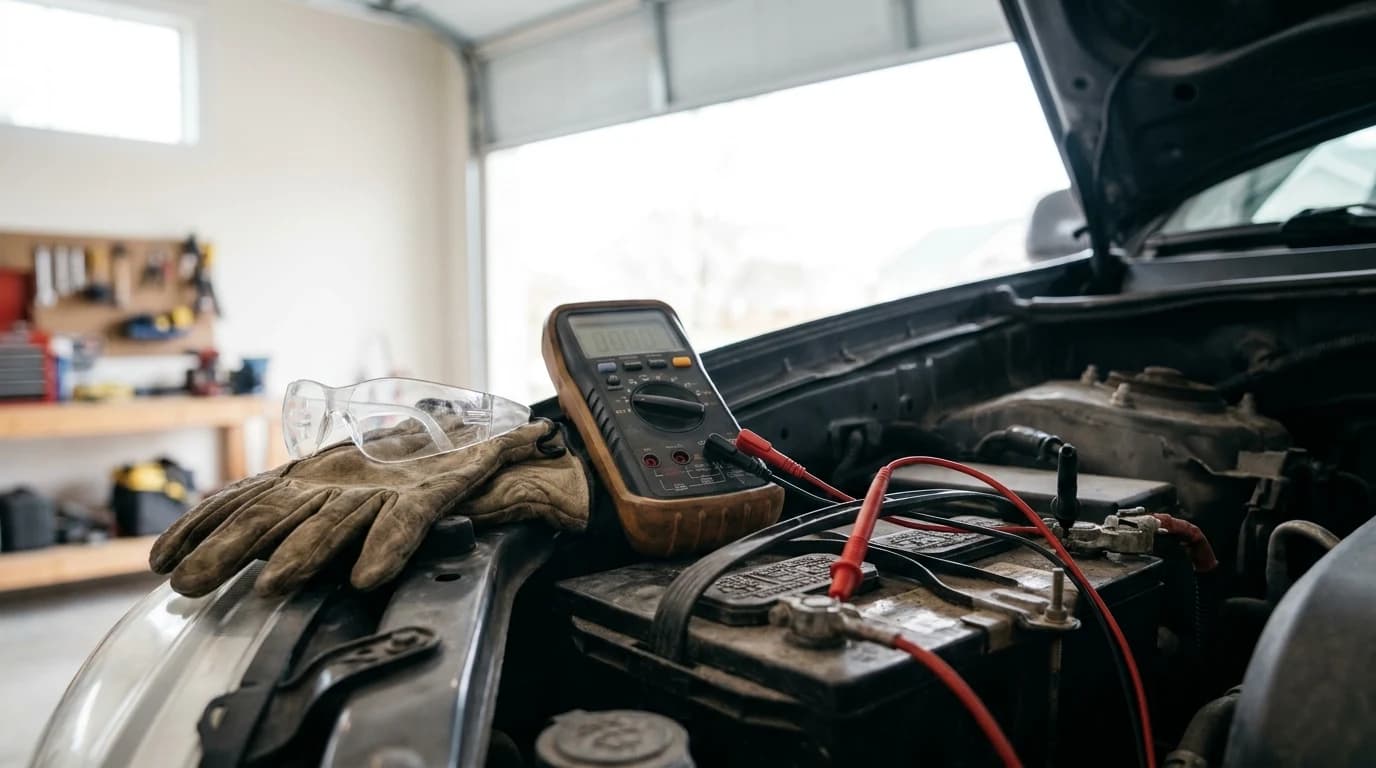
- Put on gloves and safety glasses. AAA's removal guide calls for both, plus an adjustable or socket wrench.
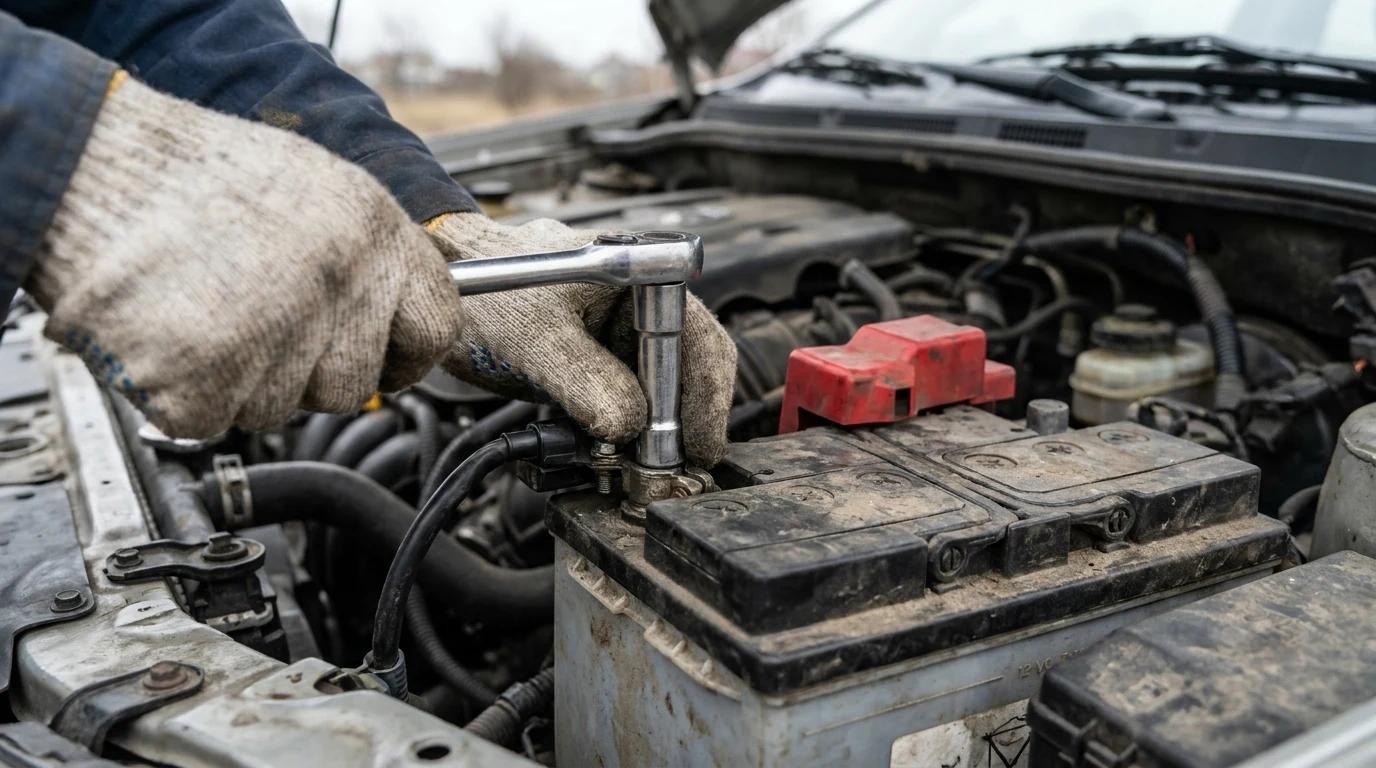
- Loosen the negative terminal and lift the cable off. Move it well away from the battery so it can't spring back onto the post.
- Loosen and remove the positive cable. AAA warns never to let a tool touch both terminals at once.
- Undo the hold-down clamp only if the battery is coming out.
Why negative first: the negative cable is the ground path to the car's metal body. Undo the positive first and a wrench that brushes the body on its way off the red post completes a short, which AAA calls a dangerous electrical short. With the ground already off, that slip does nothing.
Putting it back is the same list in reverse. AAA has you seat and clamp the battery flat in its tray, attach the positive cable, then the negative.
What resets after you reconnect
The car loses power to its memory, not just its radio. Toyota's Sienna manual says plainly that information stored in the ECU is cleared when the 12-volt terminals come off. What that looks like varies by maker, and here is what four manuals say, system by system:
| System | What happens | What to do | Source |
|---|---|---|---|
| Auto up/down windows | One-touch and pinch "bounce-back" functions need resetting | Run the window reset in your manual | Ford, Kia |
| Clock and radio presets | Lost | Re-enter them | Ford, Kia |
| Climate control and sunroof | Need resetting | Follow the manual's reset for each | Kia |
| Memory seats and head-up display | Stored positions and display settings erased | Re-save them | Toyota |
| Smart-key entry | May not unlock right after reconnecting | Use the remote buttons or the mechanical key | Toyota |
| Hybrid start-up | May not start on the first try | Start from ACC; Toyota says it works normally from the second attempt | Toyota |
| Automatic transmission | Relearns its adaptive strategy, so early shifts can feel firm | Drive normally | Ford |
| Battery management system | Needs eight hours of sleep to relearn state of charge, and may switch off some electrical systems early | Leave the car locked, ignition off, for eight hours | Ford |
| Emissions readiness | Readiness codes erased, so the car may fail an I/M test | Drive normally for a while before an inspection | Toyota |
| Pre-collision system | May not operate until the car has been driven for a while | Drive normally; it comes back on its own | Toyota |
The last two rows are the ones that catch people out. A battery swap the week before a smog check can fail it on readiness alone, which is the same trap our check engine light guide covers for clearing codes. A basic OBD2 scanner shows whether the monitors are ready again.
Hybrids and EVs: the 12-volt battery only
Hybrids and EVs still have a 12-volt battery, and it is the only one you touch.
⚡ High voltage is off-limits. Toyota's hybrid warning says never to touch, disassemble, remove or replace the high-voltage parts, cables or connectors, which are marked in orange. For the Sienna it goes further: before removing the 12-volt terminals, contact your Toyota dealer.
Toyota adds two hybrid-only quirks. The car remembers its power-switch mode and returns to it on reconnect, so switch the power off before you disconnect. And the gasoline engine may not stop even while the car is running on the hybrid battery; if that continues for a few days, Toyota says to see a dealer.
Do this, not that
Do:
- Unlock the car before you start. Toyota lists recharging or replacing the 12-volt battery while the car is locked as a trigger for its alarm.
- Reconnect any battery vent tube; Ford's manual says to.
- Keep the terminals clean and tight. Kia's battery care page asks for petroleum jelly or terminal grease on them.
Not that:
- Don't lay a wrench across the top of the battery. Toyota warns against sparks from tools touching the terminals.
- Don't smoke or work near flame. Toyota and Kia both warn that batteries give off hydrogen, which can explode.
- Don't skip the reset list. A window that won't auto-close isn't broken; it hasn't been reset yet.
When disconnecting is the right call
- Long-term storage. Kia's battery page says to disconnect the cables if the car won't be used for an extended time. A battery maintainer is the alternative that keeps every setting.
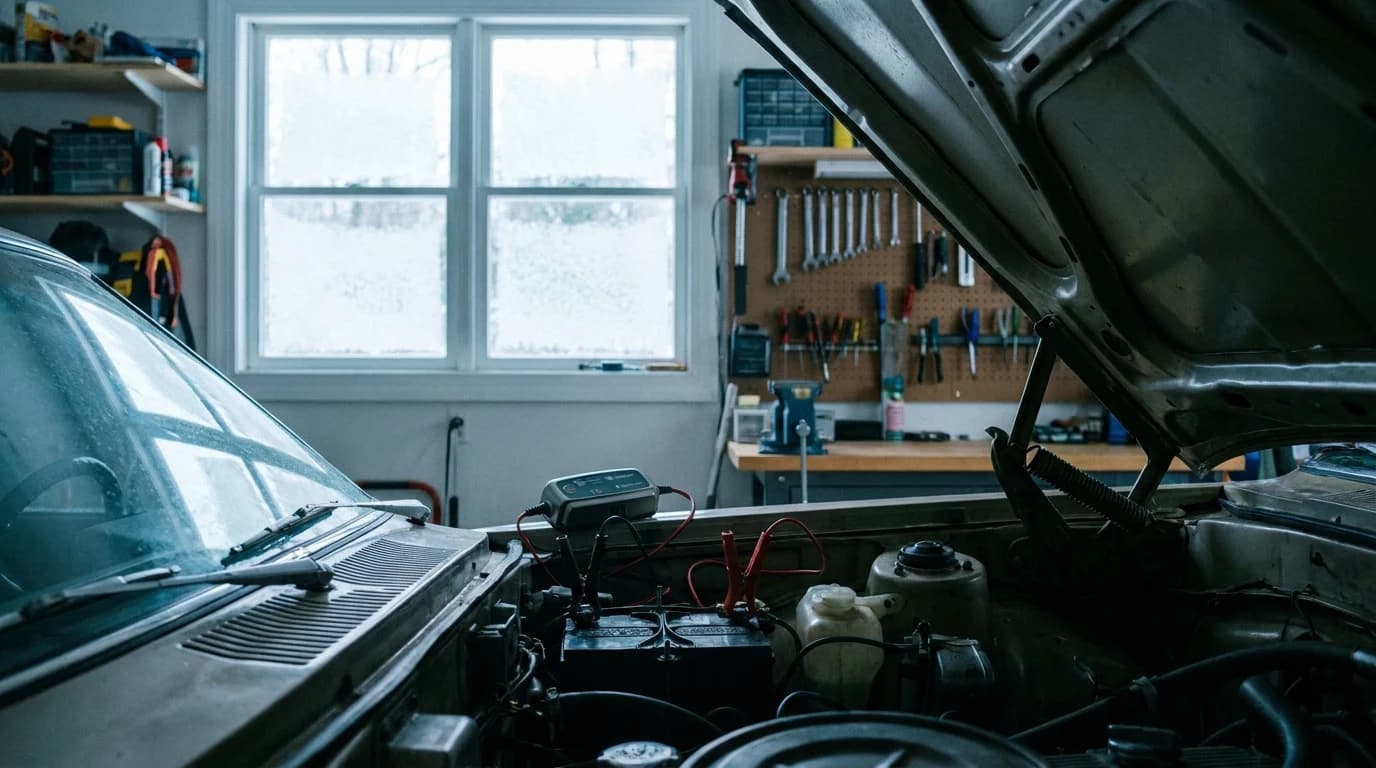
- Charging on some cars. Toyota says to disconnect the ground cable when charging the 12-volt battery in the vehicle, and Kia's UK manual says never to recharge with the cables connected. Other cars allow charging in place, so check the manual before following our charging guide.
- Replacement or a slow drain. If the battery is the suspect, test it first. Our battery life guide covers when replacement is due.
If the car won't start at all, disconnecting won't help. Start with a jump start.
Common questions
Which battery terminal do you disconnect first?
Can I just disconnect the negative terminal?
How long should I wait before disconnecting a car battery?
Does disconnecting the battery reset the computer?
Why won't my windows auto-close after reconnecting the battery?
Research Sources
- Toyota: 2026 Sienna Owner's Manual (PDF), 12-volt battery, initialization, hybrid high-voltage precautions and I/M readiness
- Ford: 2022 Explorer Owner's Manual, Changing the 12V Battery (removal steps, two-minute wait, BMS relearn, reset list)
- Kia: 2027 EV web owner's manual (US), 12V battery Reset items
- Kia: 2024 web owner's manual (UK), Battery care and battery dangers
- AAA Club Alliance: How to Remove a Car Battery, step-by-step guide